

The Art of Rest on One of Peru’s Most Spectacular Treks
Sleeping on the Salkantay Trek is almost as important as hiking it. And not just because your body needs it, but because each night on this trek feels like it belongs to a different universe: one night freezing cold under a sky full of stars, another surrounded by vibrant, fragrant rainforest, another listening to rivers cascading down from the mountains.
Nights on the Salkantay are a fundamental part of the experience. They are brief pauses where the world becomes silent, magical, intimate, and sometimes uncomfortable… but always unforgettable.
In this guide, I’ll take you through all the accommodation options, night by night, explaining what it’s like to sleep at each location, what you can expect, what services are available, the differences between classic campsites, domes, and eco-lodges, and how to choose the perfect experience for your travel style.
Get ready, because this is the longest and most comprehensive guide ever written about where to sleep on the Salkantay Trek.
🌄 1. Before we begin: Sleeping in Salkantay is a true mountain experience
The Salkantay Trek is not a leisurely stroll.
- It’s not a hotel circuit or a route with constant luxury services.
- It’s mountains.
- It’s isolation.
- It’s unpredictable weather.
- It’s a blend of adventure and rustic comfort.
Here you will sleep:
- at almost 4,000 meters facing a glacier,
- beside babbling rivers,
- in the middle of a rainforest filled with nocturnal sounds,
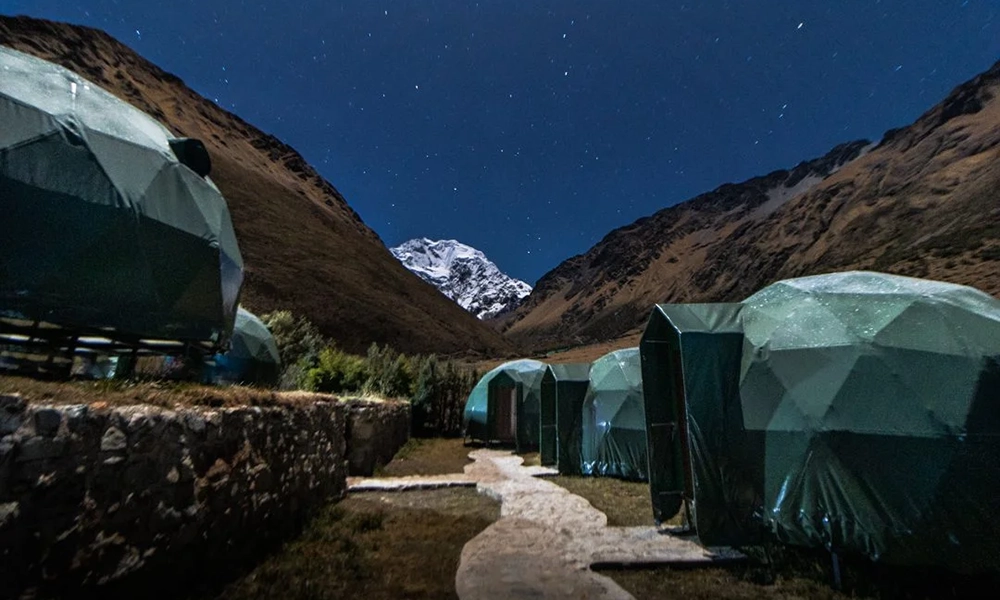
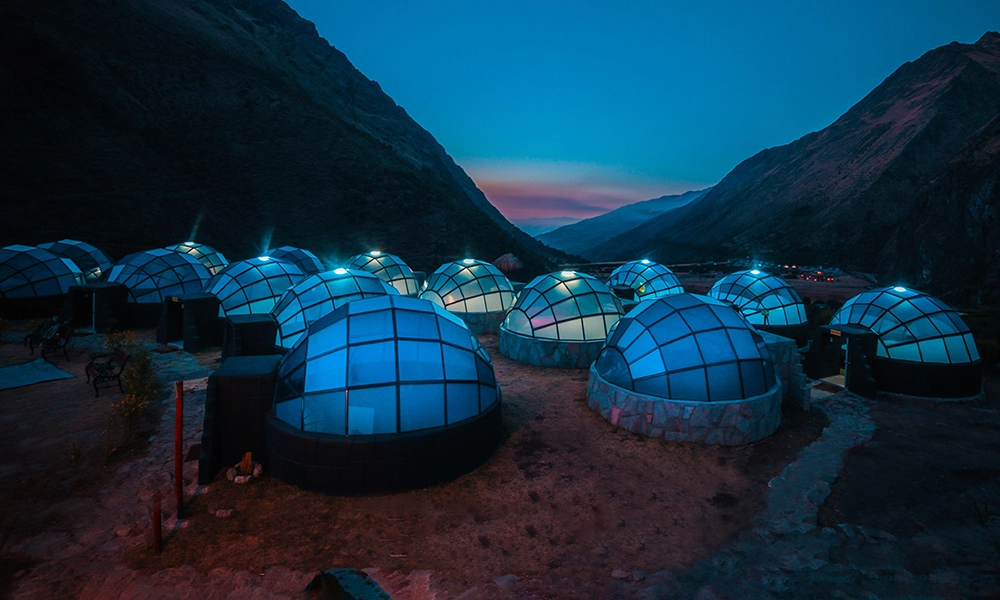
- in transparent domes under an absolutely starry sky,
- in mist-shrouded wooden cabins,
- and finally, in a hotel in Aguas Calientes to recharge.
You’ll sleep well, you’ll sleep okay, you’ll sleep uncomfortably sometimes…
but you’ll always sleep surrounded by pristine nature.
And that’s what makes Salkantay so unique.
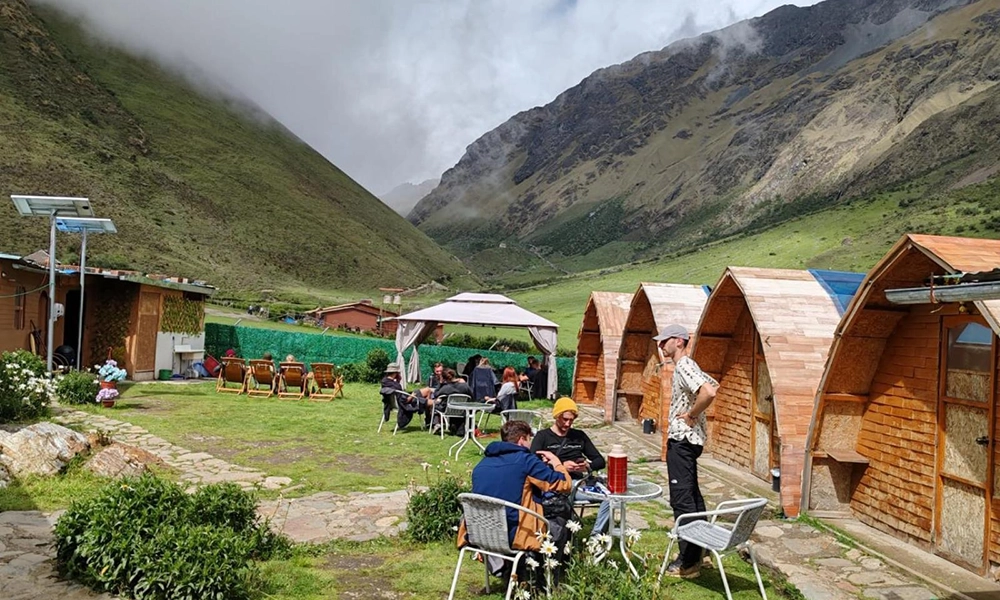
🧊 2. Night 1: Soraypampa — Accommodation on the edge of the glacier
Soraypampa welcomes you with a breathtaking landscape:
Humantay Mountain on one side, the imposing Apu Salkantay on the other,
the cold on your skin, the whistling wind, the profound silence.
Altitude: 3,900 m
Nighttime temperature: -3°C to -5°C
Dry, icy, and windy climate.
There are two main accommodation categories here:
🏕️ A. Classic campsites in Soraypampa
The most authentic and adventurous option.
What it’s like to sleep here:
You are provided with pre-assembled double or triple tents on platforms of earth or flat stones. The tents are usually windproof, thick, and designed for professional trekking. However, in Soraypampa, no tent can withstand the dry cold of the early morning.
Inside you’ll find:
- A thermal sleeping mat
- A sleeping bag (not always included)
- Two thick blankets
- A small external light
- Limited space
The real experience:
Sleeping here is to feel the mountain in its purest form.
The air is icy and still.
The sound of the wind hits the tent, the fabric tightens, and the moonlight paints shadows inside.
If you love authentic trekking, this night is unforgettable.
Advantages:
✔ Total connection with the mountain
✔ Absolute silence
✔ A true expedition atmosphere
Disadvantages:
✘ Very cold
✘ No hot showers
✘ Intense humidity
✘ The wind can make it difficult to sleep
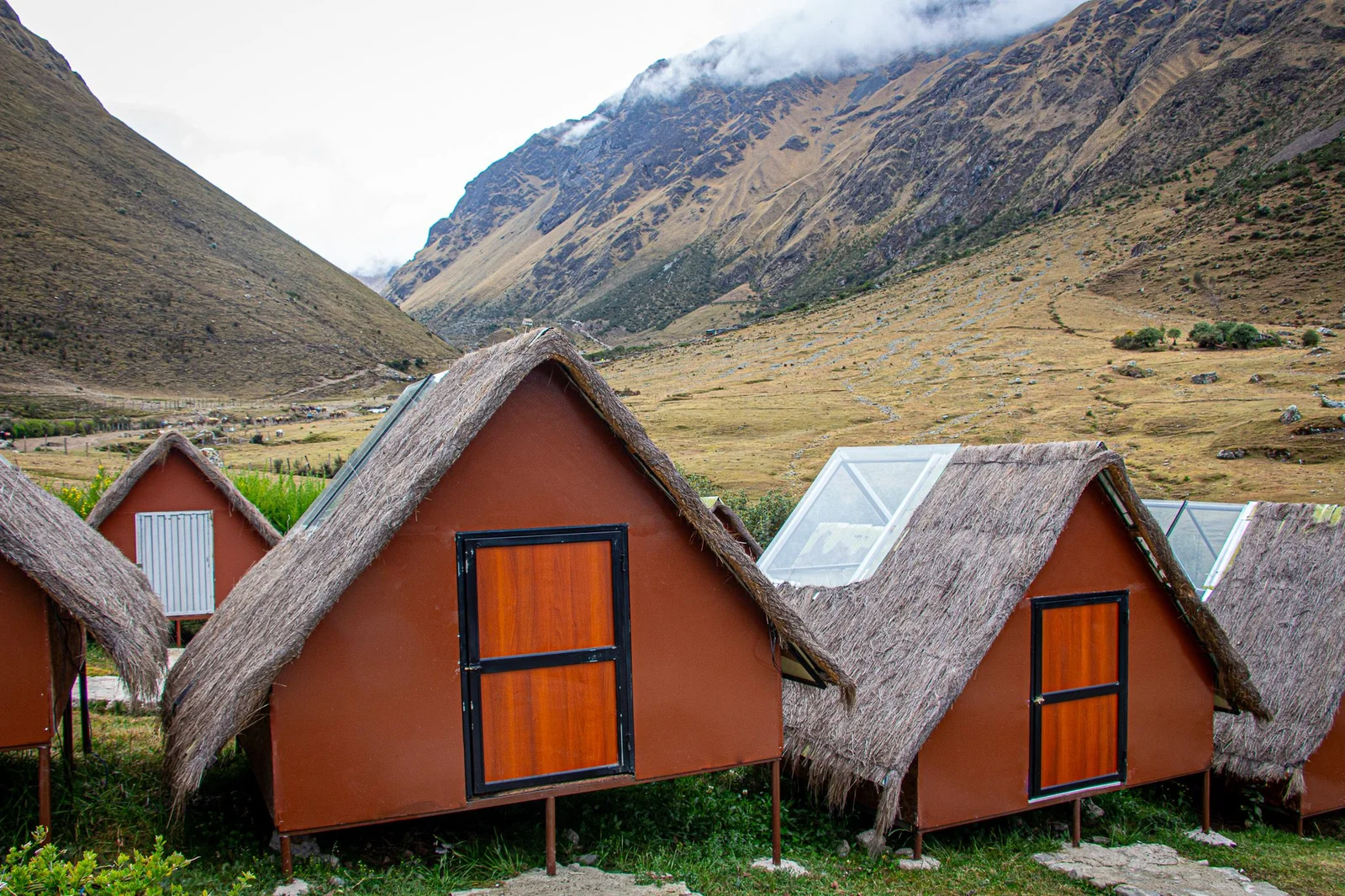
🌌 B. Panoramic Domes in Soraypampa
The famous Sky Domes, the most popular option for the trek.
What are they?
Semi-spherical structures made of:
- wood
- metal
- transparent polycarbonate
but with thermal design and insulation.
Typical interior:
- royal bed with soft mattress
- thick blankets and thermal comforters
- nightstand
- warm lighting
- panoramic window facing the glacier
The experience:
Sleeping in a dome is a blend of rustic refuge and minimalist boutique hotel.
You fall asleep under the stars, listening to the wind, feeling the grandeur of Apu Salkantay.
Seeing the snow on Humantay sparkle in the moonlight… priceless.
Advantages:
✔ Warmer than a tent
✔ Much more comfortable
✔ Direct view of the glacier
✔ Ideal for photos and a premium experience
Disadvantages:
✘ More expensive
✘ Bookings sell out months in advance
✘ Not all operators offer them
❄️ 3. Night 2: Chaullay / Collpapampa — Welcome to the cloud forest
After the Salkantay Pass, the landscape changes dramatically:
you go from the cold glacier to the humid heat of the cloud forest.
Altitude: 2,900–2,800 m
Temperature: 6°C to 10°C
Temperate tropical climate.
Here, you can usually sleep in two types of accommodations:
🏕️ A. Campsites with protective roofs
These are not tents in the open air; They are protected by:
- wooden roofs
- rustic structures
- elevated platforms
This helps protect against humidity and nighttime rain.
The experience:
For the first time on the trek, you can sleep relatively warm.
lass=”yoast-text-mark” />>The air smells of vegetation.
>The sound of the Santa Teresa River accompanies you throughout the night.<br class=”yoast-text-mark” />>The feeling is much more relaxed than in Soraypampa.
Advantages:
✔ Warmer
✔ Very natural environment
✔ Ideal for resting after the hardest day
Disadvantages:
✘ High humidity
✘ Cold showers (when available)
✘ Abundant mosquitoes
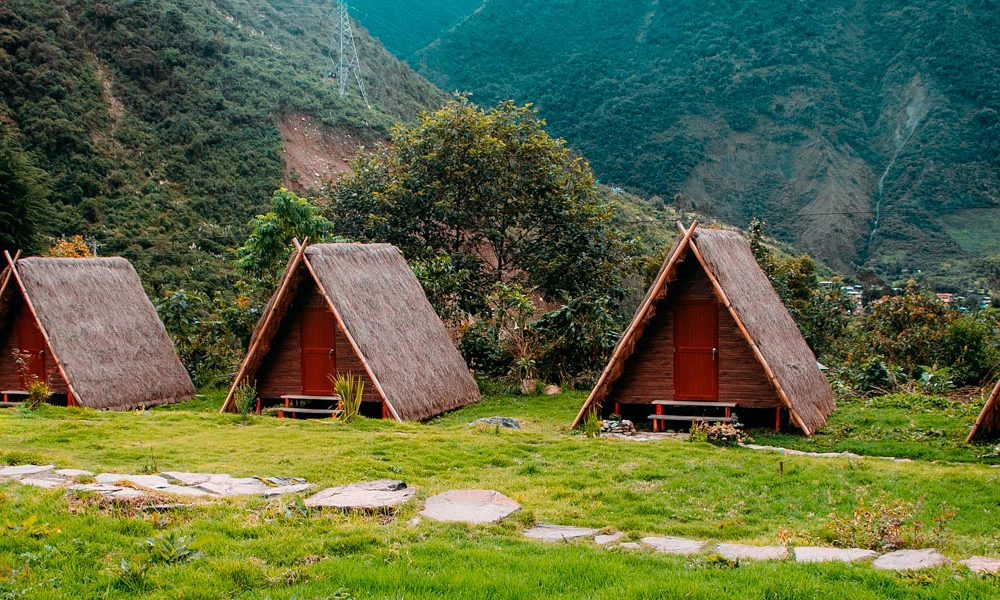
🛖 B. Wooden Eco-lodges — the most comfortable option on the day 2
Wooden cabins raised off the ground, with roofs that withstand rain and humidity.
Interior:
- elevated beds or mattresses
- thick blankets
- basic lighting
- warmer atmosphere
Experience:
Sleeping here feels like being in an Amazonian cabin.
It’s peaceful, natural, and cozy.
There’s no extreme cold, which is wonderful for rest.
Advantages:
✔ Much better sleep quality
✔ More privacy
✔ Comfortable tropical atmosphere
Disadvantages:
✘ Limited electricity
✘ Basic bathrooms
✘ There may be frogs or nocturnal insects
🌿 4. Night 3: Lucmabamba — the warmest night of the trek
Lucmabamba is an Amazonian oasis surrounded by:
- coffee plantations
- fruit orchards
- orchids
- hummingbirds
- giant trees
This is usually where you’ll find the most pleasant accommodation on the trek.
Altitude: 2,000 m
Temperature: 12°C to 18°C
Humid, warm, and relaxing climate.
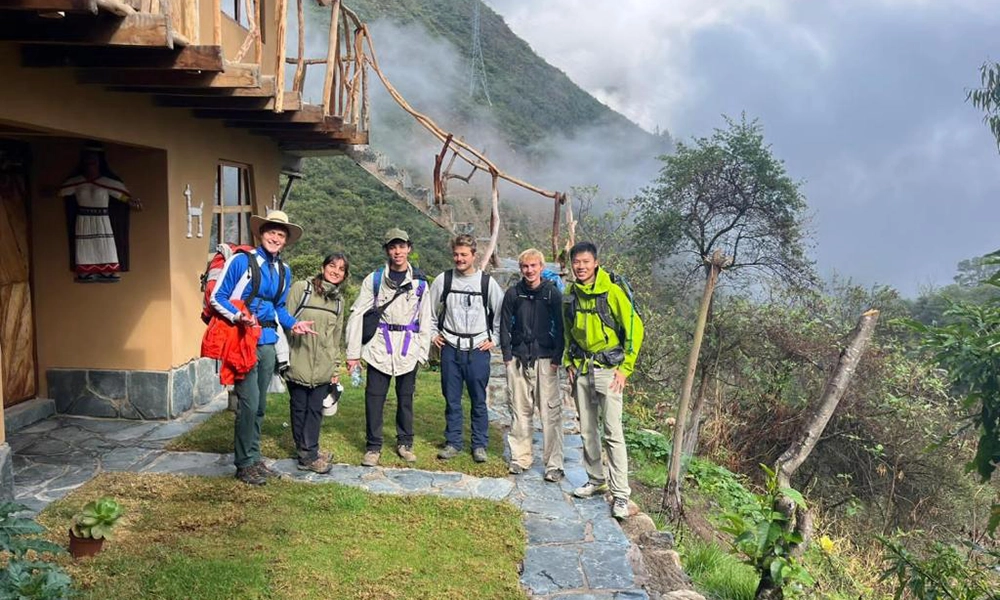
🛖 A. Rustic Family Lodges — Trekking Favorites
Lucmabamba boasts numerous ecolodges, all built with:
- local wood
- bamboo
- beautiful roofs
- comfortable beds
The Experience:
At dusk, the air is filled with the scent of plants.
You can hear the river in the distance, crickets chirp, and the weather is so pleasant that many travelers sleep like they haven’t slept in days.
Typical amenities:
- Shared bathrooms
- Cold showers (sometimes lukewarm)
- Electricity by the hour
- Rustic dining area
- Campfire area
Advantages:
✔ The most comfortable night of the trek
✔ Warm weather helps you regain energy
✔ Natural and cultural environment
Disadvantages:
✘ Limited electricity
✘ Constant humidity
🌺 B. Amazonian Domes — circular cabins in the middle of the jungle
These are smaller, warmer domes with a view of the forest.
Interior:
- Double bed
- Warm lighting
- Large windows
- Intimate and romantic atmosphere
Experience:
Perfect for travelers seeking nature + comfort + a special touch.
🏙️ 5. Final Night: Aguas Calientes — Glory After Days of Trekking
After hiking through the jungle, crossing the hydroelectric plant, and following the railway, you arrive in Aguas Calientes, where you can finally:
✔ take a hot shower
✔ sleep in a real bed
✔ charge all your devices
✔ connect to Wi-Fi
✔ rest from the changeable weather
Accommodations here range from:
- hostels
- 2-star hotels
- 3-star hotels
- boutique hotels
It depends on your package.
The rest here is restorative… almost a reward.
🔧 6. Real Services on the Salkantay Trek (the unfiltered truth)
⚡ Electricity
- Soraypampa → limited or none
- Chaullay/Collpapampa → partial
- Lucmabamba → partial
- Aguas Calientes → full
Recommendation: a power bank of at least 20,000 mAh.
🚿 Showers
- Soraypampa → cold or nonexistent
- Collpapampa → cold
- Lucmabamba → cold/warm depending on the lodge
- Aguas Calientes → guaranteed hot water
🚽 Toilets
- Basic at campsites
- Shared at lodges
- Private only in Aguas Calientes
🧭 7. Which accommodation to choose?
👉 If you love pure mountain experiences
Tents + eco-lodge + hostel
👉 If you want a balance between adventure and comfort
Soraypampa Domes + Lucmabamba Eco-lodge + 2-star hotel
👉 If you want the best available
Premium Domes + Jungle Domes + Boutique Hotel
🌟 Every night on the Salkantay Trek is a different world
Sleeping on the Salkantay Trek is much more than rest.
It’s an intimate part of the journey where you connect with nature, with yourself, and with the history of this ancient path.
- One night you sleep under millions of icy stars.
- Another, surrounded by mist descending from the mountains.
- Another, in the warm jungle listening to crickets.
- And finally, in a soft bed waiting to see Machu Picchu.
The Salkantay Trek doesn’t just require you to walk.
It asks you to surrender to each section, each climate, each sunrise… and yes, to each night.
Sleeping here isn’t a luxury.
It’s an experience.
An essential part of the magic.