

The most comprehensive and poetic guide to the real weather on the trail to Apu Salkantay
On the Salkantay Trek, the weather isn’t just a backdrop.
It’s a living character.
One that changes mood, face, and energy throughout the day.
One that tests you, speaks to you, protects you, and awakens you.
Anyone climbing Salkantay must know this truth:
the mountain doesn’t have weather… it has spirit.
Cutting cold.
Purifying rain.
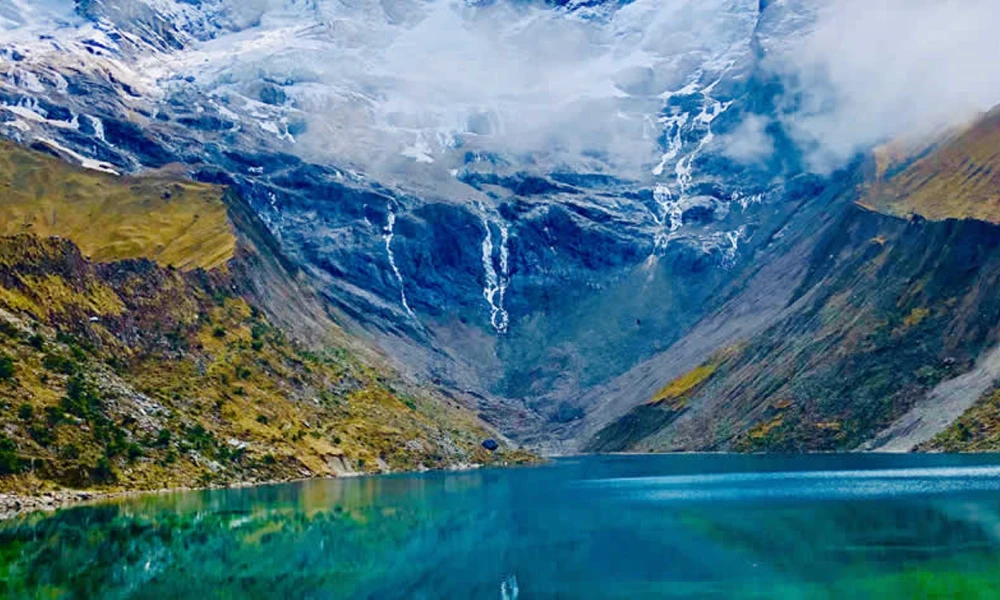
Embracing fog.
Scorching sun.
Announcing wind. Transforming humidity.
The Salkantay weather isn’t memorized:
it’s experienced.
This is the most complete guide to how it feels, how it changes, and how to prepare for each of its manifestations.
🧊 1. The Salkantay Cold: Guardian of Dawn
Cold is the dominant element in the upper part of the trek.
Ancient cold, deep cold, mountain cold.
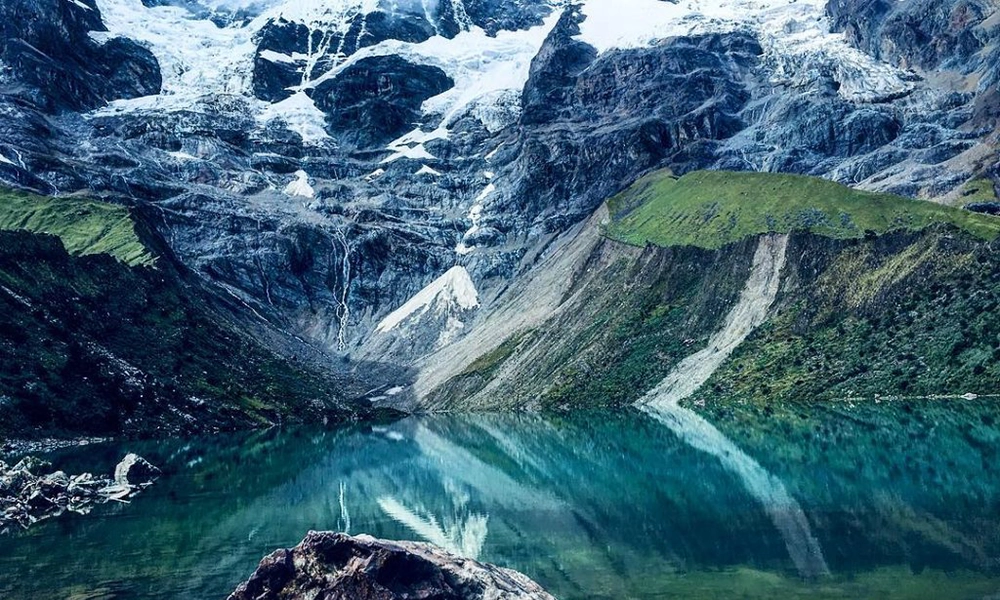
It’s not “city cold”; it’s the cold of a place where glaciers breathe and ice sings on the rocks.
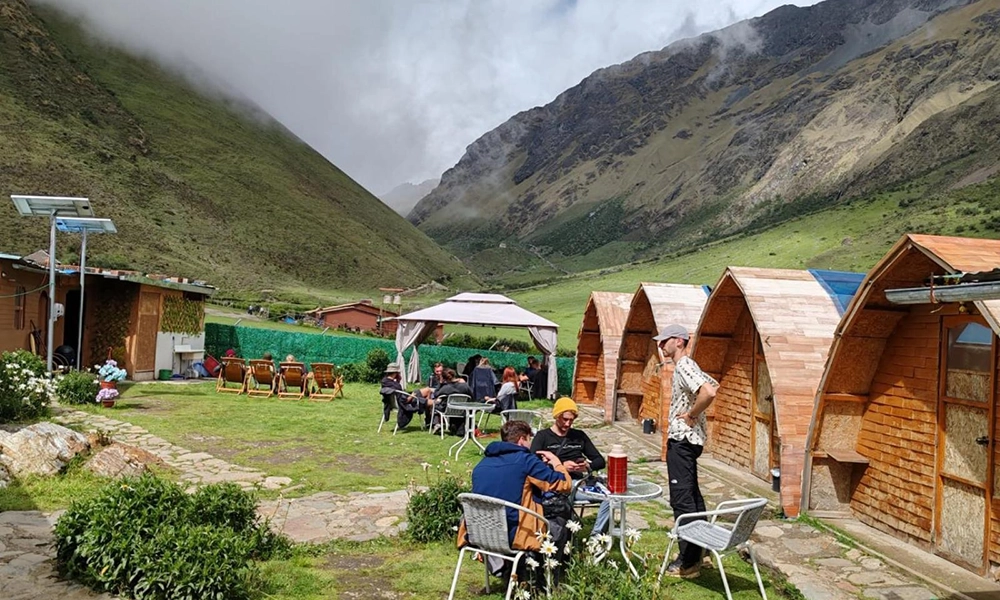
❄️ In Soraypampa (3,900 m above sea level)
Temperatures:
Day: 2°C to 8°C
Night: -5°C to 0°C
Wind chill: lower due to the wind.
Atmosphere: dry, clear, silent.
In Soraypampa, the cold doesn’t just touch your skin:
it reminds you that you are entering the domain of the Apu (mountain spirit).
There are mornings when the grass is covered in frost,
the tents sparkle with ice crystals,
and the blue sky seems as fragile as glass.
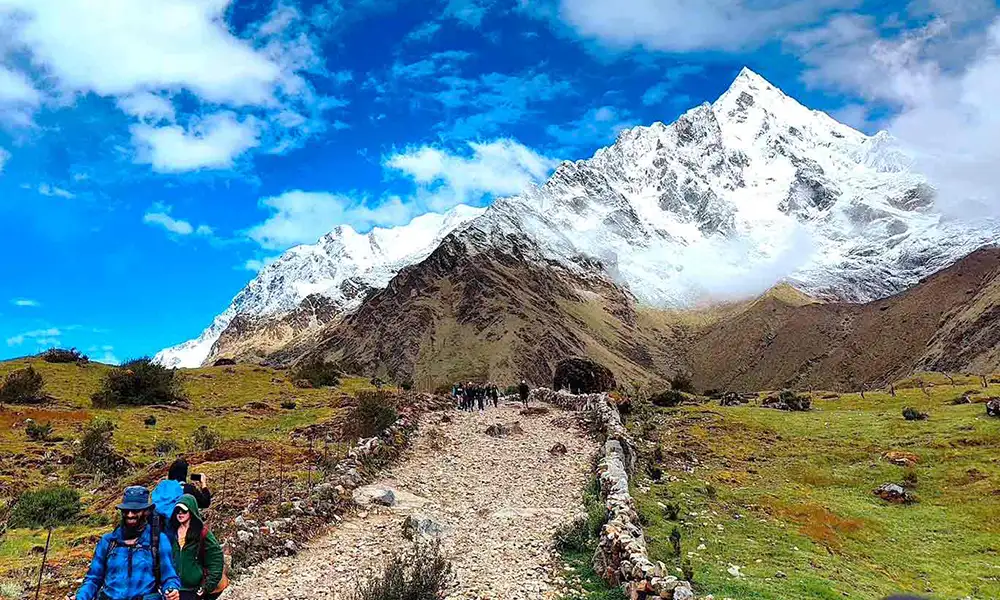
❄️ At the Salkantay Pass (4,630 m)
Temperatures:
- between -10 °C and -2 °C
- the wind chill can make it feel like -15 °C
Possible events:
- light snowfalls
- ice on the trail
- strong, penetrating wind
Here, the cold takes on a sacred character.
It’s a cold that isn’t fought:
it’s respected.
The thin air makes each breath feel like a gift,
and the silence at this altitude compels you to listen to your own inner rhythm.
🌧️ 2. The Rain of Salkantay: The Liquid Voice of the Mountain
Rain on Salkantay is not just water.
It’s a language.
It’s the way the mountain purifies, renews, and transforms the paths.
There are gentle rains, like sighs.
And intense rains, that seem to fall from all the heavens at once.
🌧️ Rainy Season (December – April)
During these months, rain is almost a constant companion.
Characteristics:
- Heavy afternoon downpours
- Constant fog
- Slippery ground
- Swimming streams that appear suddenly
- Overcast skies
The trek becomes more challenging.
More technical.
More spiritual.
Walking in the rain in the Andes is like feeling the world cleansing itself along with you.
🌦️ Dry Season (May – October)
Although it’s the best time,
it doesn’t mean the rain disappears.
Characteristics:
- Brief showers
- Light rain at night
- Passing clouds
- Patches of damp fog
It’s the most stable weather,
but always unpredictable.
The mountain never fully surrenders.
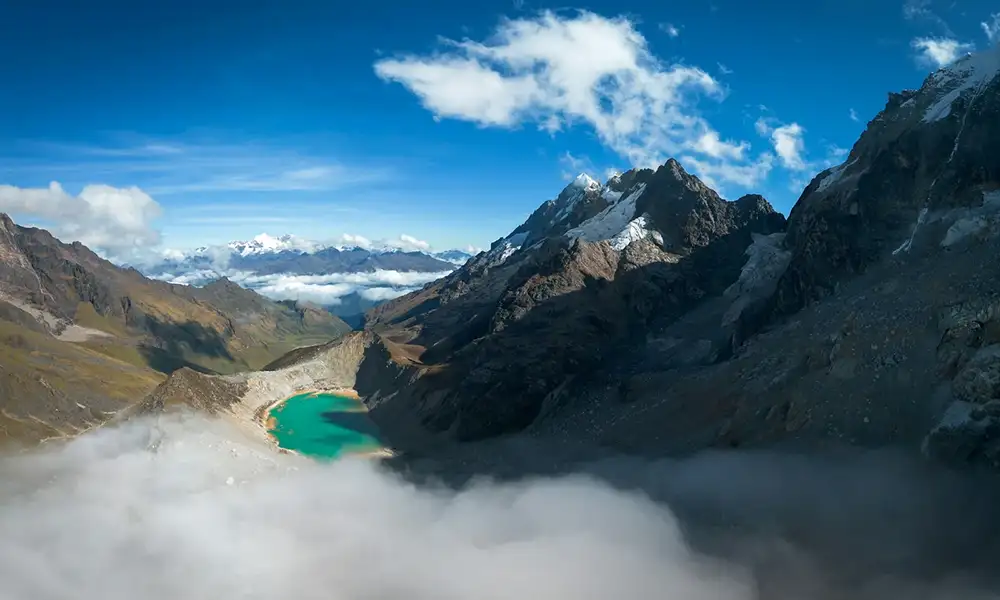
🌫️ 3. The Fog of Salkantay: Guardian of Mystery
Of all the climates on Salkantay,
the fog is the most poetic.
- It appears like a white spirit.
- It descends silently.
- It moves as if breathing.
Walking within the fog is entering a different world,
more intimate, deeper, more magical.
🌫️ Areas where fog dominates:
- Descent from the pass towards Huayracmachay
- Cloud forest of Collpapampa
- High jungle towards Lucmabamba
- Viewpoints in deep valleys
The fog can:
- hide mountains
- reveal spectacular rays of light
- envelop trails
- create mystical, cinematic atmospheres
It is one of the reasons why many trekkers consider Salkantay one of the most beautiful trails on the continent.
☀️ 4. The Salkantay Sun: Bright, Powerful, Deceptive
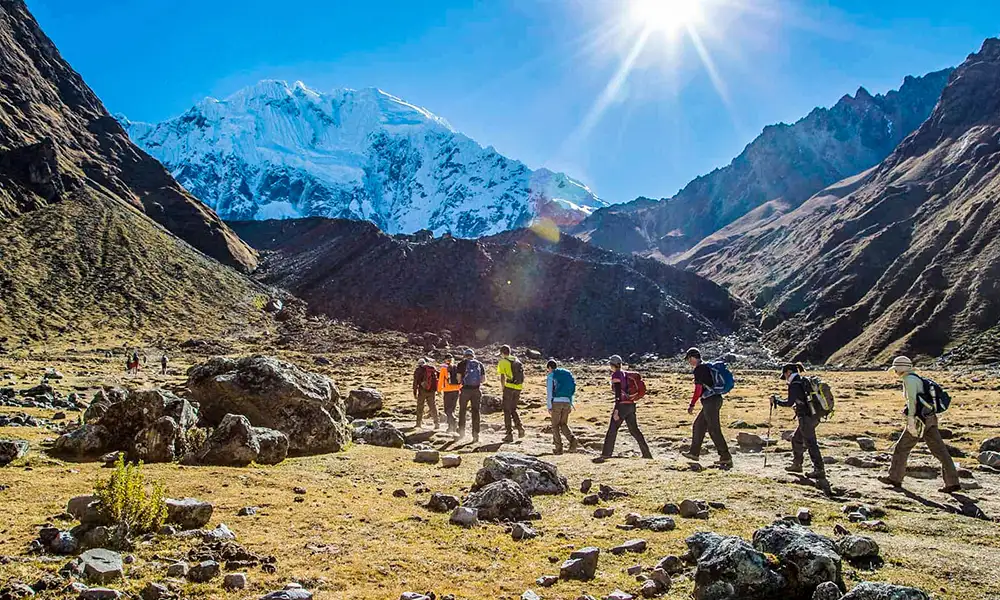
The sun at 4,000 meters is a paradox.
Even if you’re frozen,
the sun can burn your face in minutes.
Characteristics of the sun at high altitude:
- Extremely high UV radiation
- Dry air that prevents you from feeling the immediate burn
- Intense reflection on the snow
- Risk of dehydration without you even realizing it
The Salkantay sun is beautiful,
but it’s not gentle.
It illuminates the snow, paints the mountains gold at dawn,
and reminds you that altitude doesn’t forgive carelessness.
🌪️ 5. The Salkantay Wind: The Messenger of the Apu
The wind is the most emotional element of the trek.
It can blow softly like a song,
or roar like an ancient beast.
🌀 At the Salkantay Pass:
- Sudden jolts
- Very low wind chill
- Constant ringing in the ears
- Moving of small stones
The wind at high altitude has a purpose:
to cleanse, awaken, alert.
🌡️ 6. Humidity, heat, and jungle: the drastic change from day 2 to day 4
One of the most impactful experiences on the Salkantay Trek
is feeling the climate change from glacial to jungle in a single day.
🥵 In Chaullay and Collpapampa:
- 18°C to 25°C
- 70%–90% humidity
- Tropical rains
- Mosquitoes
- Lush vegetation
It’s like entering another world,
as if the mountain were sending you back to the realm of life after traversing the realm of ice.
🗓️ 7. How does the climate change day by day? (Detailed Guide)
🌄Day 1 — Soraypampa
- Dry cold
- Strong wind
- Freezing night
📋Day 2 — Salkantay Pass
- Extreme cold
- Blistering wind
- Possible snow
- Fog on descent
🚶Day 3 — Chaullay
- Temperate climate
- High humidity
- Frequent fog
- Light rain
📘Day 4 — Lucmabamba → Llactapata
- Tropical sun
- Intermittent rain
- Fog in forests
- Warm climate
🌙Day 5 — Hydroelectric Plant → Aguas Calientes
Jungle climate
Hot
Humidity
Occasional heavy rain
👕 8. How to dress to survive the Salkantay climate
👕For the cold:
- Thermal base layer
- Thick fleece
- Waterproof jacket
- Gloves
- Hat
🌦️For the rain:
- Proper waterproof poncho
- Backpack cover
- Waterproof pants
- Boots with good traction
🥵For the sun:
- SPF 50 sunscreen
- UV sunglasses
- Hat or Hat
🌡️For the jungle:
- Light clothing
- Repellent
- Long sleeves to avoid mosquitoes
🌄 9. Keys to understanding the Salkantay climate
✔ The weather changes every 20–30 minutes
This is not an exaggeration.
✔ There is no such thing as a “perfect day”
Every day presents a challenge.
✔ The mountain is felt before it is seen
The wind announces changes before the clouds.
✔ Don’t rely on forecasts
The mountain range has its own clock.
🌙 10. The climate is the spirit of Salkantay
The Salkantay climate is not an enemy.
It is a teacher.
- The cold teaches humility.
- The rain teaches patience.
- The fog teaches intuition.
- The sun teaches gratitude.
- The wind teaches strength.
- The humidity teaches adaptability.
- Those who accept these elements as part of the journey
return transformed.
Because on the Salkantay, you don’t “overcome” the weather:
you traverse it, you listen to it, you honor it.
And in the end, when you arrive at Machu Picchu after glaciers, rain, and fog,
you feel that every change in the weather was a message,
a test,
a poem written by the mountain for you.