

Hiking Alongside the Salkantay Mountain — An Inner Journey in the Land of the Apus
An extreme, intimate, and spiritual chronicle of Peru’s most breathtaking route
PROLOGUE: The Call of the Mountain
There are mountains you look at, mountains you admire…
and mountains that call to you.
Salkantay, at 6,271 meters high, is no ordinary mountain.
It is an Apu: a protective spirit, a living presence, a force you feel before you see it.
The elders say that when a traveler’s heart is restless, the Apu listens.
And when the heart is ready, Salkantay answers.
That is why you are here.
That is why you are reading this.
What follows is not a story, it is a testimony.
An invitation.
A pilgrimage.
I. SORAYPAMPA — The Giant’s Threshold
The first night in Soraypampa is a cold and silent welcome.
The air is sharp as glass, the stars twinkle as if in a hurry, and the wind seeps into every corner of the tent.
You go to bed early, but you don’t sleep much.
The altitude is noticeable.
It doesn’t hurt… it’s unsettling.
And at dawn, as you leave the tent with your eyes half-closed, it happens:
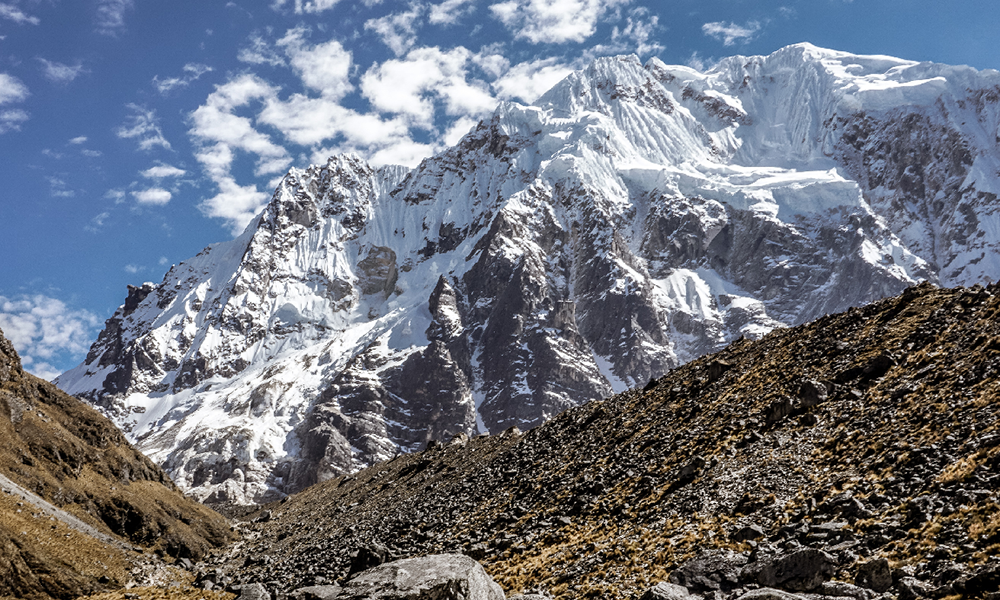
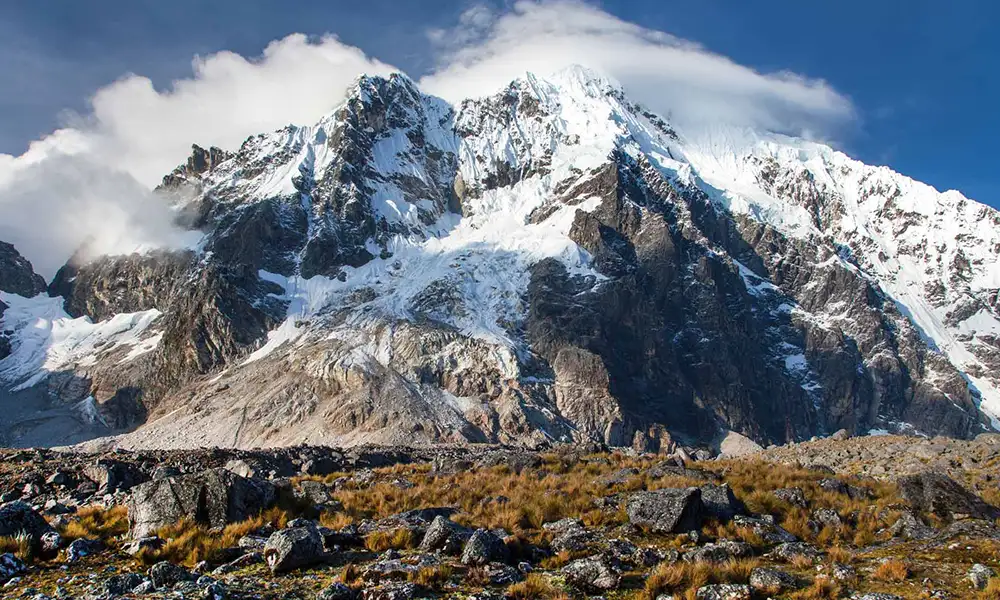
Salkantay appears there, immense, white, with a bluish sheen that only the oldest glaciers possess.
It’s so large it seems impossible to take it all in.
So silent that its presence resonates within you.
You take a deep breath.
The air rushes.
You know that today you will walk toward it.
In the mess tent, the cook serves hot soup and freshly toasted bread.
The table is full of sleepy travelers, but they all look at the same thing: that mountain that seems to be looking at you too.
Soraypampa is not just a campsite.
It’s a threshold.
The threshold to the realm of Salkantay.
II. THE BEGINNING OF THE JOURNEY — The Beat of the Heart and the Weight of the Air
The first hours of the hike are a lesson in humility.
You learn to climb slowly, to breathe deeply, to listen to your body.
The sun begins to illuminate the glaciers, and the snow-capped peak changes color as if it were breathing:
white → yellow → gold → white again.
The first steps are easy.
>The next ones, not so much.
>The altitude makes itself felt, and your heart beats like an Andean drum.
Your breath forms small white clouds before you.
Everything is slower, heavier… but also clearer.
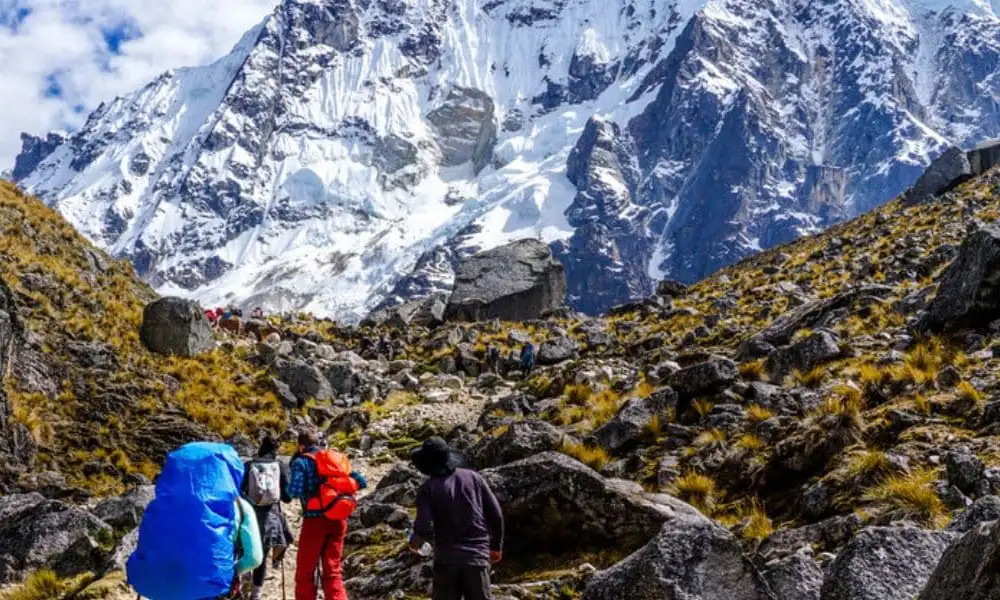
You walk among enormous stones, dry grasslands, small streams, and mules carrying supplies.
The sound of their bells mingles with your breathing.
In the distance, Salkantay seems to approach step by step.
Or perhaps it is you who is approaching it.
It doesn’t matter.
The connection begins.
III. THE SACRED ZONE — Where Silence Has a Voice
There is a point on the trail—no one knows exactly where—where the group’s conversation fades away.
No one plans it; it simply happens.
It’s as if the snow-capped mountain whispers:
“Now listen to me.”
The wind suddenly calms.
The sky opens.
And you feel something you’ve never felt before.
- It’s not fear.
- It’s not exhaustion.
- It’s presence.
The Andean guides call it “The Silence of the Apu.”
Here, the air smells different: cold, ancient, pure.
It is the breath of the glacier.
And without anyone saying a word, everyone gazes at Salkantay:
- some with tears,
- others with a smile,
- others in complete stillness.
It is a silence that doesn’t empty… it fills.
A silence that embraces.
It is here that the mountain decides if you are ready to continue.
IV. THE FINAL ASCENT — Where the Mountain Tests You
The last stretch to the Salkantay Pass is an intimate battle between your will and your breath.
You walk leaning forward, your trekking poles digging into the ground, searching for balance.
The cold makes your fingers clumsy.
The air seems thinner and thinner, as if the mountain is filtering how much you can breathe.
But you keep going.
Sometimes slowly.
Sometimes so slowly it seems like you’re not moving.
But you are moving forward.
The snow-capped peak is closer than ever.
So close you can see the texture of its ice, the fissures, the shades of blue hidden within its white mass.
Your heart beats so loudly you can hear it in your ears.
For a moment, you doubt.
- You doubt whether you can do it.
- You doubt your body.
- You doubt the path.
And then you look up.
Salkantay, majestic, watches you.
Here you understand something that only those who walk this route truly grasp:
The mountain doesn’t want to defeat you.
It wants to transform you.
Each step is a blow to the ego.
A lesson in patience.
An offering.
You walk not to arrive.
You walk to find yourself.
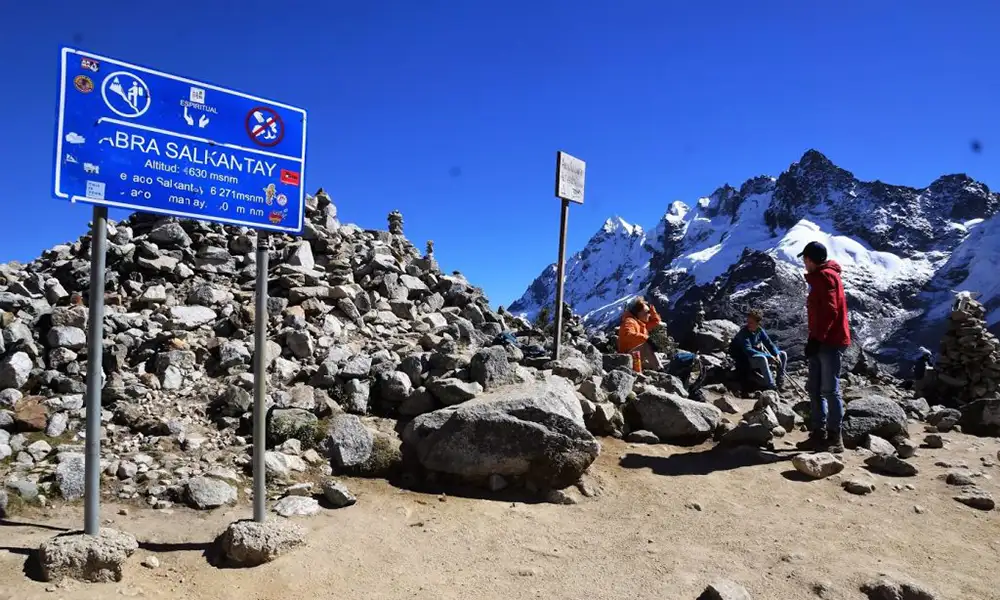
V. THE SALKANTAY PASS — The Sacred Encounter (4,630 m)
Suddenly, you no longer climb.
- The terrain flattens.
- The wind blows stronger, like a ritual welcome.
- The clouds seem to move quickly above you.
And there it is:
the Salkantay Pass.
The view is indescribable.
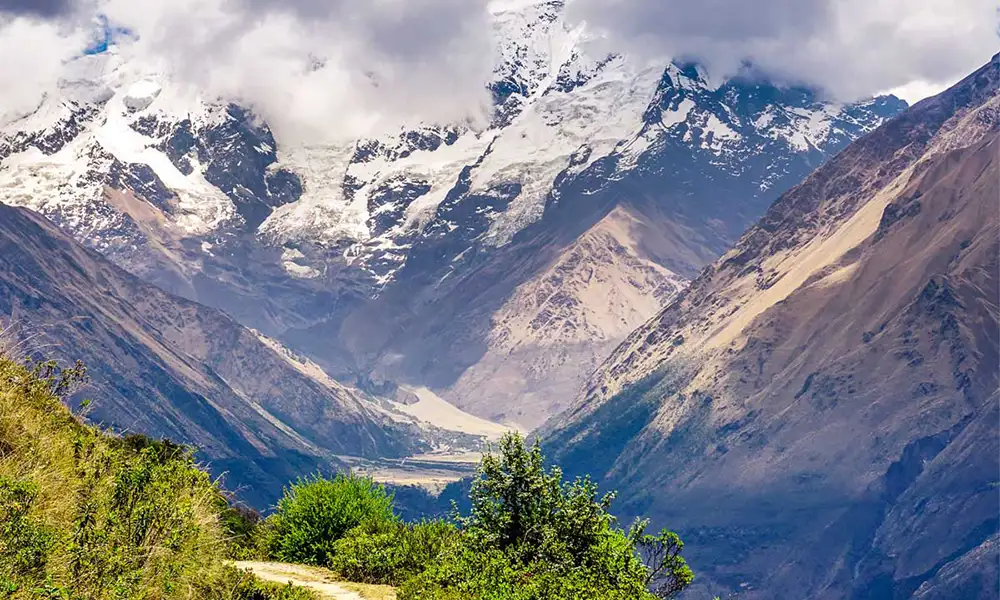
A vast valley at your feet.
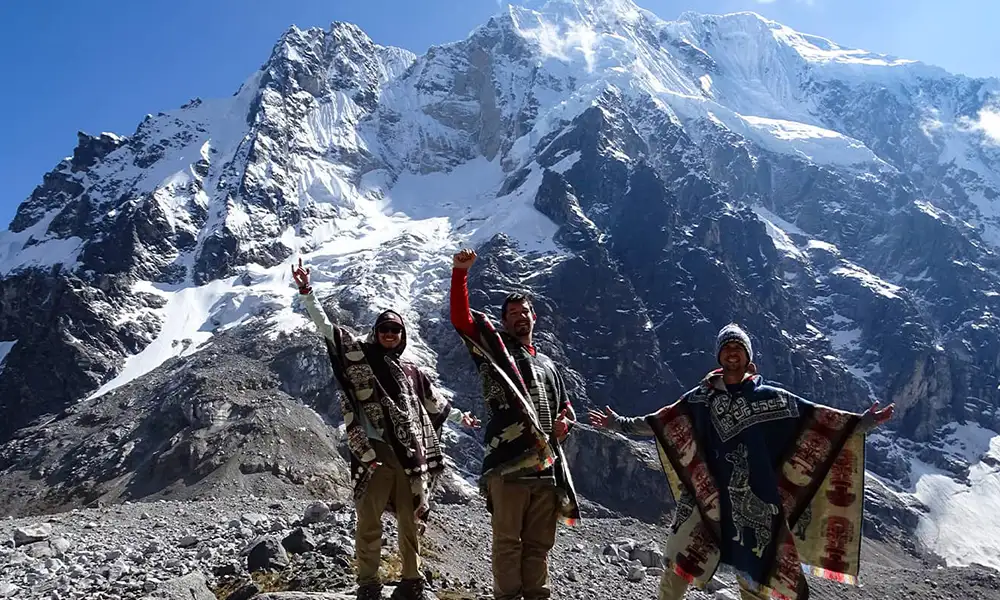
The snow-capped peak in front of you, watchful, colossal, eternal.
Emotions spill out unbidden:
- warm tears that fight the cold
- laughter that breaks the silence
- spontaneous hugs with people you met yesterday
- deep breaths that taste like victory
Many travelers leave a stone as a symbol of gratitude.
Others sit and gaze without speaking.
Others utter a word they’ve waited years to say:
“I did it.”
But most simply feel.
Because here, before the Apu, you don’t think. You feel.
- Your soul expands.
- Your fear dissolves.
- Your inner power awakens.
VI. THE DESCENT — Rebirth into Life
After the emotional intensity of the Abra, you descend.
Little by little, the gray rocks give way to shrubs.
Small streams appear.
The air grows warmer.
The sound of water replaces the wind.
Suddenly, the landscape changes completely:
you enter the cloud forest.
It is a rebirth.
It is as if the mountain has tested you, polished you, and returned you to the world anew.
The scent of damp earth envelops you.
Your tired legs now feel light.
Your lungs are grateful for the oxygen.
And you look back.
You search for Salkantay one last time.
It’s there.
Majestic.
Watching over you.
Guarding you.
You look at it and understand that something within you stayed up there.
And something new returned with you.
VII. THE TRANSFORMATION — What happens inside you
When you arrive at Machu Picchu days later, you realize that the true journey wasn’t the Inca city.
It was the path.
It was Salkantay.
Walking alongside it teaches you:
❤️ Humility
Before nature, before yourself.
⚡ Resilience
Your body can endure more than you think.
🌬️ Presence
You learn to be here, now, with every breath.
🧘♂️ Spiritual Strength
Something awakens within you.
Something you didn’t know was dormant.
🌌 Connection
With the earth.
- With your history.
- With a greater purpose.
Salkantay is not a hike.
It’s a mirror.
A teacher.
An Apu (mountain spirit) that accompanies you long after you leave the mountain behind.
EPILOGUE — When the Apu Calls You Again
They say that whoever walks alongside Salkantay never returns the same person.
The mountain leaves something within you: a vibration, a whisper, a silent fire that accompanies you in your daily life.
Many travelers say that, months later, they still dream of it.
- With its glaciers shimmering at dawn.
- With the biting wind.
- With that silence so pure it feels like a prayer.
And sometimes, for no apparent reason, the heart feels it again. As if the Apu were calling again.
Perhaps, one day, you will answer the call.
Because Salkantay isn’t visited just once.
Salkantay stays with you.
And you stay with it.
Forever.