

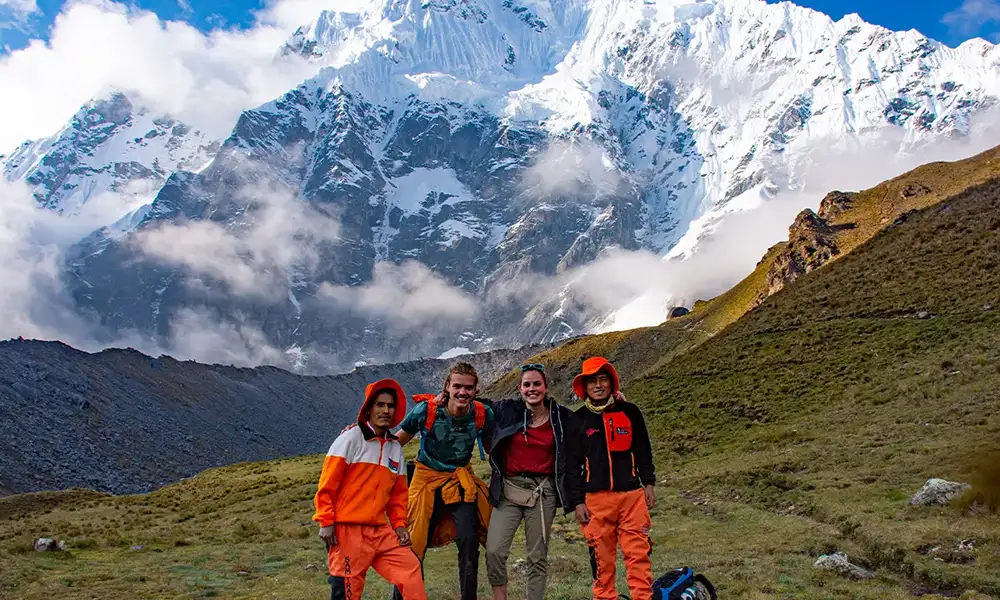
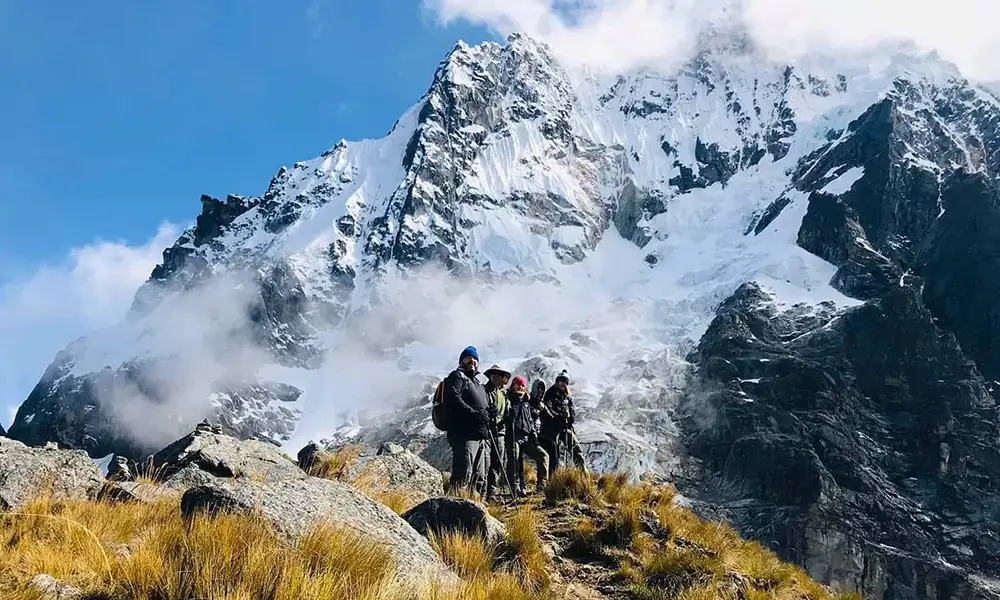
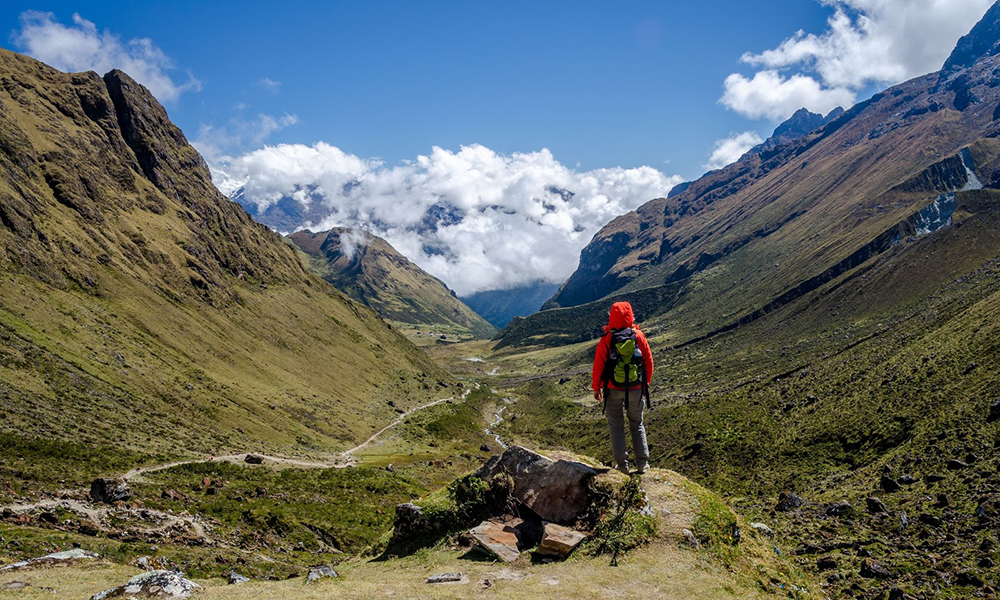
There are trips you take with friends.
Others you take as a couple.
And then there are the trips you take when you need to return to yourself.
Among the mountains of Cusco, among the green temples of the jungle and the glaciers that shimmer like broken mirrors in the sky, there is a path that doesn’t just lead you to Machu Picchu:
it leads you inward, to the quietest and most honest part of your being.
That path is the Salkantay Trek, and for thousands of travelers who hike it alone each year, it becomes a rite of passage, an embrace of the mountain, a test, a liberation.
But the big question arises:
Is it a good idea to do it alone? Is it safe for women? How difficult is it to hike without company?
This blog is the most complete, human, and honest answer you’ll find.
🌬️ 1. Traveling alone to Salkantay: a decision that changes something inside you
Traveling alone doesn’t mean being alone.
It means walking without depending on anyone,
trusting your steps,
listening to your body,
and feeling the mountain without intermediaries.
On Salkantay, walking alone offers you:
- your own pace,
- silence to think,
- time to heal,
- freedom to stop wherever you want,
- a deep connection with Pachamama (Mother Earth).
But it also demands:
- responsibility,
- preparation,
- respect for the altitude,
- emotional maturity,
- and the ability to make difficult decisions.
It’s not a path to fear,
but neither is it one to underestimate.
🏔️ 2. Can I do Salkantay without an agency?
Yes, you can.
Legally, you don’t need permits or mandatory guides.
You can hike it completely on your own.
But here’s the truth that few mention:
✔ The route is long
5 days of hiking, 70–75 km.
✔ The altitude is real
The Salkantay Pass reaches 4,630 meters above sea level.
✔ The weather changes rapidly
You can go from sunshine to freezing wind in minutes.
✔ Cell phone signal disappears
At least on two key days.
✔ There aren’t always shops
You must bring your own food if you’re not traveling with a tour agency.
✔ There are no emergency shelters
If you feel unwell, you’re on your own.
❗ If you have little experience, it’s not recommended to go alone.
But if you have experience trekking, camping, navigation skills, and can read the weather, then it is possible.
🧡 3. Traveling alone as a woman: the beautiful and essential things you should know
✔ Yes: it’s safe. Much safer than you think.
The communities of Salkantay are respectful, the muleteers protect the traveler, and thousands of women do so every year.
Respect for the hiker in the Andes is profound.
For them, you are a guest of the mountain.
But women’s safety on this trek depends not on the human environment, but on mountaineering, the altitude, and the weather.
Here’s a very realistic guide:
🌺 Essential tips for women traveling alone
1. Don’t hike completely isolated from other groups.
Keep other travelers in sight.
2. Choose campsites with families or agencies.
The best for female travelers:
- Soraypampa (official domes or tents)
- Chaullay (family campsite)
- Lucmabamba (homestays)
3. Avoid hiking after 4 pm.
The fog rolls in quickly in the mountains.
4. Stay hydrated and eat well
Many female travelers feel less hungry at high altitudes.
5. Wear simple, comfortable clothing
The Andes value humility.
6. Bring your own toiletries
There are no shops at higher elevations.
7. If someone asks if you’re traveling alone…
You can reply:
“I’m joining a group ahead of us.”
8. If you’re afraid, speak up
To other travelers, a guide, or a muleteer. People look out for each other in the mountains.
🔍 4. Real Safety on Salkantay for Solo Travelers
The biggest risk is NOT other people.
It’s:
- altitude sickness,
- the cold,
- dehydration,
- extreme fatigue,
- unpredictable weather,
- and being alone in critical moments.
✔ Symptoms to watch out for:
- Severe headache
- Dizziness
- Nausea
- Rapid heartbeat
- Shortness of breath
- Vertigo
- Tingling in extremities
If any of these occur, REST. The Salkantay does not forgive arrogance.
🧳 5. Advantages and Disadvantages of Traveling Alone to Salkantay
✔ Advantages
- Absolute freedom
- Natural rhythm
- Emotional transformation
- Unhurried photography
- Spiritual connection with the mountain
- Meeting new people
- Meditation in motion
❗ Disadvantages
- No support in case of emergency
- More logistical responsibility
- Carrying extra weight
- Less real-time information
- Risk in case of extreme weather
🌿 6. What it Really Feels Like to Hike Alone on Salkantay
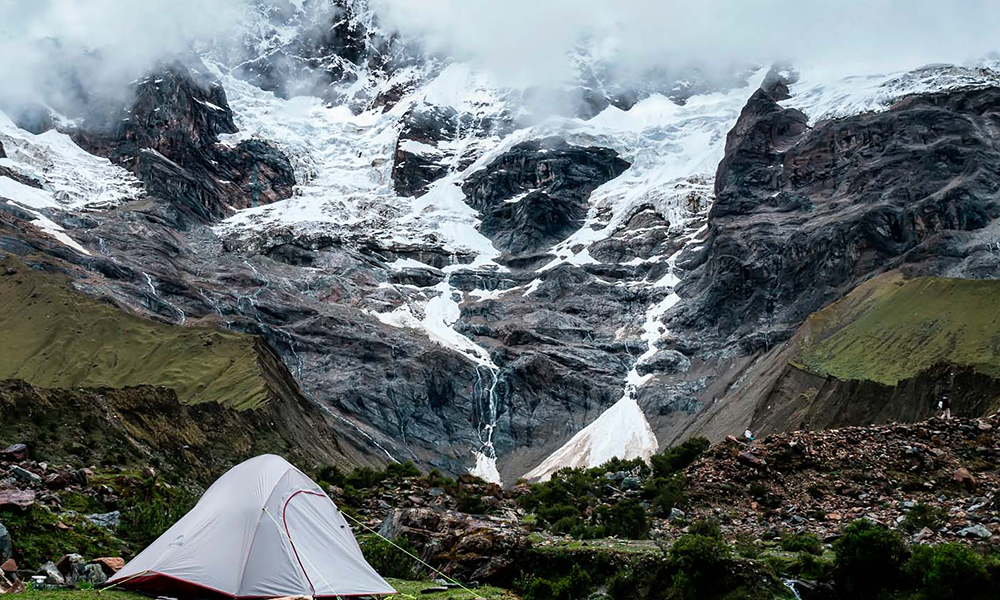
Hiking alone here is waking up to the cold scratching at your tent, feeling the wind buffet you as if it wants to speak to you, hearing the footsteps of llamas at dawn, and seeing the sun touch the snow of Apu Salkantay as if awakening a sleeping giant.
It’s looking back and seeing no one.
And yet feeling accompanied.
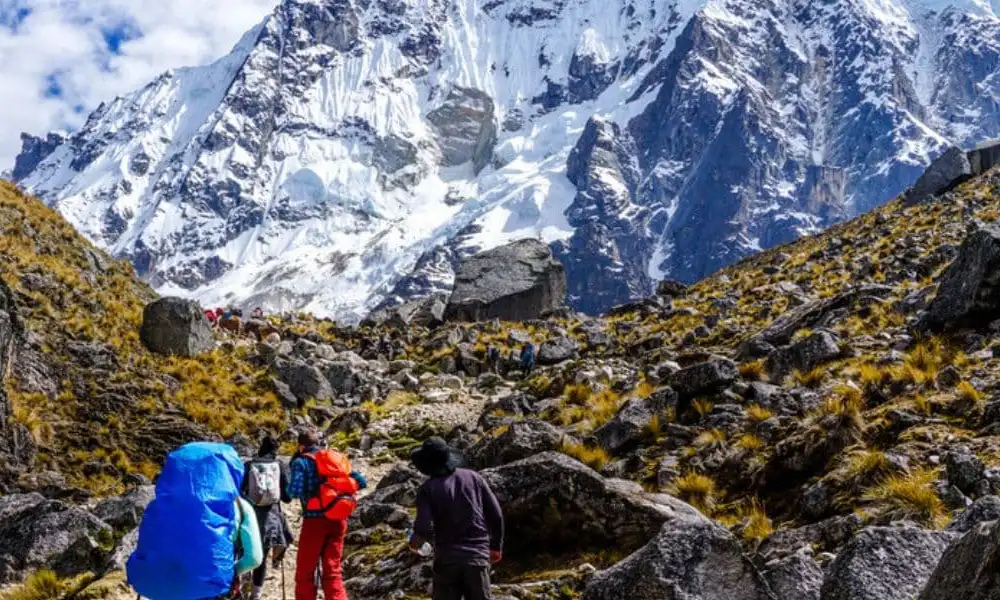
It’s advancing towards the pass,
where every stone reminds you that the mountain is not conquered,
it is respected.
It’s being you, your breath,
and the echo of your thoughts bouncing off glaciers.
And it’s also pure emotion:
that rare mix of mild fear,
adrenaline, and profound gratitude.
The Salkantay has a very subtle way of showing you
who you are when no one is watching.
🧠 7. Requirements if you want to do it alone and without an agency
Previous experience in 2–3 day treks
Ability to use offline maps
Good physical condition
Good acclimatization
Complete equipment:
- tent
- sleeping jacket rated to -10°C
- trekking poles
- 55–65 L backpack
- food for 2–3 days
- technical clothing
- personal first-aid kit
- water filter
Basic knowledge of first aid
Ability to read mountain weather
Without these items, going alone is NOT recommended.
🏞️ 8. Is it better to go alone with an agency?
You can travel alone…
but with an organized group.
You don’t give up your independence,
but you eliminate the most serious risks.
An agency provides you with:
- Safety
- Guide
- Food
- Emergency horses
- Safe campsites
- Help if you’re affected by altitude sickness
- Clear route
- Real-time weather information
- Logistics taken care of
It’s the most balanced option for solo travelers.
🧭 9. Final tips for those embarking on a solo adventure
1. Acclimatize for 2–3 days in Cusco
2. Carry 2.5 liters of water per day
3. Don’t push yourself too hard
4. Always use trekking poles
5. Eat even if you’re not hungry
6. Keep the weather in mind
7. Rest before the Salkantay Pass
8. Always start hiking early
9. Talk to other travelers
In the mountains, a conversation can save you.
10. Remember:
The mountains are not meant to be rushed.
🌟 Traveling alone to Salkantay is an act of courage, freedom, and respect.
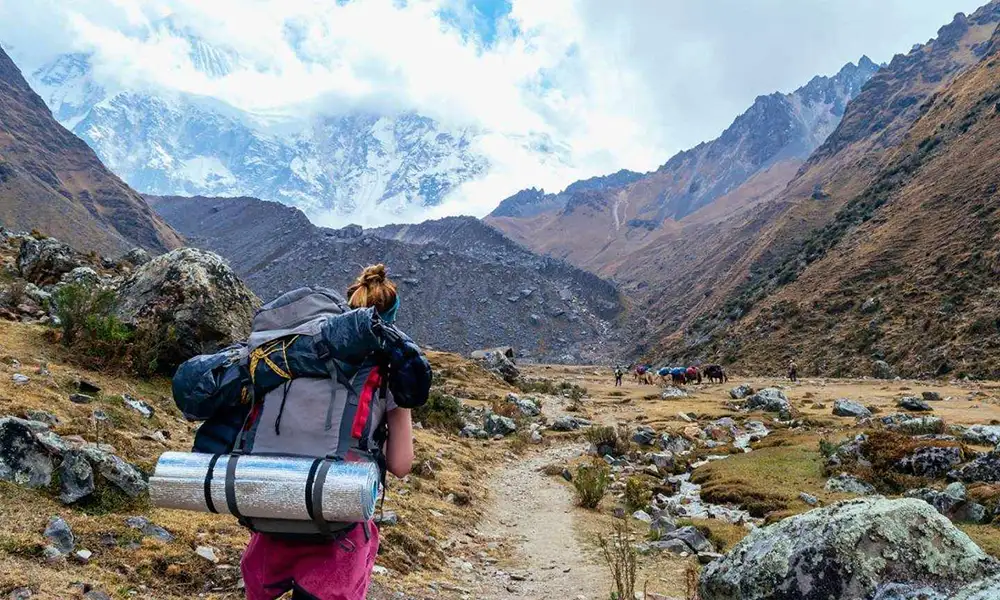
It’s walking carrying only what’s necessary,
leaving behind what weighs you down,
listening to the wind,
gazing at the glacier as one gazes upon an ancestor.
For women and solo travelers,
Salkantay is a safe and profoundly revealing path,
provided it’s undertaken with respect and preparation.
Walking alone here is a reminder
that we are not so alone
when we learn to listen to ourselves.
Apu Salkantay—with its snow, its legend, its shadow, and its grandeur—
is always with you.
And when you arrive at Machu Picchu,
after days of silence, strength, and clarity,
you will realize something beautiful:
you didn’t make the journey alone…
you made it with yourself.