

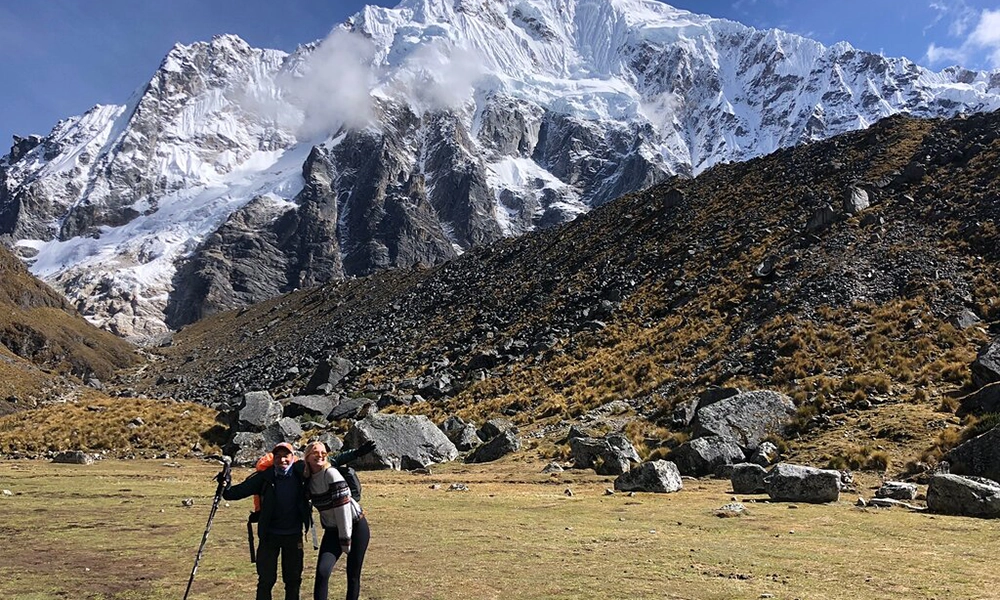
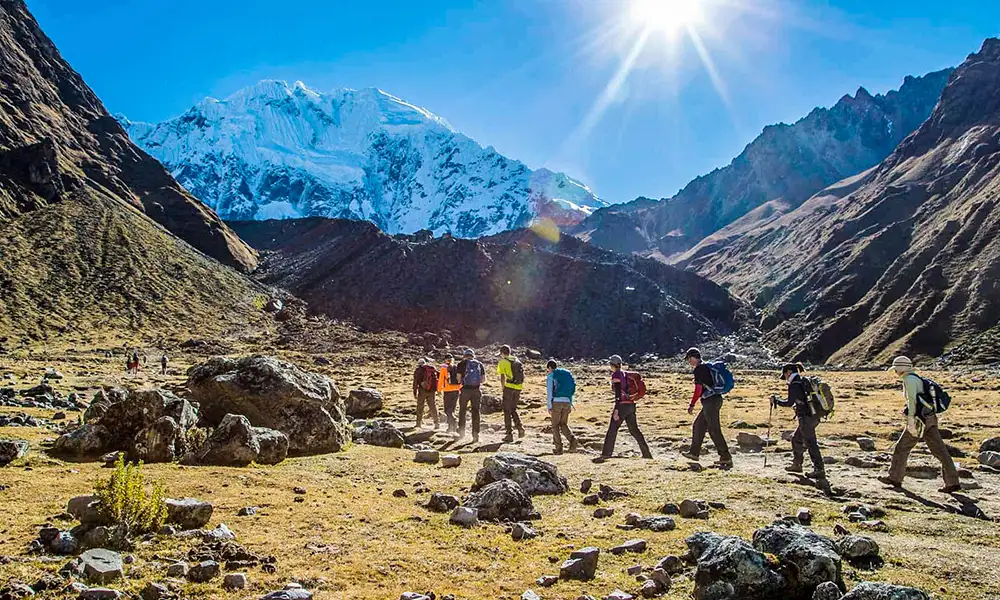
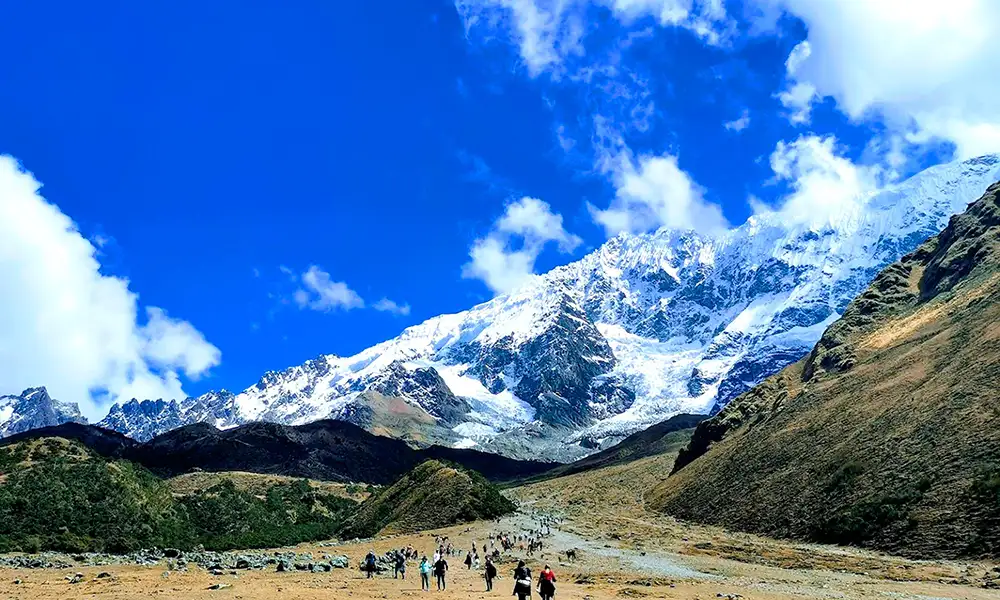
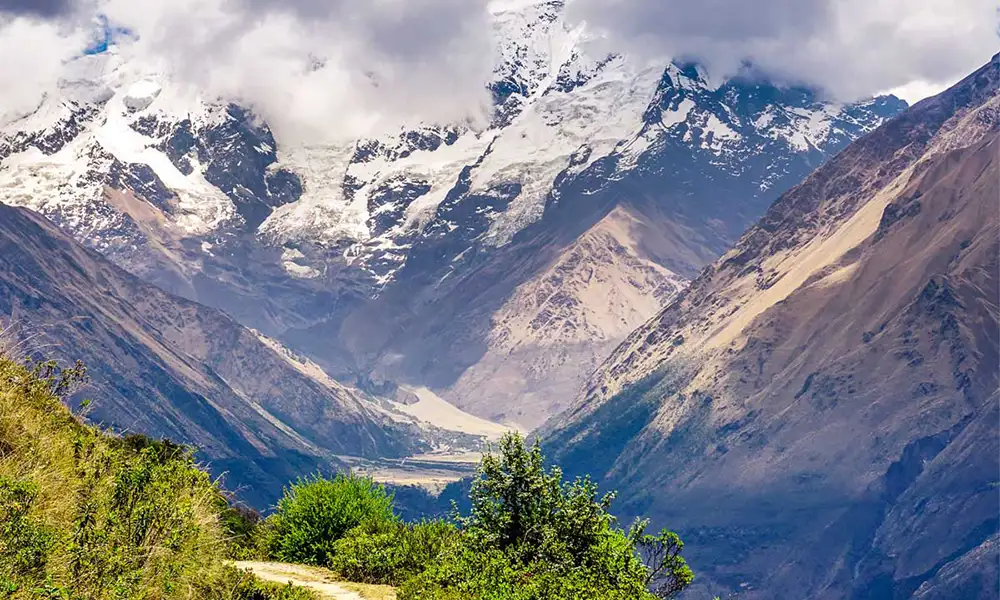
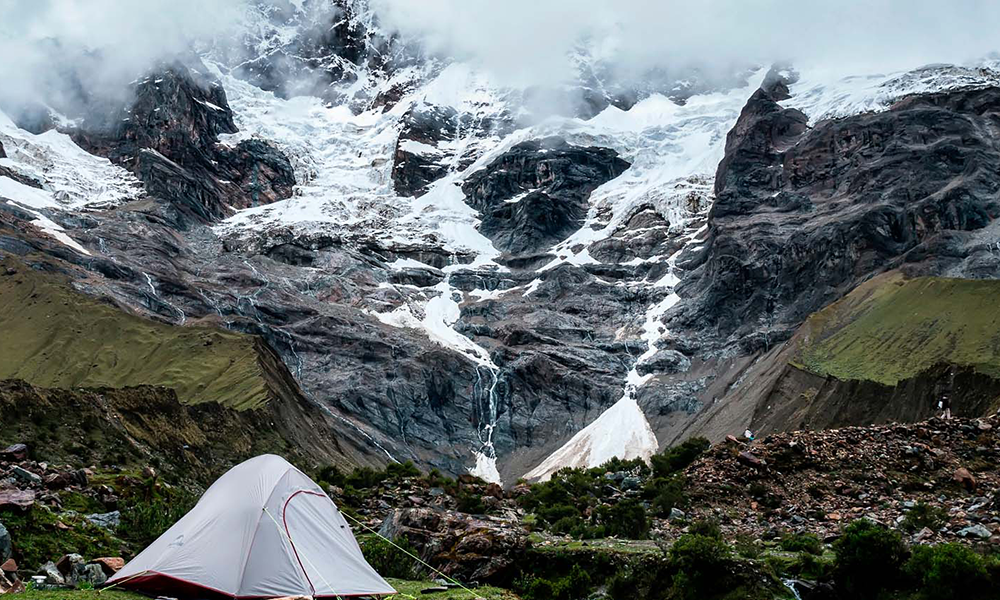
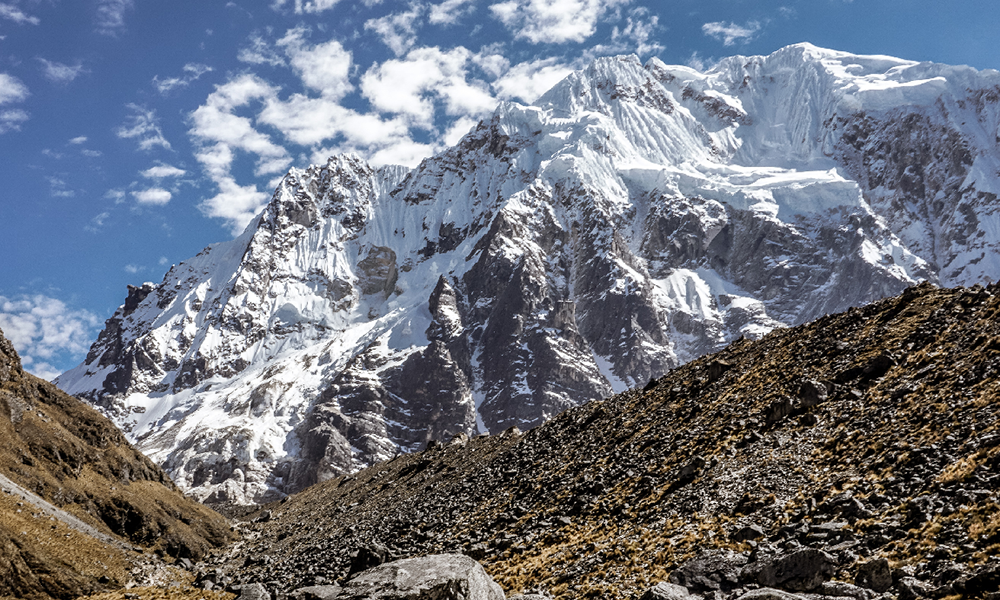
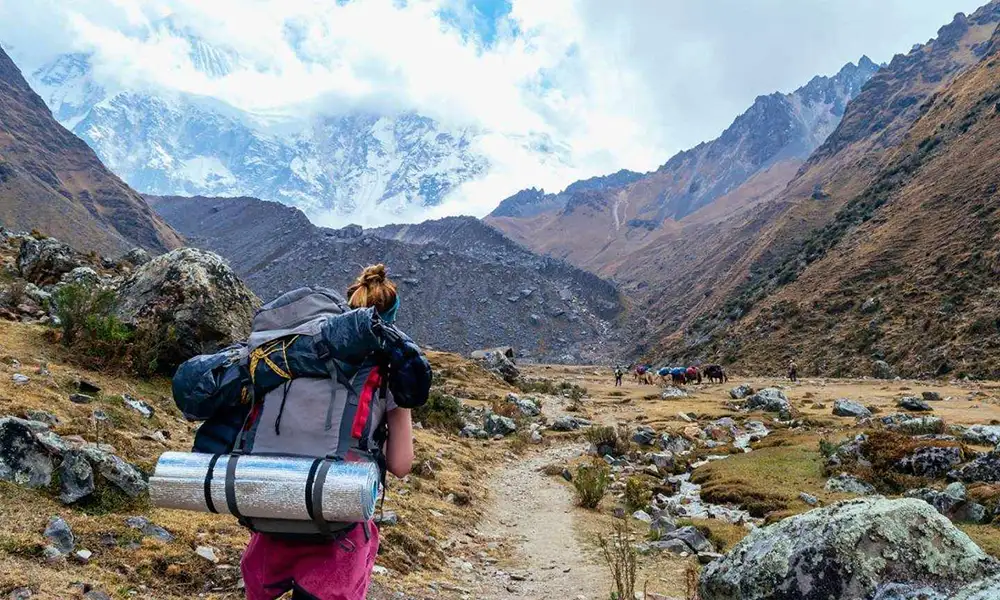
The Salkantay Trek is not just a simple walk in the mountains.
It’s a 70–75 km trek, with altitudes reaching nearly 4,630 meters above sea level, extreme weather changes, and terrain ranging from glaciers to high jungle.
You don’t need to be a professional athlete,
but you do need to respect the route and prepare your body well in advance.
This guide is designed so that anyone in normal health, with 8–10 weeks of preparation, can reach the Salkantay Pass and Machu Picchu strong, confident, and enjoying the journey.
1. What are the physical demands of the Salkantay Trek?
Before discussing specific exercises, it’s important to understand what the mountain will require of you:
🔹 Main demands
- Aerobic endurance:
Walking between 6 and 10 hours a day, for several consecutive days. - Leg strength:
Long ascents, prolonged descents, carrying a 6–10 kg backpack. - Downhill endurance:
Days 2 and 3 involve long descents, which are very taxing on your quadriceps and knees. - Altitude:
Sleeping and hiking mostly above 2,800 meters above sea level, with one key day above 4,600 meters above sea level. - Climate:
Intense cold, wind, rain, strong sun, and humidity in the jungle. - Mental load:
Accumulated fatigue, sleeping in tents or simple lodges, and waking up very early.
The better you train, the less all of this will affect you, and the more you’ll be able to enjoy the scenery, photos, and moments.
2. Evaluate your starting point (mini home test)
Before starting, do this quick self-assessment:
- Can you walk 10 km on flat terrain without being completely exhausted?
- Can you climb 4–5 flights of stairs without getting winded?
- Do you do any physical activity at least twice a week?
- Do you have significant excess weight, injuries, or chronic illnesses?
If you answer:
- Yes to almost everything → You’re at an intermediate level.
- No to almost everything → You need a more progressive (beginner) plan and perhaps 10–12 weeks.
3. Basic Training Principles for Salkantay
Before getting into routines, keep these principles in mind:
⚙️ Progression
You don’t go straight from the couch to a 20 km hike with a backpack.
The load should increase gradually: more time, more elevation gain, more weight.
🎯 Specificity
You have to train for what you’ll be doing on the trek:
- Walking uphill and downhill
- Walking with a backpack
- On uneven terrain
🧩 Balance
You must combine:
- Endurance (cardio)
- Strength (legs and core)
- Mobility and stretching
- Real rest
😴 Recovery
Without rest, you don’t improve.
Sleep and rest are also part of the plan.
4. Recommended General Plan (8–10 weeks)
I propose a 3-phase plan, adaptable to your level:
🎯Phase 1 (Weeks 1–3): Aerobic base + muscle activation
🧷Phase 2 (Weeks 4–7): Specific strength + long-distance endurance
🦵Phase 3 (Weeks 8–10): Realistic trekking simulation + fine-tuning
If you have less time, you can condense the plan, but ideally, for someone who is not an expert, it should take about 8 weeks.
5. Phase 1 (Weeks 1–3): Building a base
🎯 Goal: for your body to get used to moving more, for longer, without getting exhausted.
🗓️ Sample week
Monday – Brisk walk 45–60 min
On the street, treadmill, or in a park. A pace at which you can talk, but not sing.
Tuesday – Light Strength (30–40 min)
- Bodyweight squats: 3 x 12
- Forward lunges: 3 x 10 per leg
- Glute bridges: 3 x 12
- Planks (front): 3 x 30 sec
Wednesday – Active Rest
Gentle stretching, 30 min brisk walk.
Thursday – Stairs or Hill Climb (20–30 min)
Go up and down stairs or a hill.
Friday – Strength + Core (30–40 min)
- Step-ups (step onto a bench): 3 x 10 per leg
- Romanian deadlifts with no or light weight: 3 x 12
- Side planks: 3 x 20–30 sec per side
- Bird-dog: 3 x 10 per side
Saturday – Long walk 1.5–2 hours
On terrain with slight inclines.
Sunday – Complete rest
6. Phase 2 (Weeks 4–7): Real strength + endurance
🎯 Goal: for your legs and heart to learn to work like they did on the Salkantay Trek.
Here’s what we include:
- Weighted backpack
- Long hikes
- More elevation gain
🗓️ Typical Week (Intermediate Level)
Monday – Leg Strength (45 min)
- Squats with backpack (5–8 kg): 4 x 10
- Walking Lunges: 3 x 12 per leg
- High Step-ups: 3 x 12 per leg
- Standing Calf Raises (heel raises): 3 x 20
Tuesday – Cardio + Core
- 40–50 min brisk walk or bike
- Planks: 3 x 45 sec
- Russian Twists (gentle): 3 x 16
Wednesday – Hike with backpack (2–3 hours)
- Backpack weight: 5–7 kg
- If possible, choose trails with hills and descents.
Thursday – Active Rest
- Stretching
- Gentle Yoga or Mobility
Friday – Stairs + Strength Training
- 15–20 min stair climbing with a light backpack
- Isometric wall squat: 3 x 30–45 sec
- Hip abductions with a resistance band: 3 x 15 sec
Saturday – Long-Distance Hike (3–4 hours)
Easy pace, but without stopping too much.
Sunday – Rest
7. Phase 3 (Weeks 8–10): Salkantay Simulation
🎯 Goal: To simulate trekking days so your body is ready for the pass.
Key points of this phase:
- Backpack with almost your actual weight (7–10 kg)
- 4–6 hour hikes with ascents and descents
- Practice two consecutive days of hiking
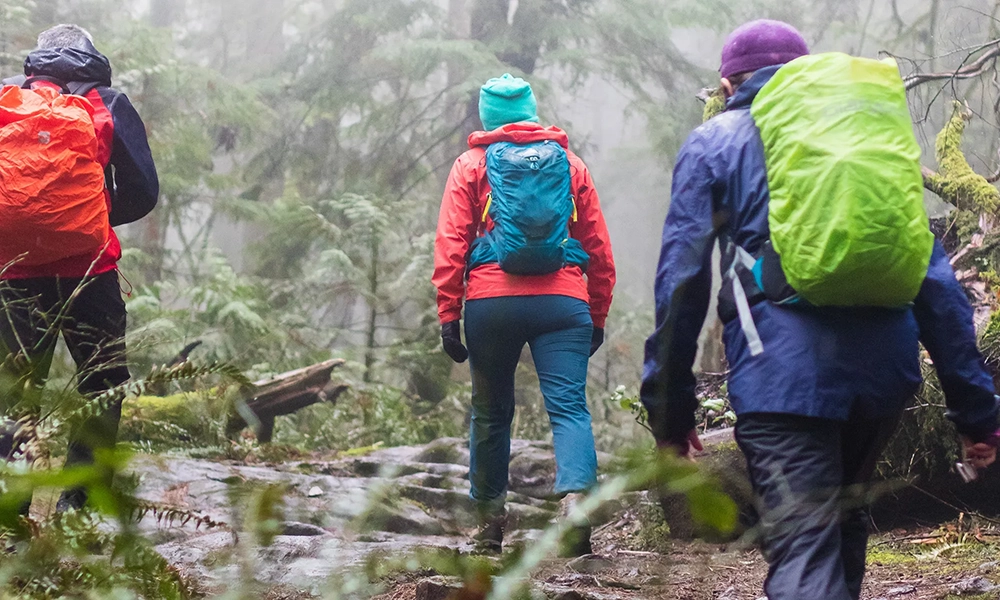
- Train a little in the cold Rain or shine, if you can
🗓️ Sample Week of Simulation
Monday – Active rest
Stretching and some mobility exercises.
Tuesday – Moderate strength training (maintenance)
Don’t overdo it, just maintain:
- Squats: 3 x 10
- Lunges: 3 x 8 per leg
- Planks: 3 x 40 sec
Wednesday – 3-hour hike with a backpack (7–9 kg)
Including uphill and downhill sections.
Thursday – Rest
Friday – 1.5–2-hour easy hike
Just to maintain the habit of walking.
Saturday – “Salkantay Day”: 4–6 hours with a backpack
Ideally, on a hill or similar mountain terrain, with 500–800 m of elevation gain.
Sunday – Complete rest
The week before the trek, reduce the intensity:
lighter weight, fewer hours, more rest, sleep, and good food.
8. Specific Exercise Details
🦵 Legs
Squats:
- Feet shoulder-width apart
- Straight back
- Lower yourself without letting your knees go too far forward
- Don’t bounce at the bottom
Lunges:
- Long stride
- Back knee almost touches the ground
- Upright torso
Step-ups:
- Step onto a high bench or step
- All weight on the leg you’re stepping up
- Control on the way down
🧱 Core (for balance and descents)
Planks:
- Body in a straight line
- Don’t raise or lower your hips
Side Planks:
- Support on your forearms and toes
- Keep your body aligned
Bird-dog:
From all fours, extend your right arm and left leg
Control the movement, don’t swing
9. Specific Training for Descents (very important)
Many people struggle more going downhill than uphill.
To ensure your quadriceps and knees are well supported:
- Descend stairs slowly.
- Do eccentric squats (descend slowly, ascend normally).
- Practice downhill hiking with trekking poles.
- Strengthen your thighs and glutes (they act as shock absorbers).
10. Acclimatization and Preparation in Cusco
Even with intense training, the altitude will affect you.
Recommendations:
- Arrive in Cusco 2–3 days in advance.
- Take gentle walks around the city (Plaza de Armas, San Blas, viewpoints).
- Avoid overeating and drinking alcohol.
- Stay well hydrated (water, coca tea, oral rehydration solutions).
- Sleep as much as possible.
Acclimatization is not mindless sightseeing:
it’s part of the training.
11. Nutrition and Energy for Training and the Trek
Before the Trek (During Your Training Process)
- Eat quality carbohydrates: oats, rice, whole-wheat pasta, potatoes, quinoa.
- Ensure sufficient protein: eggs, chicken, fish, legumes.
- Include healthy fats: avocado, nuts, olive oil.
During Long Training Sessions
- Carry nuts, cereal bars, and bananas.
- Drink electrolyte-enhanced water if you sweat a lot.
Days Before the Salkantay Trek
- Don’t experiment with unusual diets.
- Don’t overindulge in heavy meals at night.
- Eat simple, sufficient, and easily digestible food.
12. Hydration: Key to Performance and Altitude
- Aim for 2–3 liters of water per day during the trek.
- During training, at least 1.5–2 liters (more if it’s hot).
- Avoid excessive caffeine and alcohol close to the trek.
Dehydration worsens altitude sickness, increases fatigue, and causes headaches.
13. Sleep, Rest, and Overtraining
Signs you’re overdoing it:
- You feel more tired each day, instead of stronger.
- Muscle pain that doesn’t go away.
- Irritability, bad mood.
- Complete lack of motivation.
- Trouble sleeping.
If this happens:
- Reduce the intensity for 3–4 days.
- Get more sleep.
- Prioritize easy walks and stretching.
Remember: Don’t arrive in Cusco completely exhausted.
Arrive trained, but with energy.
14. Checklist: Am I physically ready for Salkantay?
You can feel reasonably prepared if:
- You can walk 15–18 km in a day without burning out.
- You have done at least one 4–5 hour hike with a backpack.
- You have climbed hills or stairs frequently.
- You can ascend and descend 500–800 meters of elevation gain in a single day.
- You’ve consistently worked your leg and core strength.
- You don’t get winded climbing a local hill at a leisurely pace.
If all of this sounds possible to you → Salkantay won’t be a punishment, it will be an adventure.
15. Poetic closing: you train the body, but also the soul
Training for Salkantay isn’t just about preparing your muscles.
It’s about preparing your attitude.
Every hike beforehand, every staircase climbed with a backpack,
every Sunday you swap the sofa for the mountains,
is a rehearsal for the moment you reach the Salkantay Pass
and feel the icy wind on your face.
That instant when you look back and understand:
you didn’t get here by luck,
you got here because you decided to prepare.
The mountain doesn’t demand perfection.
It demands commitment.
And your training is the promise you make to the Apu:
“I will come with respect, with humility, and with my body ready to hear what you have to say to me.”