

The Ultimate Guide to Capturing the Magic of the Salkantay Trek
The Salkantay is more than just a hike:
it’s a place to contemplate, listen to, breathe in, and photograph.
Every step of the trek is a moving postcard.
Every bend reveals a landscape that seems to be patiently waiting for someone to see it with fresh eyes and transform it into a memory.
- Some mountains reveal themselves, others remain hidden until the very last minute.
- Some lagoons are so turquoise they seem almost unreal.
- Some valleys are so vast they compel you to put down your camera and simply feel.
This is the definitive guide to capturing the best scenery, the best photos, and the most magical moments of the Salkantay Trek.
Here you’ll find not only where to take the photo, but also when, how, which lens to use, how to play with the light, and above all, how to capture it with soul.
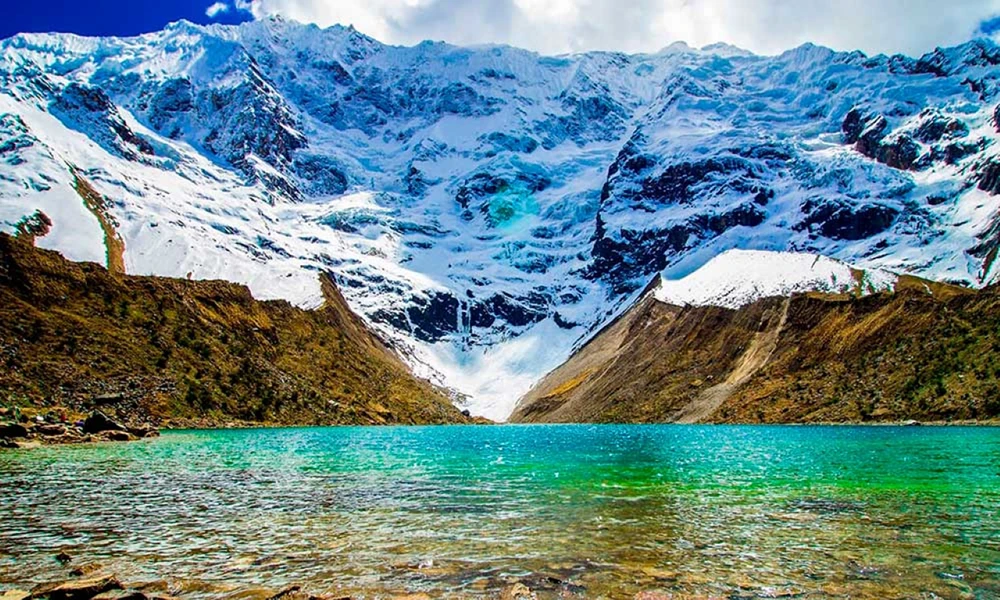
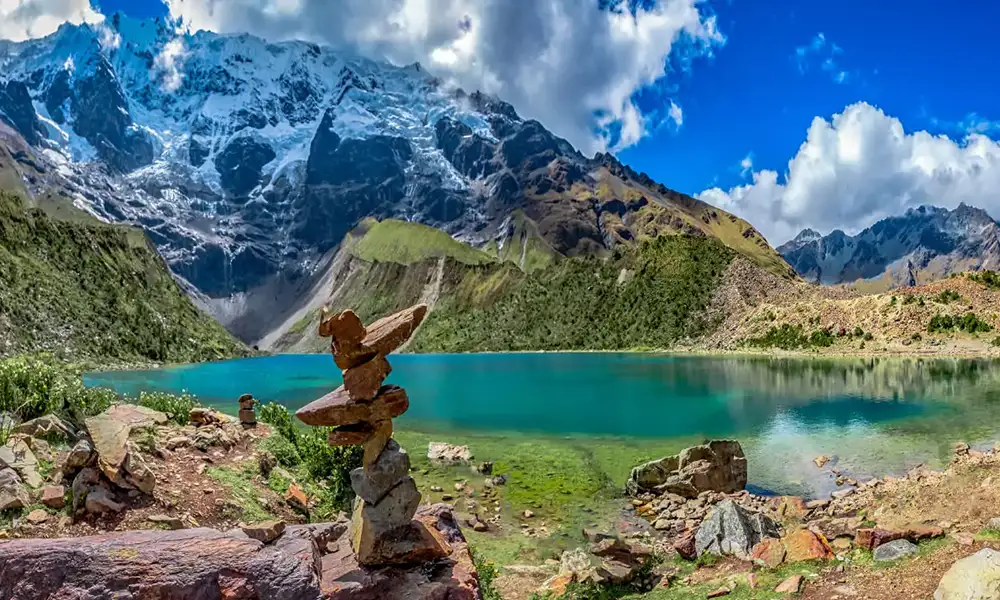
🏔️ 1. Humantay Lagoon – The turquoise crystal jewel that begins the trek
The first stunning image of the trek.
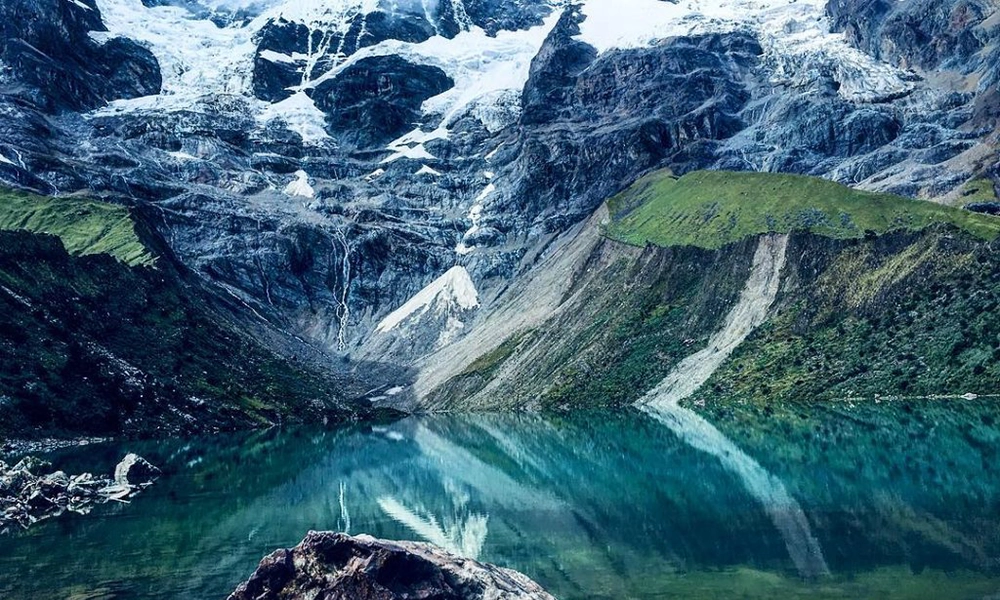
A sacred mirror where the sky spills down and the snow-capped Humantay mountain watches from its summit.
📸 Where to get the best photos:
1. Upper right viewpoint
The classic spot.
From here, the lagoon appears round and perfect, and the snow-capped mountain seems to cascade down upon it like an icy blanket.
2. Ascent path (halfway up)
The water becomes more intense, allowing you to capture the trail, the lagoon, and the snow-capped mountain—the most powerful visual trilogy.
3. At water level
Perfect for reflections, textures, and more intimate shots.
🕒 Best time:
9:30–11:30 a.m.
The soft light illuminates the turquoise without overexposing the image.
Humantay Lagoon doesn’t just reflect mountains:
it reflects silences, fears, dreams, and first victories.
There, facing the still water, one understands that this journey is already bringing about change.
🌄 2. Soraypampa – The Valley Where Dawn Breaks Differently
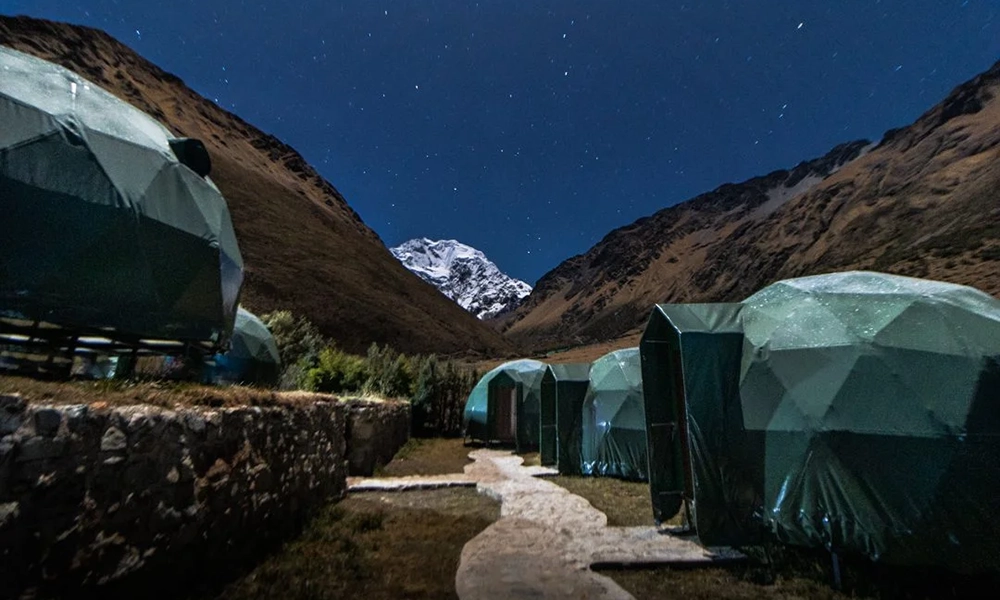
Soraypampa is a vast natural amphitheater surrounded by mountains.
Here, dawn is slow, almost ceremonial:
first a thread of light, then a flash on the ice…
until the entire valley is ablaze.
📸 Photos you should take:
- Your tent or dome illuminated by the sun
- Humantay Mountain glowing in gold
- The shadow of Salkantay advancing across the grass
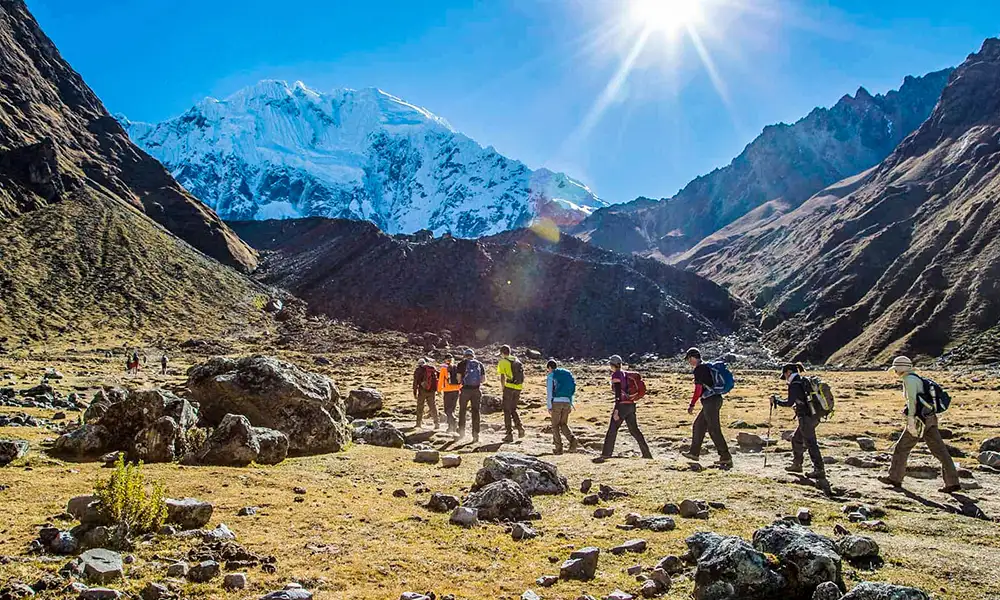
- Silhouettes of travelers preparing their backpacks
🕒 Ideal time:
6:00–7:00 a.m.
It’s the first sunrise “on the mountain.”
The light here seems cleaner, newer, more genuine.
❄️ 3. Salkantay Pass – The epic photo, the summit of the trek
The pass is a temple without walls.
A place where the wind roars, the cold cuts, and the soul trembles.
Here, you don’t just take a photo: you capture a symbol.
📸 Key photos:
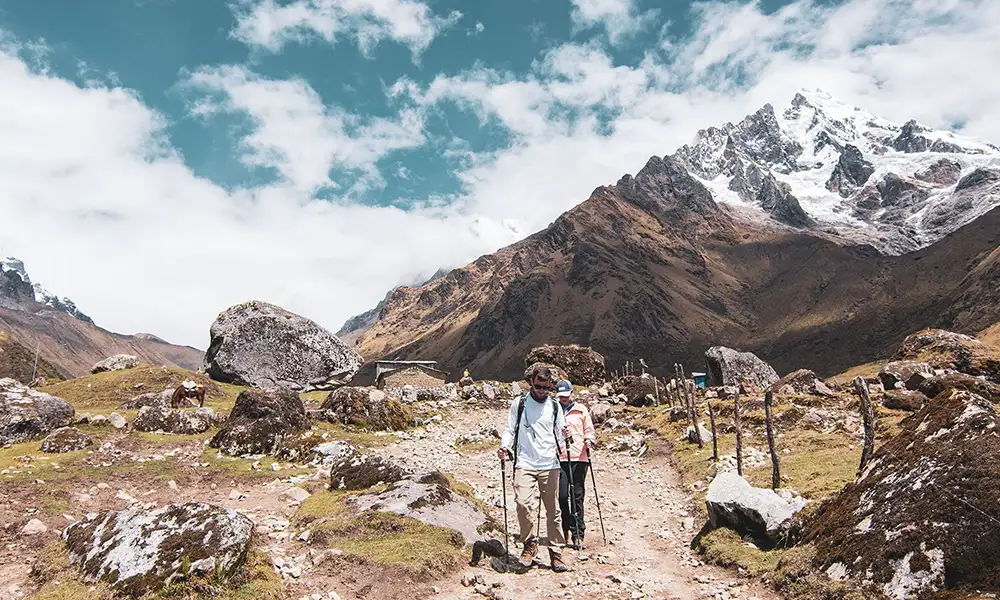
1. The sign at the pass (4,630 m)
The official photo, a mandatory ritual.
2. The entire Salkantay mountain
Use a wide-angle lens.
The mountain is so large that it seems impossible to frame it.
3. Silhouette with open arms gazing at the giant
The most powerful image of the trek.
4. The contrast of the valley descending on the other side
It shows the dramatic change in landscape.
🕒 Best time:
8:00–10:00 a.m.
The mountain is usually clear in the morning.
Here you feel the presence of the Apu.
It’s not a metaphor: it’s something physical, dense, ancient.
A mixture of respect, smallness, and triumph.
🌫️ 4. The descent to Huayracmachay – Valleys that seem to breathe
Here the light becomes cinematic.
The clouds move slowly, like white smoke among the mountains.
📸 Where to capture:
- Winding trails that descend into the valley
- Dramatic diagonal mountains
- Thin waterfalls cascading from the glaciers
- Mist partially covering the valley (magical photo)
🕒 Best time:
11:00 a.m.–1:30 p.m.
The descent is an emotional transition:
from the biting cold to the embracing valley.
🌿 5. Chaullay – The first caress of the Andean rainforest
Chaullay marks the point where the Andes begin to transform into rainforest.
Here, the green appears shy at first… and then envelops you.
📸 Recommended photos:
- Contrast between arid mountains and the emerging rainforest
- Rural houses with glistening roofs in the rain
- Wildflowers
- Photos with depth among the trees
The air changes, smelling of dampness and wood.
Life feels closer again.
🌱 6. Collpapampa Cloud Forest – The Green Tunnel of Salkantay
One of the most beautiful and least photographed areas.
A natural corridor of trees, giant leaves, and soft mist.
📸 Must-see spots:
- Wooden bridges
- Narrow paths covered in leaves
- Clouds drifting through the treetops
- Botanical details (moss, flowers, fruits)
🕒 Best time:
When there’s mist:
The mist transforms this forest into a dreamlike landscape.
It’s like walking through a verdant breath.
Every step is a whisper of vegetation.
☕ 7. Lucmabamba – Coffee plantations, local life, and gentle sunrises
Lucmabamba is a blend of culture, agriculture, and jungle landscape.
Perfect for more intimate photos.
📸 Capture:
- Coffee plantations
- Locals roasting beans
- Small waterfalls behind houses
- Paths surrounded by tropical flowers
Here, the mountain becomes home.
It no longer challenges you; it invites you.
🏞️ 8. Llactapata – The hidden viewpoint towards Machu Picchu
One of the most magical spots on the trek.
From here, you can see Machu Picchu from afar, like a dream suspended among the clouds.
📸 Must-have photos:
- Machu Picchu from a distance
- The deep forest surrounding the viewpoint
- The ancient Inca trail leading to this point
- You gazing towards the lost city
🕒 Best time:
8:00–10:30 a.m.
Highest chance of a clear view of Machu Picchu.
Llactapata is a window into the mystery.
A glimpse of the end of the journey.
🚂 9. Hydroelectric Plant – Minimalism among mountains
Here, the train tracks offer stunning photo opportunities.
📸 Shots:
- The endless line of the tracks
- Silhouettes walking against the light
- Mountains closing in on the background
- Natural tunnels of trees
It’s the final passage towards the end.
A straight path in a curved world.
🏯 10. Machu Picchu – The final postcard view
The visual reward of the trek.
📸 Essential photos:
- Classic view from the Guardhouse
- Huayna Picchu illuminated
- Llamas posing naturally
- Terraces at sunrise
After days of walking, breathing in the cold, and crossing valleys,
you arrive here and understand that the journey was never just about effort:
it was preparation for this moment.
📷 Technical Tips FOR THE ENTIRE TREK
✔ Use a wide-angle lens (16–24 mm)
For glaciers, lagoons, and valleys.
✔ Use a telephoto lens (70–200 mm)
For condors, waterfalls, and Machu Picchu from afar.
✔ Use a polarizing filter
To intensify colors and reduce glare.
✔ Extra batteries
The cold drains the battery.
✔ Photos in fog = magic
Don’t run from the fog.
Embrace its atmosphere.
✔ Photograph during breaks
The best compositions come when you stop.
✔ Look behind you
Some of the best photos of the trek are behind you.
🌟 Salkantay is a living album
- Every view of Salkantay is a poem.
- Every photo, a paragraph.
- Every step, a verse written among stones, wind, and silence.
Don’t just capture the landscape:
capture what the mountain awakens in you.
Because in the end, the photos won’t just remember what you saw,
but who you were when you saw it.