

The Route to the Base of Salkantay Explained in Detail
Some paths lead not just to a destination, but to an encounter with the mountain.
For those who dream of hiking to Apu Salkantay, the journey doesn’t begin in the snow or turquoise lagoons: it begins at two points that hold the key to the trail, Mollepata and Soraypampa.
Reaching them is almost a prelude to the journey. Leaving Cusco behind, entering the valleys, traveling along roads that skirt abysses, crossing fields gilded by the sun, seeing small farms where life unfolds at a leisurely pace.
Every bend in the road hints at what’s to come: the entrance to a higher, colder, and purer world.
Below you’ll find the most comprehensive guide for 2025 to reach these two essential points.
🌄 1. Understanding the Route: Why are Mollepata and Soraypampa so important?
Mollepata (2,803 m)
This is the gateway to Salkantay.
Vehicles from Cusco arrive here, and you can buy water, have breakfast, pay the community entrance fee (approx. 20 soles), and arrange transportation to the higher areas.
Soraypampa (3,900 m)
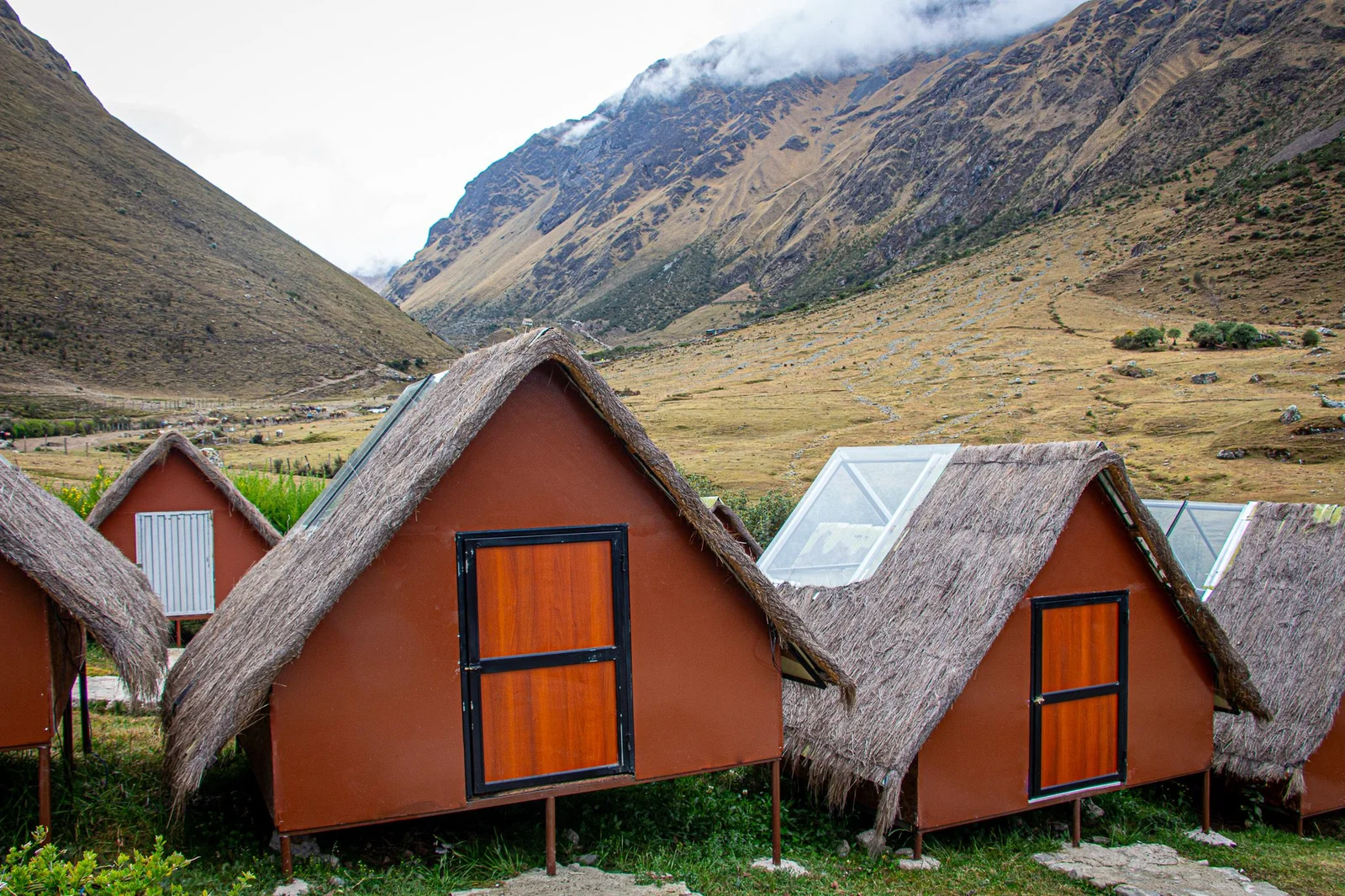
This is the main campsite at the base of Nevado Salkantay.
Many tours begin their trek here.
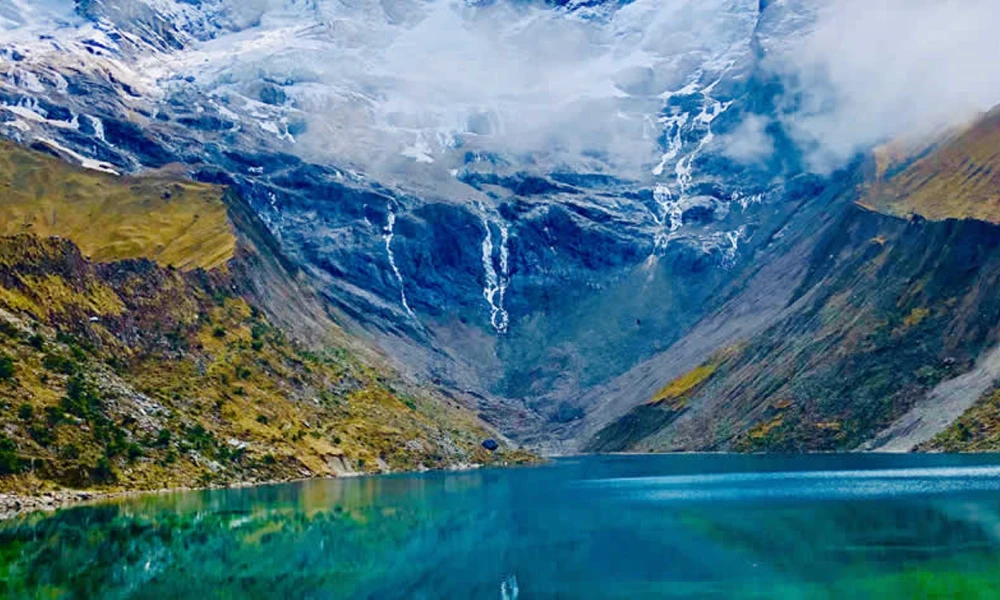
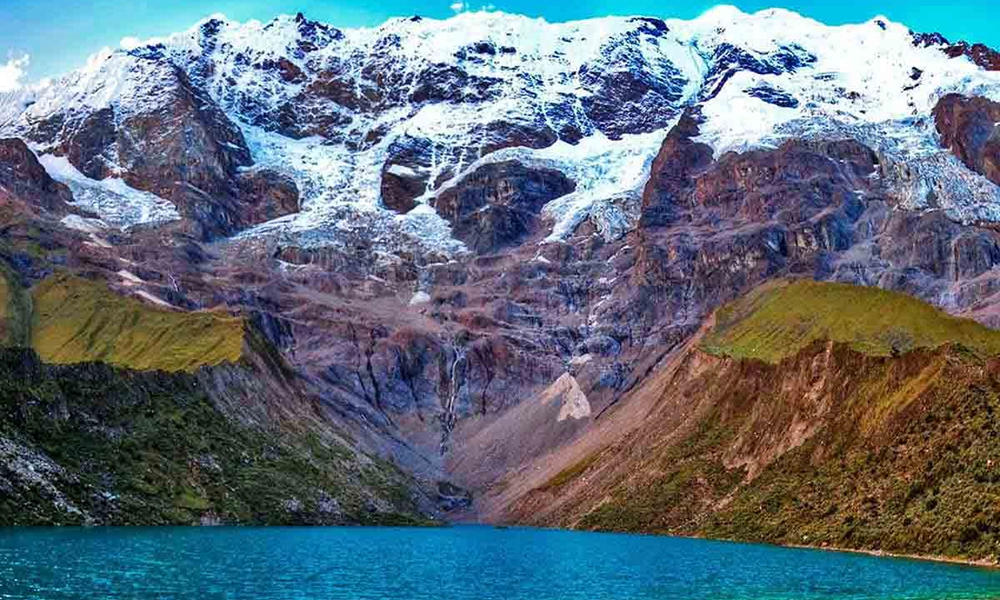
It’s also the gateway to Laguna Humantay and the first night for most trekkers.
Thinking of Mollepata and Soraypampa is to think of transition:
- from the green valley to the glacial world.
- From urban noise to sacred silence.
- From temperate air to the icy caress of the mountain.
🚐 2. How to get from Cusco to Mollepata
Estimated time: 2 h – 2 h 30 min
Distance: approx. 100 km
The road is paved for almost the entire route.
It’s safe, well-traveled, and has gentle curves. The scenery is spectacular: green mountains, agricultural terraces, and wide valleys bathed in sunlight that seems closer in the Andes.
🚐 A. Shared van or minivan from Cusco
The most economical and popular option among backpackers.
Where to catch it:
Arcopata Terminal (Cusco).
Departures from 4:30 a.m. to 5:30 a.m.
Price 2025:
25 to 35 soles per person
Advantages:
- Economical
- Frequent departures
- Good option if you’re traveling light
Disadvantages:
- They don’t leave on time
- They don’t go all the way to Soraypampa
- They can be crowded during peak season
🚕 B. Private taxi from Cusco
Ideal for travelers who want comfort, speed, or are carrying heavy equipment.
Price:
150 – 220 soles (entire car)
Time:
2 hours on average
Advantages:
- Leave whenever you want
- Comfortable pace
- Driver drops you off in downtown Mollepata
Disadvantages:
- More expensive
- Must coordinate in advance
🏞️ C. Agency Transportation
If you have a tour booked, the agency will pick you up at your hotel between 4:00 and 5:00 a.m.
Generally includes:
- Breakfast in Mollepata
- Direct transfer
- Backpack in a bus or larger van
This is the most relaxed option if you already have a trek booked.
🏔️ 3. How to get from Mollepata to Soraypampa
- Here the real climb begins.
- The road becomes narrower and winds through the mountains.
- The air gets colder.
- The landscape becomes more arid.
- The clouds seem closer.
Time: 35–50 minutes
Distance: Approx. 22 km
The route is divided into two options:
🚙 A. Taxi or 4×4 vehicle from Mollepata
Transportation to Soraypampa is neither regular nor formalized.
It is generally negotiated in the Mollepata town square or at local restaurants.
Price 2025:
80–120 soles per vehicle
(30–50 soles per person shared)
Advantages:
- Fast
- Direct
Drops you directly at the campsite
Disadvantages:
- Price varies
- Depends on driver availability
🚐 B. Van or pickup truck to Challacancha + Hike to Soraypampa
Many travelers prefer to start the hike from Challacancha, an intermediate point.
Vehicle to Challacancha:
20–30 minutes from Mollepata
Hike from Challacancha to Soraypampa:
Approximately 3 hours, easy, with open views of the valley.
Advantages:
- Pleasant hike for acclimatization
- Less demanding than the day hike to the mountain pass
- Safe and well-marked trail
Disadvantages:
- Requires good sunshine or good weather
- Can be tiring if carrying a full backpack
🥾 C. Full Hike from Mollepata
Only for travelers in good physical condition.
Time: 4–6 hours to Soraypampa
Few people do it, but it is possible.
It is a continuous, slow, and gradual ascent.
Ideal for acclimatization, but it requires energy.
🌬️ 4. The Feeling of the Trail: A Poetic Journey to the Apu (mountain spirit)
The road from Mollepata to Soraypampa is like a trance.
You see condors soaring overhead.
- You see fields that change from green to gold.
- You see families working the land as they have for centuries.
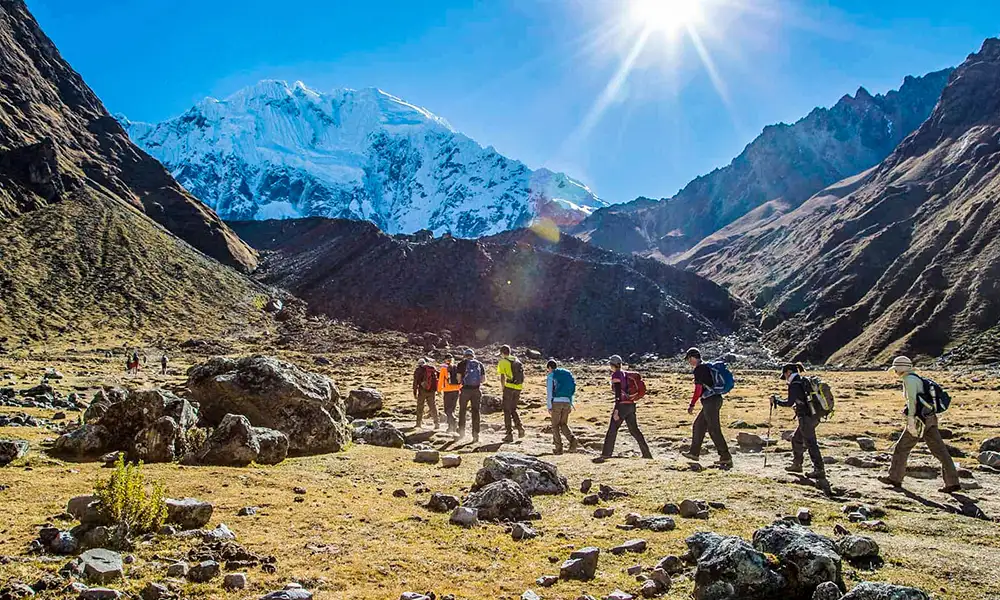
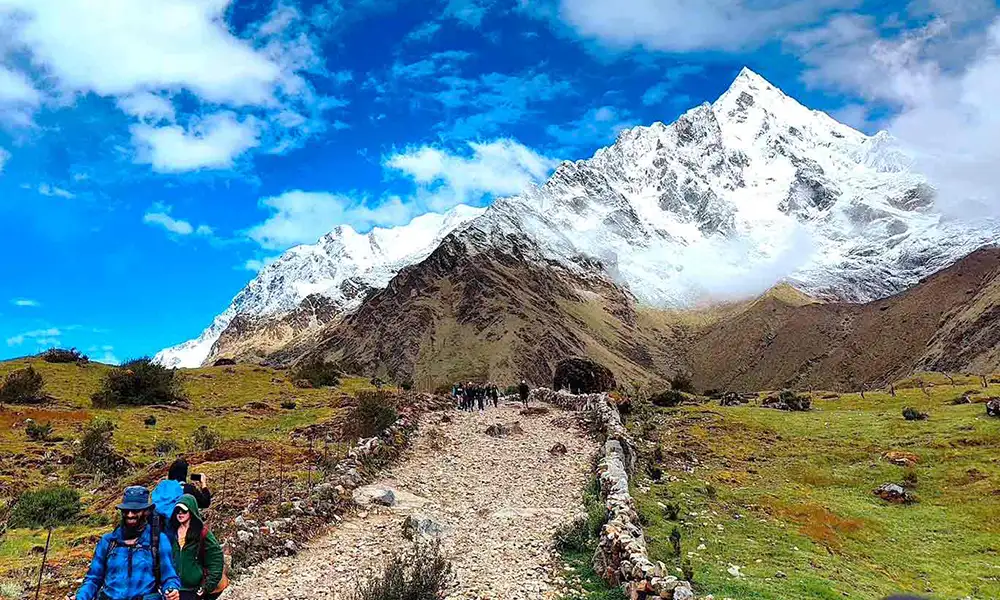
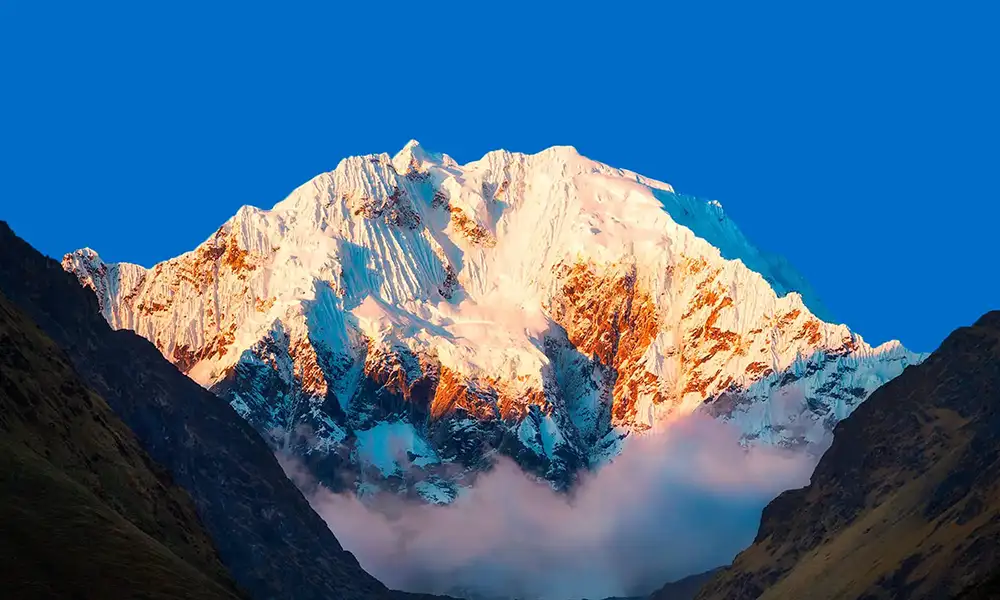
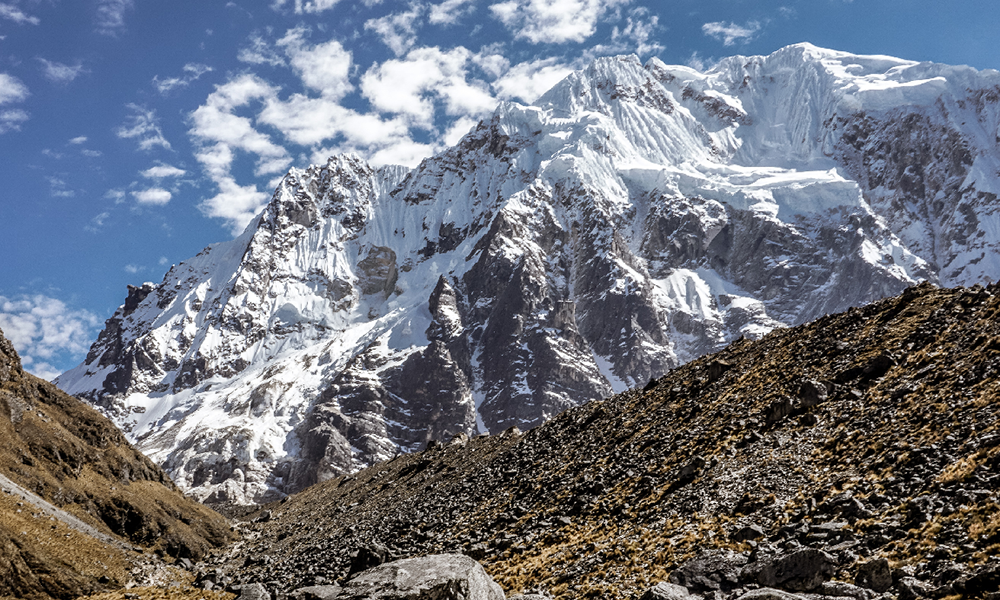
And little by little, Nevado Salkantay appears on the horizon like a white guardian,
a witness to thousands of travelers who passed through with dreams in their backpacks.
It is a journey where silence becomes part of the experience.
Where the sun beats down, but the cold wind announces what’s to come.
Where the altitude begins to take its toll: a slight fatigue, shallower breaths, slower steps.
The arrival in Sor
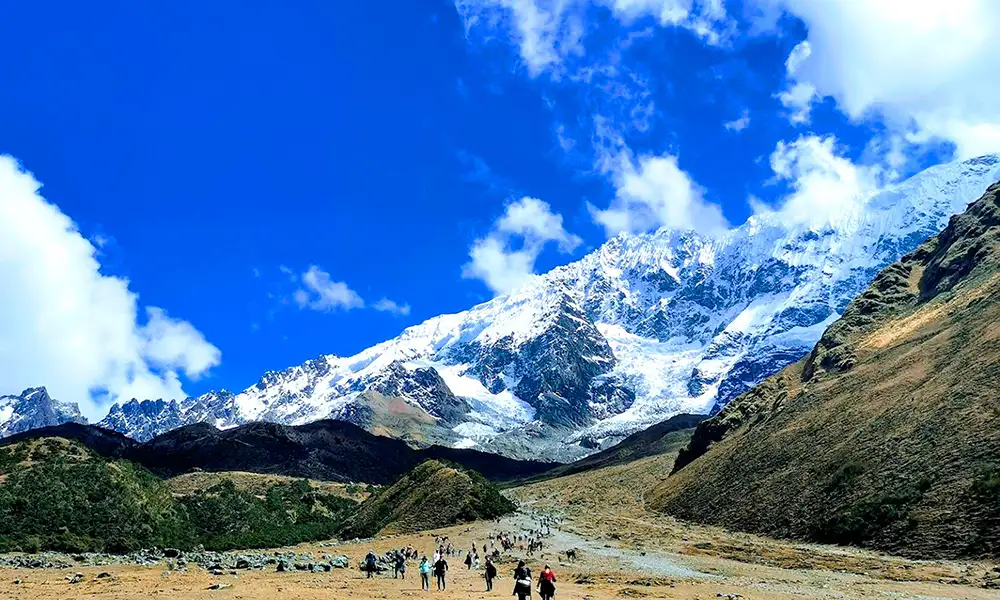
Soraypampa is a unique experience:
Suddenly you find yourself in an immense valley, surrounded by mountains that seem like giants in a circle,
as if they were evaluating you, asking:
“Are you ready to walk to the heart of the Apu?”
🧭 5. Essential Tips for Transporting Your Equipment
✔ Bring cash
There are NO ATMs in Mollepata and Soraypampa.
Even fewer in Challacancha.
✔ Have your entrance ticket ready
Salkantay Community Entrance Fee – approx. 20 soles.
✔ Stay hydrated
The altitude starts to take its toll from Mollepata.
✔ Wear layers
Temperatures drop rapidly above 3,500 meters above sea level.
✔ Book your transportation early
During peak season (June–August), everything fills up.
✔ Bring an offline map
Maps.me or AllTrails work very well.
✔ Don’t rely on the weather
Even in the dry season, the wind can be unpredictable.
🗺️ 6. Important connections if you’re coming from other places
🔹 From Cusco Airport
You can take a private taxi to Mollepata
or go to the city center and take a shared taxi (colectivo).
🔹 From Ollantaytambo / Sacred Valley
Ideally, go to Cusco first.
From there, take transportation to Mollepata.
There is no official direct route.
🔹 From Arequipa or Puno
You’ll arrive in Cusco first.
Then the route is the same.
⭐ 7. What’s the best time to start your trip?
Recommended time:
Between 3:30 a.m. and 5:00 a.m.
Why so early?
- You arrive before the strong sun.
- You have time for a leisurely breakfast.
- You can start hiking at a good time.
- You avoid the congestion of tourist vans.
- The dawn light is the most beautiful on this route.
🌟The route to Mollepata and Soraypampa is the prelude to Salkantay.
It’s not just a transfer.
It’s a small initiatory journey.
A symbolic ascent to a higher, purer, more spiritual world.
Mollepata is the valley’s last breath.
Soraypampa is the first embrace of the mountain range.
Between these two points, the traveler feels for the first time
the call of the mountain,
the presence of the Apu (mountain spirit),
the excitement of the path that is about to begin.
If you arrive well-prepared,
if you arrive early,
if you respect the weather and the altitude,
everything will flow smoothly.
After that transfer,
all that will remain is to walk,
gaze at the white giant of Salkantay
and let the journey work its magic.