

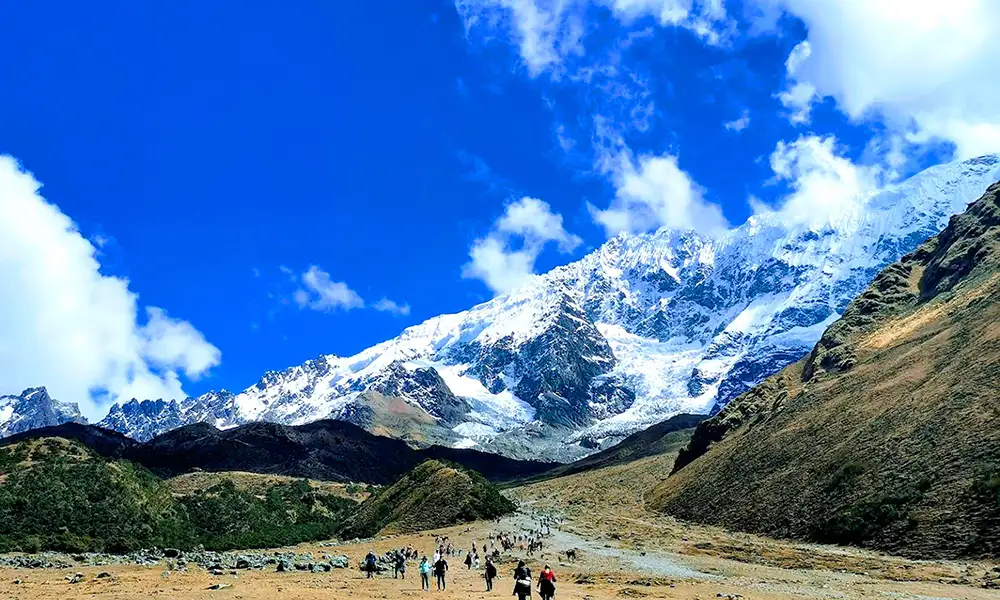
The most complete, honest, and expert guide to surviving (and loving) the most epic trek to Machu Picchu
Get ready, because this is a mega-guide designed for real travelers, not for people who think trekking is a fifteen-minute walk to the supermarket.
Here, we’ll speak unfiltered, with humor, real mountain experience, and the most useful, applicable, and detailed information possible.
If you’re planning to do the Salkantay Trek, you need to read this.
If you’ve already done it, you’ll laugh.
And if you’re still undecided… after reading this blog, you’ll be ready.
🏔️ 1. Before You Begin: The Salkantay Trek is tough, beautiful, and transformative
There are beautiful treks.
And then there’s Salkantay.
A trek that:
- makes you sweat like never before,
- forces you to control yourself,
- fills you with pride,
- breaks your legs,
- heals your mind,
- confronts you with your limits,
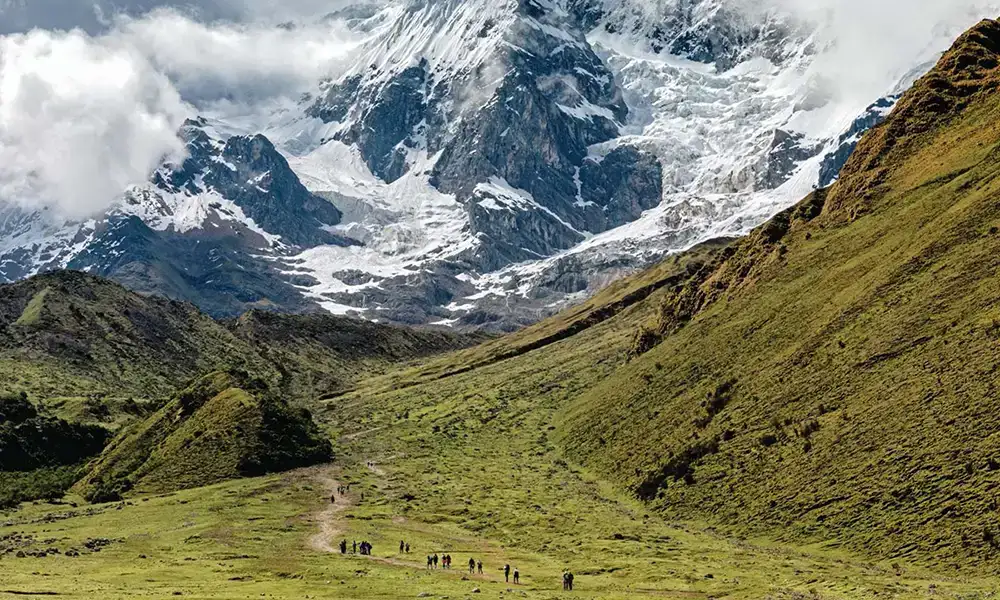
- and rewards you with one of the most diverse landscapes on the planet.
It’s not just about reaching Machu Picchu.
It’s about earning it.
But to do it without suffering more than necessary… you need preparation.
🏋️♂️ 2. Physical Preparation: The difference between enjoying it and suffering
Do you need to be an athlete?
No.
But you do need to be a functional human being with legs that can handle daily challenges of 6–10 hours of hiking.
Ideal Training (minimum 3 weeks before)
✔ Long walks (3–4 times per week)
Ideal example:
- 10 km flat
- 6 km with hills
- 1 long walk of 12–15 km on weekends
✔ Strengthen your legs
Do:
- squats
- lunges
- stair climbing
- controlled jumps
✔ Work on cardiovascular endurance
Run or jog for 20–25 minutes 3 times per week.
✔ Train in your boots
Don’t wear new boots on the trek. Do it and you’ll learn the true meaning of pain.
🫁 3. Acclimatization: The golden rule of the Salkantay Trek
Altitude is a silent enemy.
It doesn’t matter if you run marathons in your country;
If you don’t acclimatize, you’ll be defeated on Day 1.
Ideally: 2–3 days in Cusco before the trek.
During that time:
✔ Walk at a leisurely pace
✔ Drink water throughout the day
✔ Eat light meals
✔ Drink coca tea
✔ Avoid alcohol (yes, even a small beer)
Symptoms of poor acclimatization:
- Dizziness
- Headache
- Shortness of breath
- Excessive sleepiness
- Nausea
If you experience these symptoms in Soraypampa…
your Day 2 will be hell.
Acclimatize. Don’t compromise on this.
🎒 4. What to Pack: The Ultimate List (no nonsense)
The key is to bring only what you need, not your entire house.
Large backpack (carried by muleteers)
Weight allowed: 5–7 kg.
Bring:
- 1 extra pair of sneakers
- 1 pair of thermal pants
- 2 thermal layers
- 1 thick fleece
- 1 waterproof jacket
- 1 pair of waterproof pants
- Underwear
- Thick socks (3 pairs)
- Sandals for relaxing
- Small toiletry bag
Daypack (your inseparable companion)
Must bring:
- Water
- Rain poncho
- Sunscreen
- Hat and gloves
- Cookies / chocolate / nuts
- Basic first-aid kit
- Toilet paper
- Camera / GoPro
- An extra layer
Key clothing for comfort
✔ Quick-drying clothing
✔ No cotton (“cotton = dampness = cold = suffering”)
✔ Windproof hat
✔ Blister-proof socks
✔ Fleece thermal layer
✔ Real waterproof jacket (Gore-Tex or similar)
❄️ 5. Day 1 and Day 2: The cold is relentless
👁️Day 1 – Soraypampa
- Nighttime temperature: -3°C to -5°C
- Strong wind, high humidity.
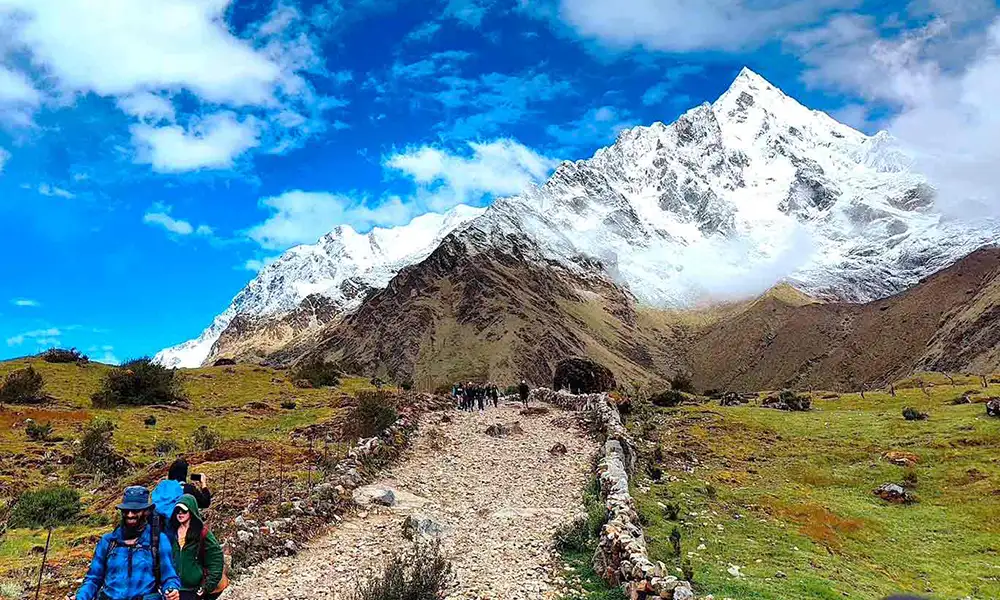
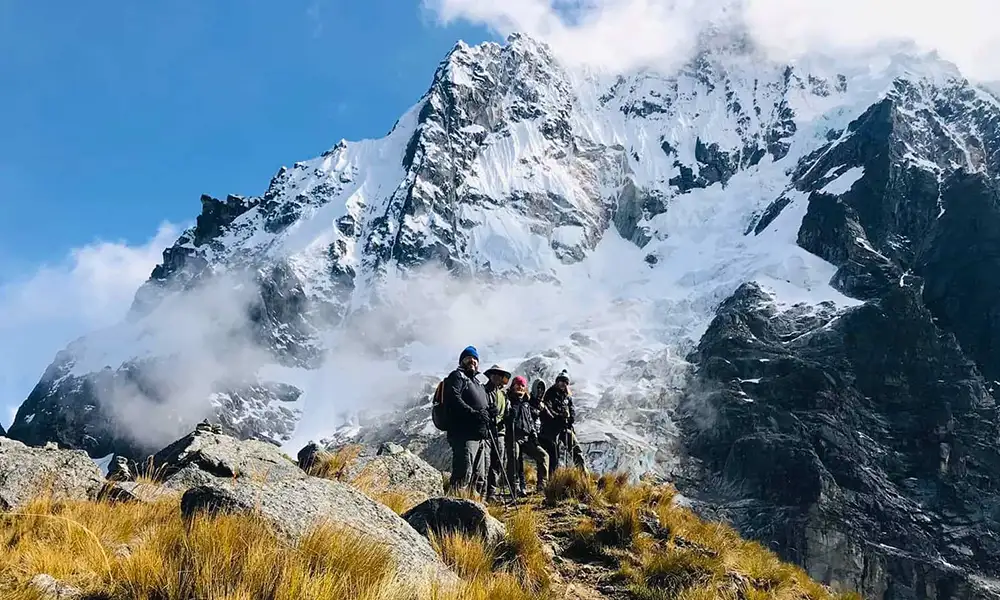
🎉Day 2 – Salkantay Pass (4,630 m)
- The toughest day.
- The most beautiful day.
- The day many think, “Why am I doing this?”
- And also the day you fall most in love with the trail.
How to survive it:
✔ Climb slowly
✔ Stay well hydrated
✔ Breathe deeply
✔ Eat snacks before you run out of energy
✔ Use trekking poles (they save your knees and your spirit)
✔ Don’t underestimate the wind
✔ Don’t stay still at the summit (you lose heat quickly)
🌧️ 6. Rain: Your unexpected companion (even in the dry season)
In Salkantay, it can rain whenever it wants.
You absolutely need:
✔ Large waterproof poncho
✔ Backpack cover
✔ Real waterproof jacket
✔ Waterproof inner bag (for the essentials)
Nothing ruins your mood more than hiking in wet clothes for hours.
🍽️ 7. Nutrition: What gives you energy (and what drains it)
The Salkantay is a high-calorie hike.
You need fuel.
What you should eat:
✔ Carbohydrates (pasta, rice, quinoa)
✔ Hot soups
✔ Fruits
✔ Nuts
✔ Dark chocolate
✔ Bread + honey
What you should NOT eat:
✘ Deep-fried foods
✘ Excess sugar
✘ Alcohol (I repeat… NO alcohol)
🧠 8. Mental Strength: The part no one trains, yet it matters most
There will be a moment when:
- you get tired,
- everything hurts,
- you want to stop,
- the trail seems endless,
- the weather doesn’t cooperate,
- the climb seems like a cruel joke.
That moment will come.
But another will come too:
- a breathtaking view,
- a comforting silence,
- a group that encourages you,
- an inner strength that appears unexpectedly.
The Salkantay Trek doesn’t just test you.
It transforms you.
🛏️ 9. Sleep Well: More Important Than You Think
A good night’s rest will determine your performance the next day.
Expert Tips:
✔ ALWAYS change into dry clothes
✔ Use a good sleeping bag
✔Sleeping in temperatures as low as -10°C
✔ Wear a separate pair of socks just for sleeping
✔ Don’t sleep in too many layers
✔ Don’t drink large amounts of water before bed (avoid using the bathroom at -3°C)
✔ Keep your boots handy (and keep them dry)
A bad night’s sleep guarantees suffering the next day.
⚠️ 10. Real Safety: Things Nobody Tells You, But You Should Know
✔ Never hike alone in foggy areas
✔ ALWAYS listen to the guide
✔ Watch your pace on descents (more trips have ended on descents than on ascents)
✔ Don’t touch animals (even if they seem cute)
✔ Avoid walking close to the edge
✔ Learn to adjust your trekking poles correctly
✔ Don’t drink unpurified water
✔ Check your gear every night
🤝 11. The Magic of the Group: Don’t Underestimate the company
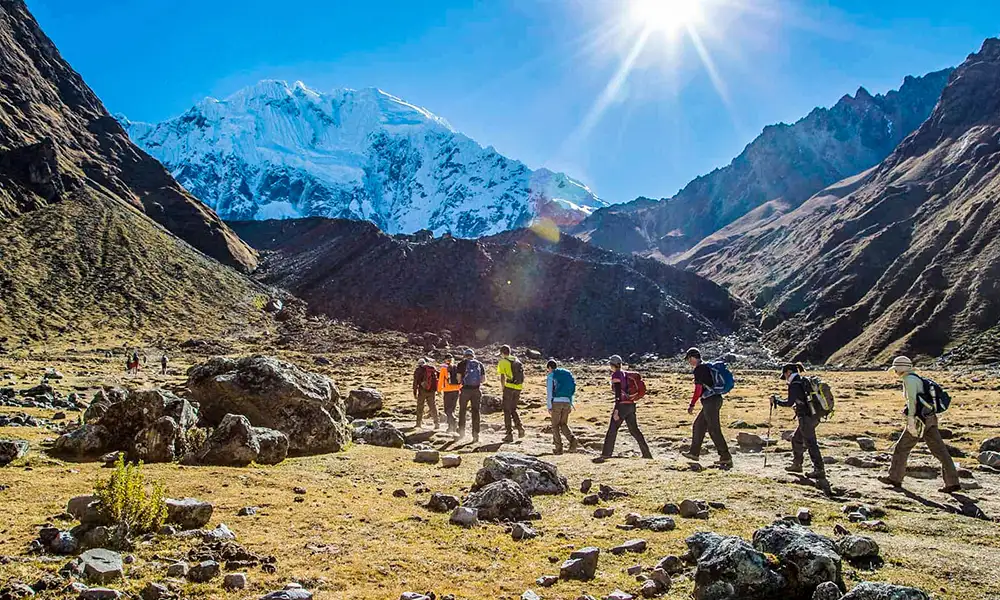
Your group will be your temporary family:
- The one who lends you chocolate
- The one who mentally pushes you
- The one who laughs with you when you can’t take it anymore
- The one who takes your pictures
- The one who listens to you
- The one who walks at your pace
The Salkantay Trek unites people.
And that’s an incredible part of the journey.
👁️ 12. Llactapata: The Hidden Reward Before Machu Picchu
One day before arriving at Machu Picchu,
one of the most magical moments of the trek unfolds:
The view of Machu Picchu from Llactapata.
From high above, among the clouds,
you’ll see the Inca city peek out shyly.
Here, everything makes sense:
- why you walked so far
- why it was worth it
- why the Incas used this path
- why Machu Picchu is so moving
It’s your first real encounter.
An intimate, spiritual, unforgettable view.
🎉 13. Arrival at Machu Picchu: The Final Triumph
When you arrive,
when you cross the gates,
when you look at the city from the terraces…
…it’s not like arriving by train.
- It’s something else.
- It’s victory,
- it’s pride,
- it’s transformation,
- it’s gratitude.
- You’ve walked for days on end.
- You’ve overcome cold, rain, altitude, and exhaustion.
- You’ve conquered Salkantay.
And Machu Picchu feels different:
like a gift.
🌟 You won’t just survive Salkantay… YOU’LL LOVE IT
The Salkantay Trek isn’t designed to destroy you,
but to rebuild you.
If you follow these tips,
you won’t just survive the attempt…
you’ll have one of the best experiences of your life.
You’ll return:
- stronger
- more aware
- more connected to yourself
- with stories to tell
- with epic photos
- with true pride
And with a phrase you’ll repeat every chance you get:
“I did the Salkantay Trek.”
And that, my fellow traveler,
is worth its weight in gold.