

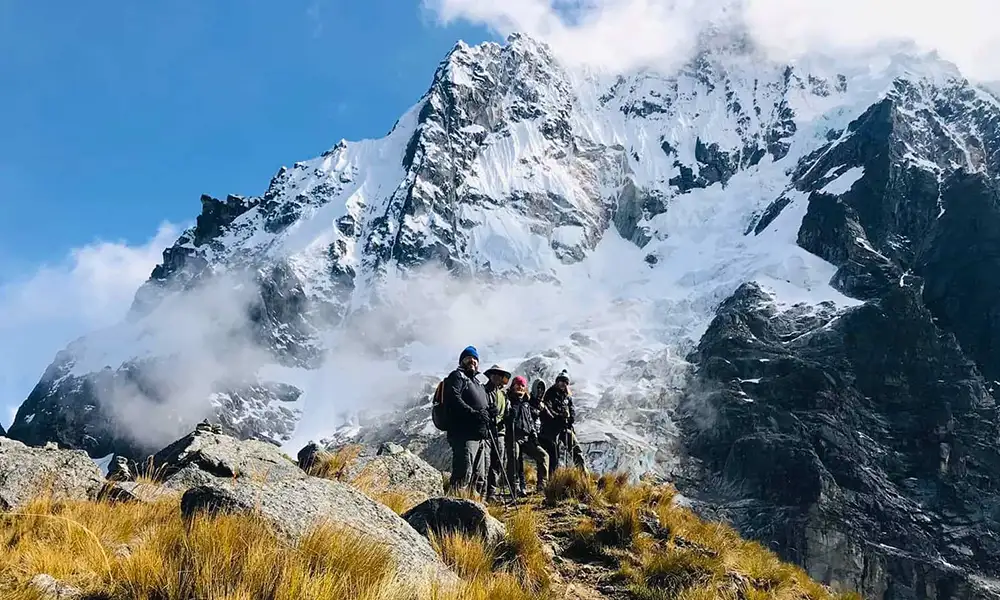
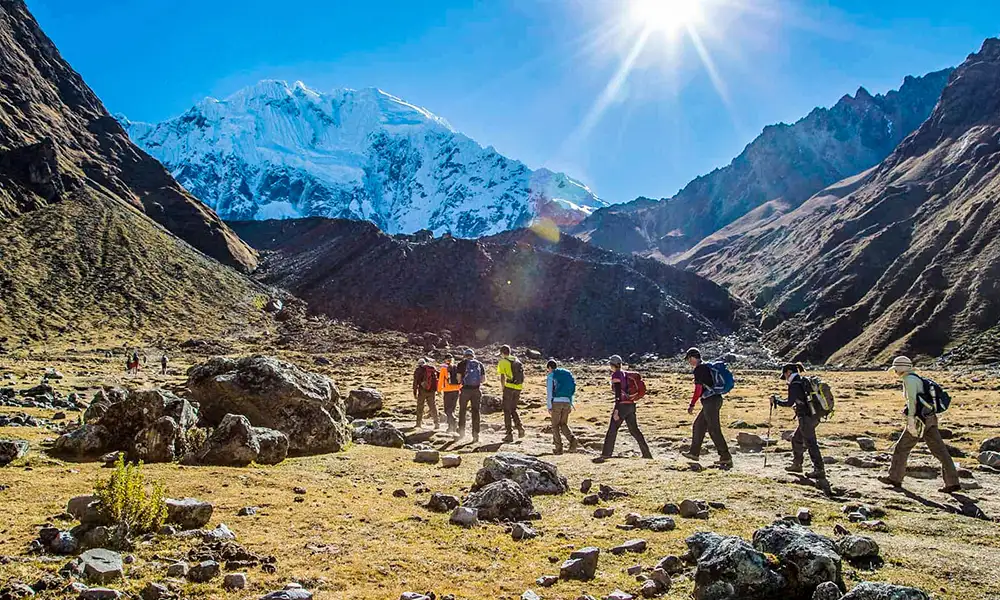
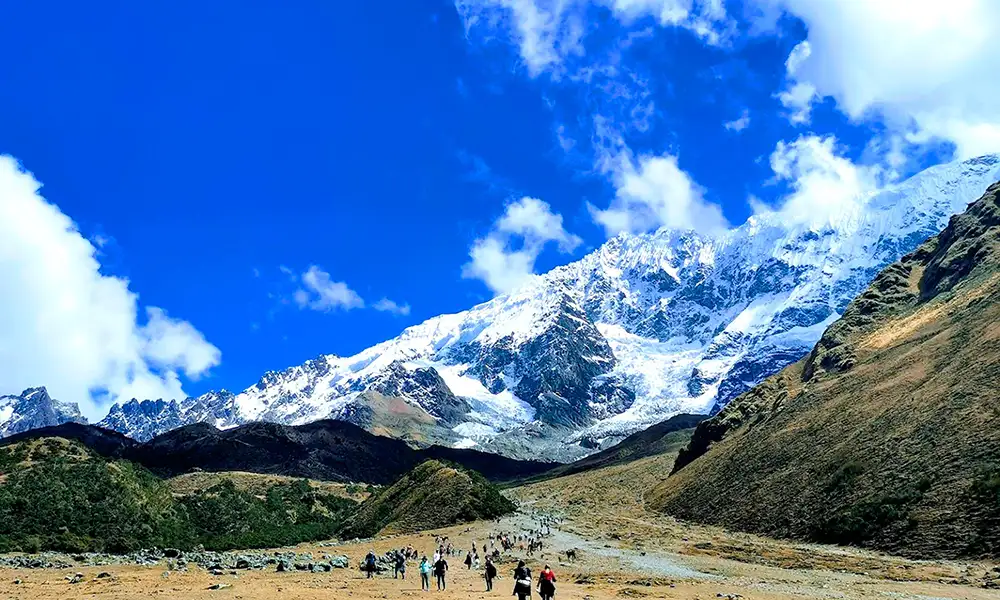
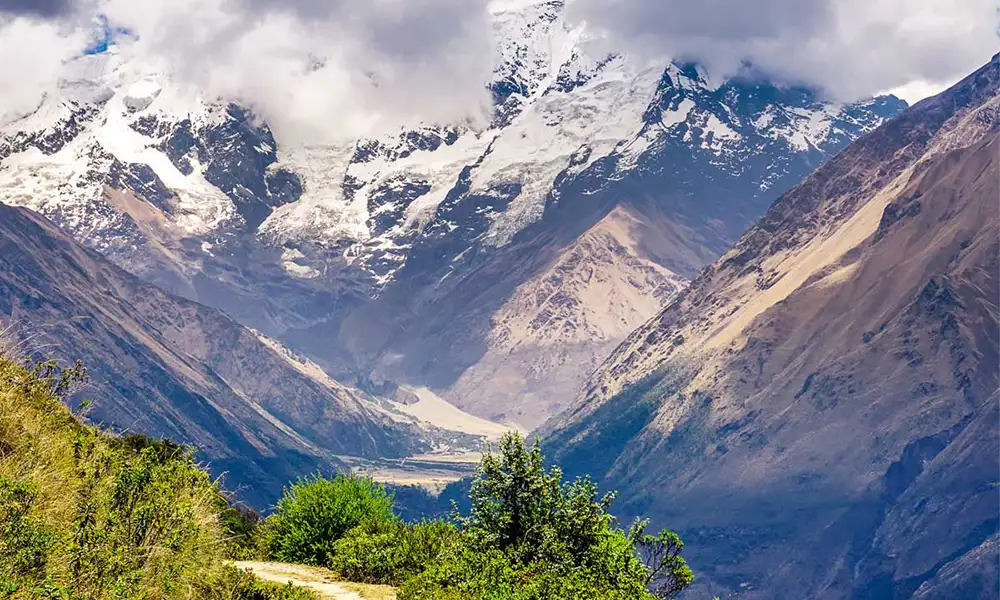
The Salkantay Trek is a journey into the heart of the Andes: 4,630-meter passes, turquoise lagoons, ancient glaciers, and high jungle that smells of damp earth and new life.
But if there’s a way to crown that effort,
a way to give it a perfect, almost ceremonial, ending,
it’s by climbing Huayna Picchu.
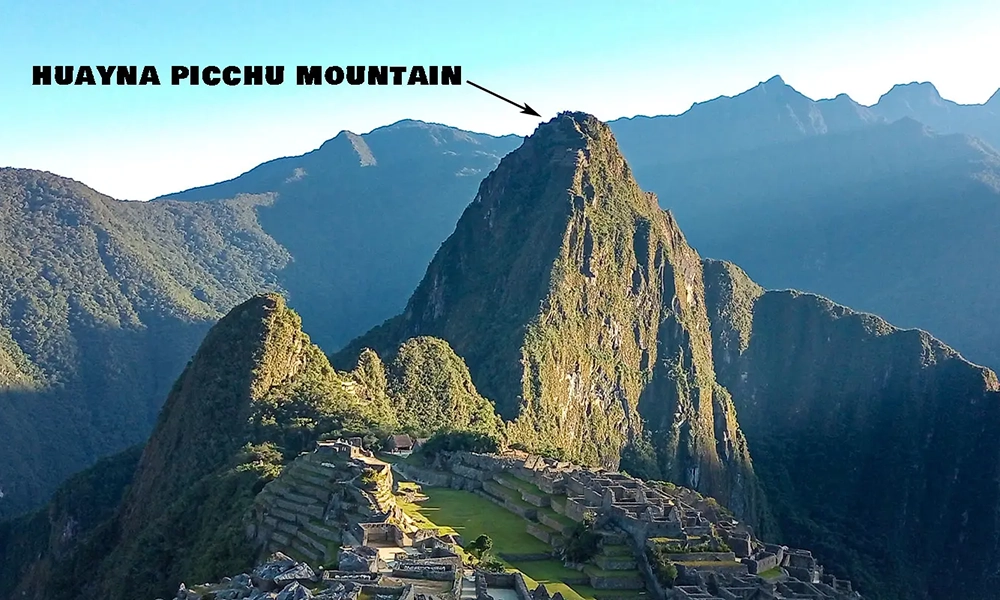
Huayna Picchu is a sharp mountain, a stone finger pointing to the sky.
It’s the natural guardian of Machu Picchu.
- The most famous viewpoint on the planet.
- The ultimate photo.
- The final reward.
Adding it to the Salkantay Trek isn’t difficult, but you need to understand how the ticket system works, schedules, routes, local logistics, and coordination with your guided tour.
Here you’ll find everything. Absolutely everything.
🌄 1. Why combine Salkantay + Huayna Picchu?
Because this combination allows you to:
✦ Transform a physical trek into a spiritual experience
Salkantay is power, rock, wind, and effort.
Huayna Picchu is perspective, silence, vertigo, and majesty.
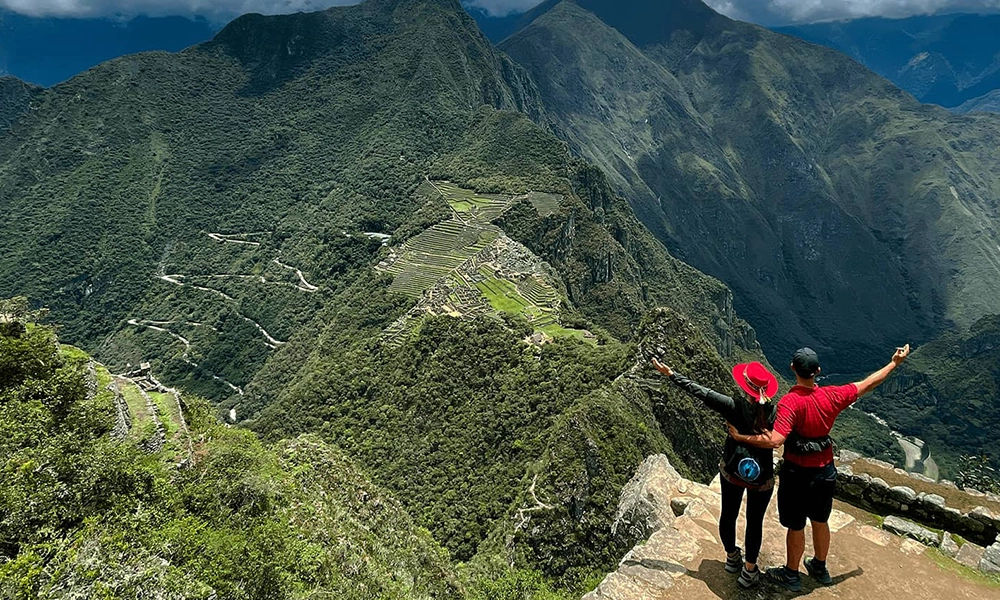
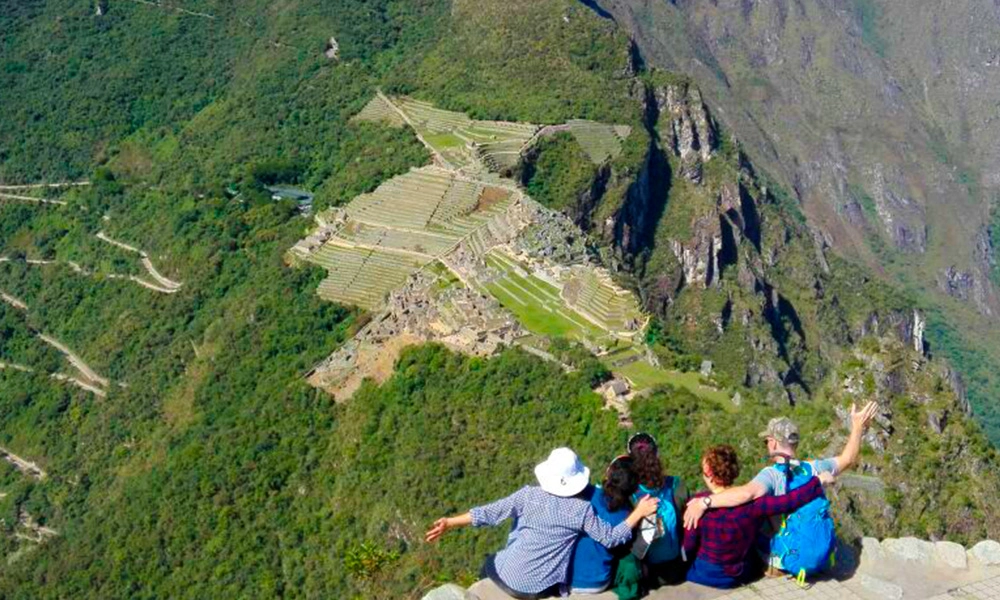
✦ Capture the world’s most iconic photograph
From above, Machu Picchu resembles an eagle spreading its wings.
✦ Explore secret temples not seen on the standard tour
Such as:
- the Temple of the Moon
- the hanging terraces
- the hidden Inca viewpoints
✦ End the trek with a final challenge
Many travelers say that Huayna Picchu is the last test before the ultimate reward.
✦ Experience something very few travelers in the world get to do
While 90% of people only visit Machu Picchu,
you can complete the perfect trilogy:
Salkantay – Machu Picchu – Huayna Picchu
🎟️ 2. The exact ticket you need (detailed explanation)
To climb Huayna Picchu, you must purchase only:
👉 “Machu Picchu + Huayna Picchu – Circuit 4” TICKET
There is no other ticket that allows you to climb it.
What does this ticket include?
- Official entrance to Machu Picchu
- Specific permit to climb Huayna Picchu
- Access to Circuit 4, the descending route within the citadel
- Limited time allowed according to official schedules
- Approximate time inside the sanctuary: 4–5 hours
❗ Why Circuit 4 and not another?
Because the Ministry of Culture reorganized Machu Picchu into circuits:
- Circuit 1: Panoramic view from the top (classic)
- Circuit 2: Complete upper and lower circuit
- Circuit 3: Short circuit
- Circuit 4: Short circuit + connection to Huayna Picchu
The Huayna Picchu ticket only allows entry to the lower circuit (4).
This means you will NOT be able to access the classic upper viewpoint with this ticket.
Solution:
If you want the classic postcard photo, you should ask your guide to:
- take you to an alternative viewpoint, or
- add an extra visit the day before, or
- buy an extra ticket (if you want complete freedom)
🕰️ 3. Official Schedules and Which One to Choose Based on Your Trek
Huayna Picchu operates with mandatory entry groups:
- Group 1: 7:00 – 8:00 am
- Group 2: 8:00 – 9:00 am
- Group 3: 9:00 – 10:00 am
- Group 4: 10:00 – 11:00 am
⭐ Best time for Salkantay trekkers: Group 2 or 3
Why?
- It allows you to do the guided tour of Machu Picchu early
- You won’t be tired or rushed
- The light is softer
- The paths are less damp
- The fog has already lifted
- You have time in case there’s a line for buses or at the entrance
❗ NOT Recommended Time
Group 1 (7:00 am)
Problems:
- You leave the hotel at 4:30 am rushing
- You might be delayed in the bus line
- The path can be wet and slippery
- Many travelers arrive late and miss their entry
🗺️ 4. How Huayna Picchu fits into your Salkantay itinerary
Here is the most accurate schedule possible, used by professional guides:
4:00 – 4:30 am
Breakfast and departure for Machu Picchu
5:30 – 6:00 am
Entrance line
6:00 – 8:00 am
Guided tour (Circuit 4)
8:30 – 10:30 am
Ascent to Huayna Picchu
- Ascent: 45–75 min
- Time at the summit: 10–25 min
- Descent: 45–60 min
11:00 am – 2:00 pm
Free time + bus descent
3:00 – 4:30 pm
Train to Ollantaytambo or Cusco
⛰️ 5. Actual Difficulty: How demanding is Huayna Picchu after Salkantay?
After days of trekking, your body feels:
- accumulated fatigue in the legs
- slight dehydration
- prolonged exposure to the elements
- travel stress
- backpacks and equipment
But if you’ve already crossed the Salkantay Pass (4,630 m),
Huayna Picchu will be a manageable challenge.
✔ Technical Difficulty
Moderate to High due to its steep stairs.
✔ Maximum Altitude
2,693 m, almost 1,000 meters lower than Salkantay.
✔ Main Risks
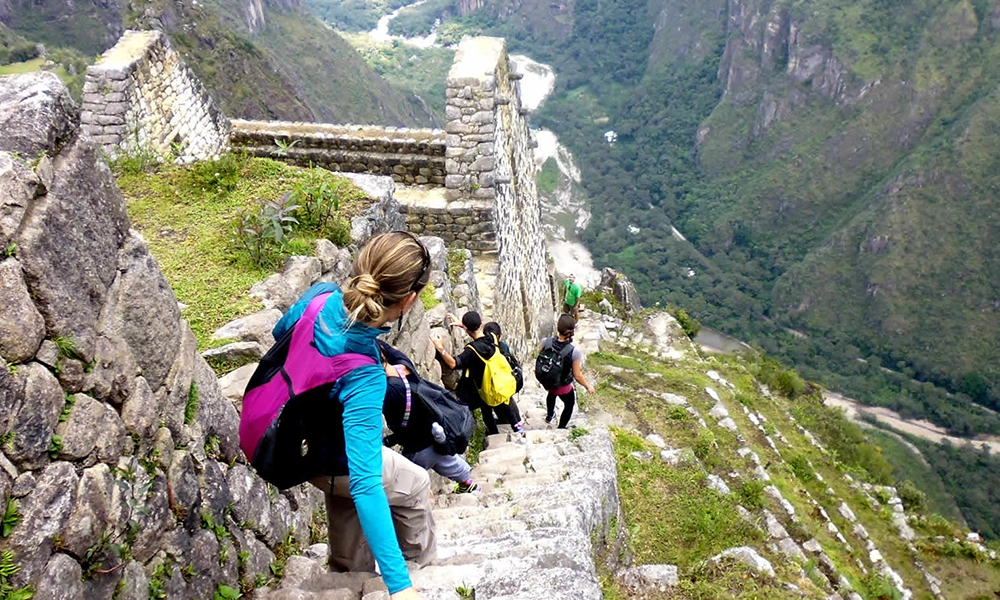
- Narrow stairs
- Wet rocks
- Vertigo
- Queues in some sections
🧠 6. How safe is it to climb Huayna Picchu?
It’s safe if:
- You wear good shoes
- You don’t rush the climb
- You follow the signs
- You avoid dangerous edges
- You take frequent breaks
It’s not recommended for:
- People with severe vertigo
- Those with severe knee problems
- Those who suffer from claustrophobia at heights
- Those who are not well hydrated
🎒 7. What to bring specifically for this climb
Professional Checklist:
- Passport
- Printed or digital ticket
- Water (500 ml)
- Hat + sunscreen
- Lightweight rain jacket
- Shoes with good traction
- The sticky one
- Quick-energy snack
- Camera or cell phone
- Absorbent wipe (practical for humidity)
- Insect repellent (especially between May and October)
⚠️ 8. Important restrictions
- Large backpacks (>20 L) are not allowed
- Trekking poles are not allowed (except with a medical certificate)
- Eating is not allowed within the circuit
- Drones are not allowed
- Re-entry is not allowed once you have left the trail
- Backtracking is not permitted
📸 9. Photography: Where are the best angles on Huayna Picchu?
✔ Upper terraces (vertical view of Machu Picchu)
The classic “view from above.”
✔ Middle zone (tall forest with natural windows)
Perfect for intimate photos.
✔ Hanging terraces of the Temple of the Moon
One of the most mystical spots.
✔ Side Viewpoints
They offer a panoramic view of the canyon and the Urubamba River.
🪧 10. Alternatives if you can’t get tickets to Huayna Picchu
⭐ Machu Picchu Mountain
Longer, less steep, excellent view.
⭐ Llactapata
Included in some Salkantay 5D itineraries.
⭐ Guardian Viewpoint
The classic postcard view.
⭐ Huchuy Picchu Mountain
An easier option, with beautiful views.
🌙 11. The final mountain
Huayna Picchu is the ultimate test.
A mountain that demands but also rewards.
A viewpoint that isn’t conquered: it’s earned.
When you reach the top,
after the sweat,
after the rapid breathing,
after the mild fear that the altitude brings,
you feel Machu Picchu welcoming you from below
like a mother watching her child return from a long journey.
Up there, the wind doesn’t blow: it whispers.
The clouds don’t drift by: they dance.
Time doesn’t flow: it stands still.
Huayna Picchu is the final point of a poem written with footsteps,
with weariness,
with hope,
with faith.