

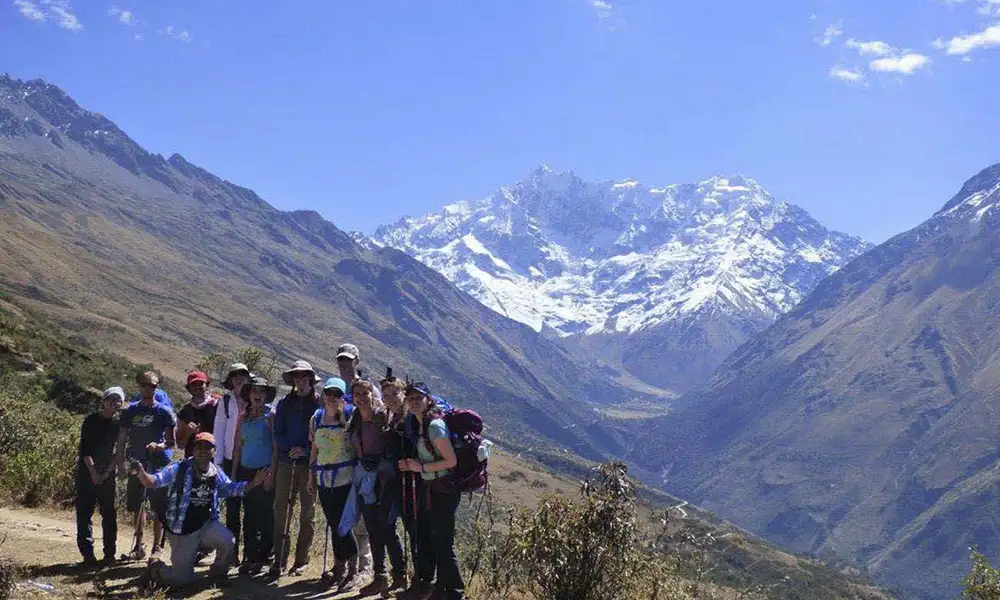
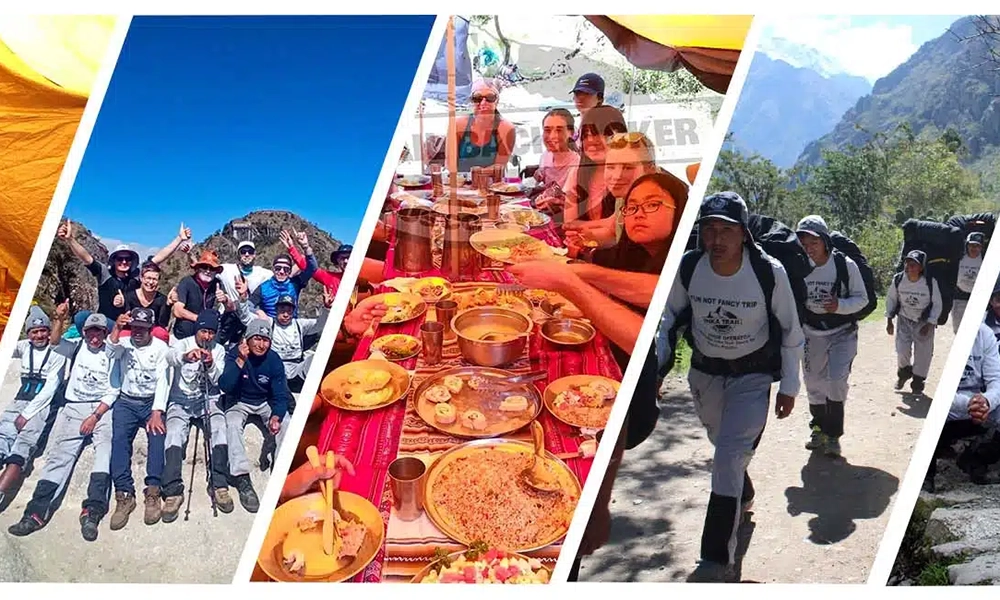
Hiking the Salkantay Trek is not just a physical challenge; it’s a sensory journey. Every dish you taste along the way is steeped in Andean tradition, ancestral ingredients, and cooking techniques adapted to the altitude.
At 4,000 meters, where the air is cold and the wind cuts to the skin, a hot soup can feel like a hug, and a quinoa stew can give you the strength to keep going.
In this EXTENDED version, you’ll discover absolutely everything about the food on the Salkantay Trek, from what’s served each day to the cultural significance behind the ingredients.
🥘 1. The Philosophy of Cooking on the Salkantay Trek
Andean cuisine is born from three values:
⭐ Energy
Food must sustain long days, cold weather, and intense work.
⭐ Warmth
The body needs to stay warm to avoid discomfort.
⭐ Community
The table is a space for sharing and reconnecting.
On the Salkantay Trek, these values are respected:
Every breakfast, lunch, and dinner is a shared experience.
🔥 2. How do you really cook at over 4,000 m?
Cooking at high altitude is almost a science:
- Water boils faster, but cooks more slowly.
- Potatoes take longer to cook.
- The wind cools pots in seconds.
- Gas behaves differently in cold weather.
- Humidity changes the texture of bread and pasta.
That’s why trained cooks:
🟢 Use wider pots to retain heat.
🟢 Keep water constantly heated.
🟢 Adapt recipes for easy digestion.
🟢 Balance carbohydrates and proteins.
🟢 Prepare soups before each meal.
🍽️ 3. The ancestral ingredients of Salkantay: history and significance
The trek’s cuisine uses typical Andean ingredients:
🌾 Quinoa
“The golden grain of the Incas.”
It’s energizing, light, and very nutritious.
🥔 Native Potato
The original potatoes of Peru (there are more than 3,000 varieties).
Purple and yellow-skinned varieties are the most commonly used.
🧅 Basic Vegetables
Carrot, squash, onion, and tomato.
🍗 Fresh Chicken
The lightest and easiest protein to digest at high altitude.
🍚 Rice
Efficiently digestible carbohydrate.
🍞 Local Bread
Usually chuta bread or mountain bread.
These ingredients are chosen to offer an ancestral, nutritious meal suitable for extreme treks.
🍵 4. EXTENSIVE Breakfast: Fuel for the Day
The day begins with warm aromas in the dining tent: freshly cooked oatmeal, freshly warmed bread, and coca tea.
Typical Breakfasts:
🥣 Hot Oatmeal or Quinoa
Creamy texture, mild flavor, ideal for high altitude.
🍳 Eggs cooked to order
Simple deliciousness, full of energy.
🥞 Homemade pancakes
Sometimes with honey or jam.
🍉 Fresh fruit
Depending on the season: apple, banana, papaya, pineapple.
🍞 Toasted Andean bread
Crispy on the outside, soft on the inside.
☕ Herbal teas for altitude sickness
Coca tea, ginger tea, muña tea.
This breakfast prepares you for hikes of up to 10 km on uneven terrain.
🍲 5. Hearty lunches: complete and nutritious meals
Lunch is prepared high in the mountains.
1️⃣ Energy soups
Soups are the star:
- Quinoa soup
- Pumpkin soup
- Vegetable soup
- Noodle soup
- Hot, hydrating, and light.
2️⃣ Main Course
Includes:
- Chicken with rice
- Noodles with vegetables
- Andean stew
- Trekking version of lomo saltado
- Quinoa stew
- Chef’s fried rice
3️⃣ Side Dishes
- Native potatoes
- White rice
- Cooked vegetable salad
- Light stew
🌙 6. Salkantay Dinners: Emotional Food for the Nighttime Cold
When night falls and the temperature drops to -5°C, dinner is almost medicinal.
⭐ Hot Soup
Comforting, calming, and essential.
⭐ Hearty Dishes that Fill Up
- Mashed potatoes with vegetables
- Quinoa stew
- Chicken stew
- Noodles with homemade sauce
⭐ Hot Infusions
To combat altitude sickness and improve digestion.
🌱 7. Vegetarian and Vegan Menu
The cooks can prepare:
🌱 Vegetarian:
- Vegetable omelet
- Pasta with natural sauce
- Rice with vegetables
- Quinoa stews
- Avocado with tomato
- Meatless soups
🥦 Vegan:
- Quinoa + vegetables
- Rice + vegetables
- Vegan soups
- Vegan stew
- Bread, fruit, herbal teas
Always communicate your dietary needs in advance.
🍫 8. Included Snacks and Expert-Recommended Snacks
⭐Included Snacks:
- Cereal bars
- Cookies
- Fresh fruit
- Peanuts or nuts
- Coca candies
🌙Expert-Recommended Snacks:
- Cliff bar-style energy bars
- 70% dark chocolate
- Mixed nuts
- Energy gummies
- Oral electrolytes
- Dried banana
- Sports gels (only if you normally use them)
🔬 9. Nutrition and Science: How Eating Helps Prevent Altitude Sickness
Eating well helps to:
✔ Regulate glucose levels
✔ Maintain consistent energy levels
✔ Prevent dizziness
✔ Improve breathing
✔ Maintain body temperature
✔ Stabilize blood pressure
That’s why the trek menu is rich in complex carbohydrates, which require less oxygen to be converted into energy.
🧾 10. Complete Royal Menu of the Salkantay Trek
🍫Day 1 – Soraypampa
- Bread + juice
- Lunch: Soup + chicken + rice
- Dinner: Soup + homemade pasta
👨🍳Day 2 – Salkantay Pass
- Hearty breakfast
- Lunch: Hot stew
- Dinner: Thick soup + mashed potatoes + stew
📸Day 3 – High Jungle
- Tropical fruits
- Grilled chicken
- Chaufa rice
- Light dinner
🌱Day 4 – Lucmabamba / Sahuayaco Beach
- Local homemade food
- Plantain, avocado, eggs
- Organic coffee
⭐Day 5 – Aguas Calientes
- Dinner at a restaurant
- Pizzas, soups, pasta, chicken
👨🍳 11. Narrative interview with a cook from Salkantay
Based on real testimonies from Andean cooks.
“Cooking in the mountains is cooking with soul,” says Julián, a cook from Soraypampa.
“Sometimes the cold freezes my hands, but I know that travelers need a hot meal to keep going. A good soup can change their whole day.”
Julián explains that he starts cooking at 3:30 a.m., when it’s still dark, so that breakfast is ready by 6:00 a.m.
“The wind is strong and the gas burns out. Sometimes I have to shield the pot with my body. But the satisfaction comes when the trekkers come in, help themselves, and smile.”
🧠 12. Professional Digestive Tips
- Chew slowly
- Avoid dairy if you are sensitive
- Eat small portions
- Don’t drink very cold water
- Avoid lying down immediately after eating
🖼️ 13. Image Suggestions + Advanced ALT-TEXT
Cook preparing soup at high altitude
ALT: Andean cook preparing hot soup during the Salkantay Trek at over 4,000 meters
Full breakfast table at camp
ALT: Typical Salkantay Trek breakfast with eggs, pancakes, and coca tea
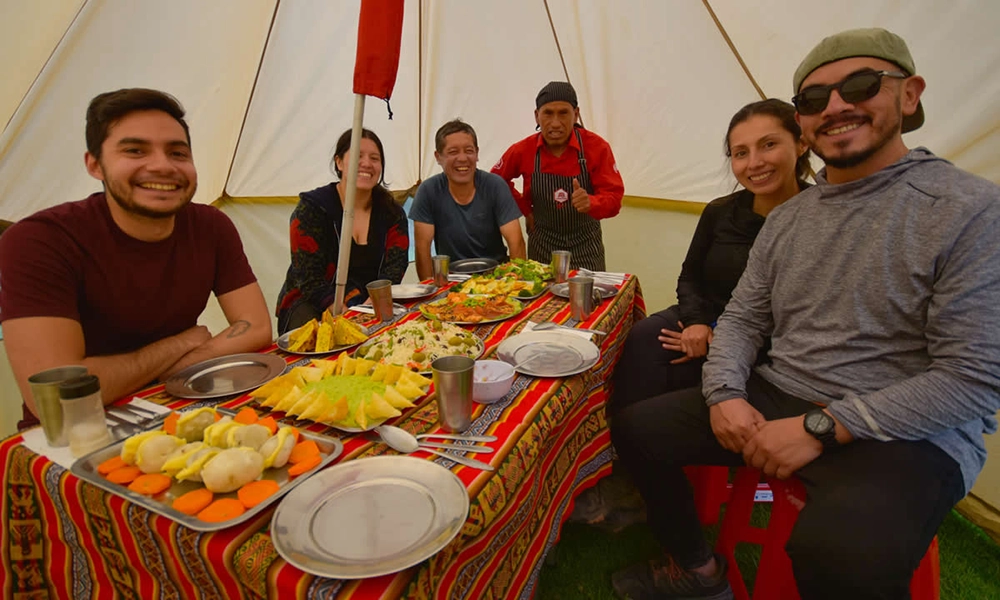
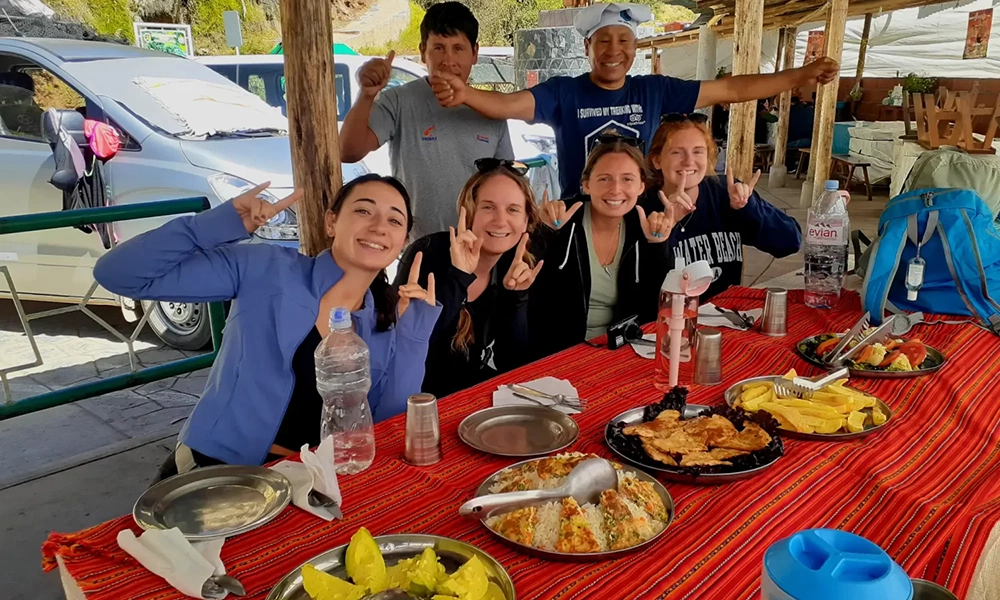
Lunch served in the dining tent
ALT: Home-cooked lunch served in the Salkantay Trek dining tent with soup and stewed chicken
Dinner in the middle of the night at camp
ALT: Hot dinner at the Salkantay Trek camp with soup, stew, and hot drinks
Trekking snacks
ALT: Recommended energy snacks for the Salkantay Trek such as nuts, bars, and Chocolate
🌟 FINAL CONCLUSION
Food on the Salkantay Trek is an indispensable and profoundly human part of the journey.
- It’s the bridge between your body and the mountain.
- It’s the energy that drives you forward.
- It’s living culture, Andean tradition, and the effort of cooks working in extreme cold to give you warmth, flavor, and strength.
Each dish has a purpose:
🌱 to nourish you
🔥 to warm you
🏔️ to help you acclimatize
💪 to give you energy
❤️ to connect you with yourself
The Salkantay is not just about walking. It’s also about feeling, tasting, and experiencing the mountain.