

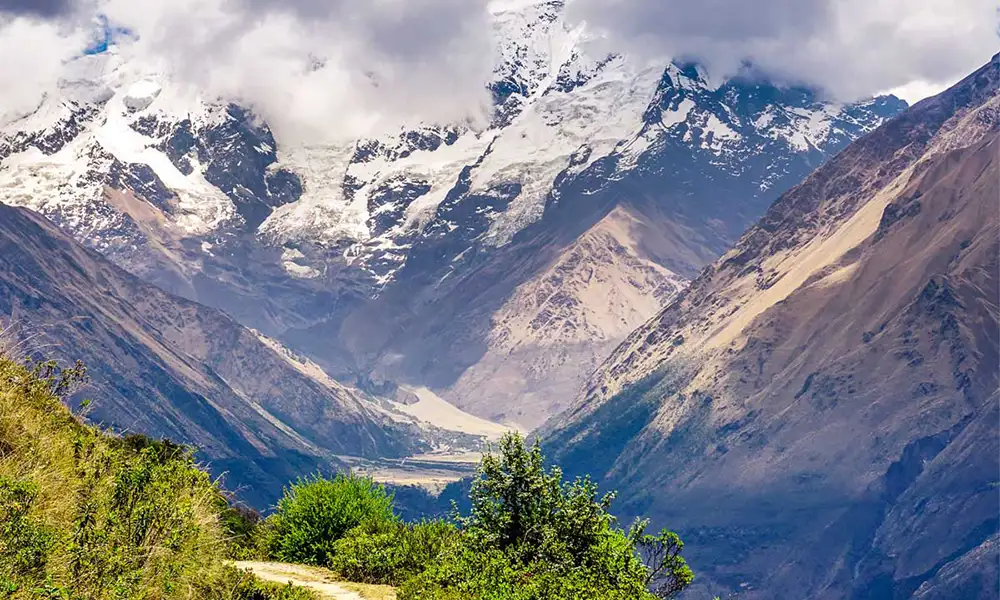
The Salkantay Trek, one of the most breathtaking routes to Machu Picchu, combines extreme beauty with real challenges.
Among them, the most common—and the most feared by many travelers—is altitude sickness, known in the Andes as soroche.
This guide is an in-depth journey through science, Andean culture, the geography of Salkantay, and the best current strategies for preventing, recognizing, and overcoming altitude sickness.
A guide designed for those who want to trek safely and preparedly.
🌄 1. The Altitude of Salkantay: Why this Trek Demands Respect
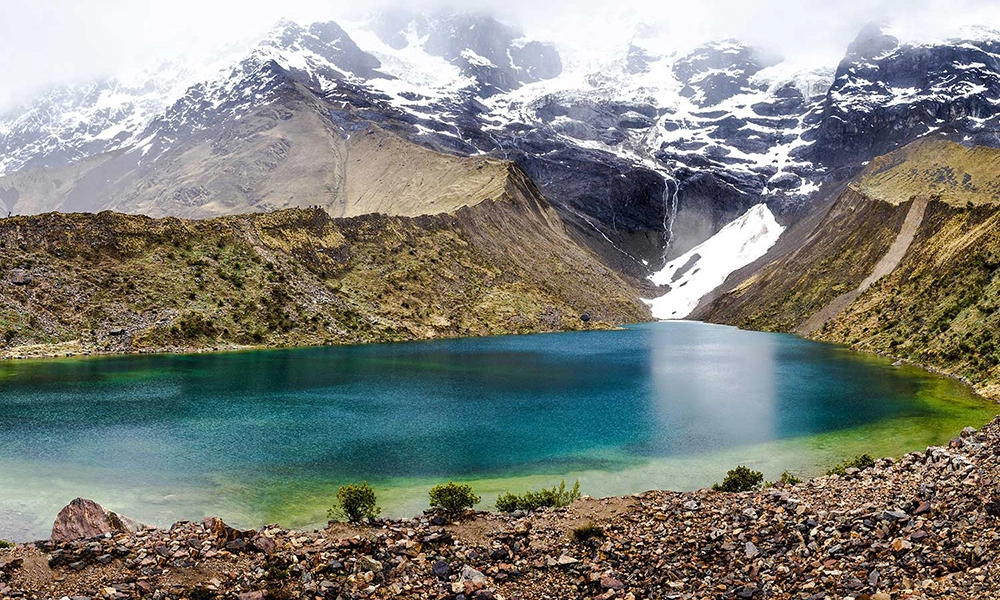
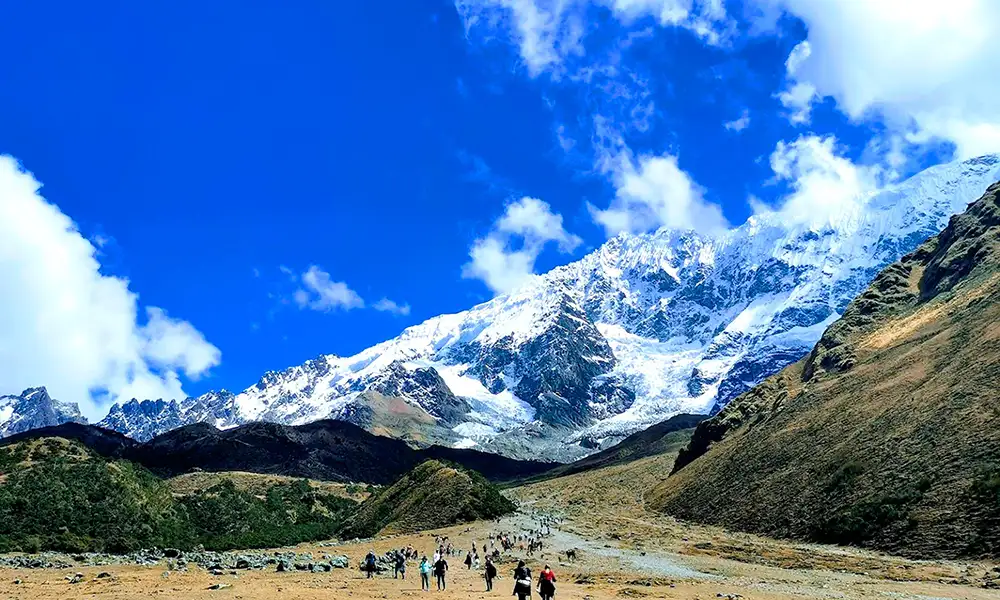
Salkantay is a sacred Andean mountain, standing at 6,271 meters.
Its trekking route crosses several ecological zones:
- Puna zone
- Glacial zone
- Cloud forest
- High jungle
However, the greatest challenge is concentrated between 3,900 m and 4,630 m, where available oxygen is reduced by 35% to 45% compared to sea level.
📌 Salkantay’s daily altitude:
- Day 1: Soraypampa – 3,880 m
- Day 2: Salkantay Pass – 4,630 m (critical point)
- Day 3: High jungle – 2,000–2,800 m
- Day 4: Llactapata – 2,800 m
- Day 5: Machu Picchu – 2,430 m
The human body considers any altitude above 2,500 m potentially risky. On Salkantay, the highest point far exceeds that limit.
That’s why almost all travelers feel the effects of altitude, and 15–25% experience severe symptoms if they don’t acclimatize properly.
🧬 2. What is altitude sickness, really?
Altitude sickness occurs because at high altitudes:
- there is less atmospheric pressure,
- and therefore less oxygen enters the lungs,
- which causes hypoxia, a lack of oxygen in the blood and brain.
The body tries to compensate by increasing:
- breathing
- heart rate
- red blood cell production
But this process takes time.
When we ascend very quickly—as happens when traveling from Lima (0 m) to Cusco (3,400 m) in one hour—the body goes into “altitude shock.”
⚠️ 3. Symptoms of altitude sickness
Altitude sickness is not the same for everyone.
Some people feel nothing, while others are severely affected.
The most common symptoms:
🟡 Mild altitude sickness
- Headache
- Fatigue
- Shortness of breath upon ascent
- Light sleep
- Loss of appetite
- Dizziness
- Slight nausea
🟠 Moderate altitude sickness
- Persistent headache
- Vomiting
- Difficulty breathing at rest
- Unsteadiness while walking
- Chest pressure
🔴 Severe (dangerous) altitude sickness
- Confusion
- Bluish lips
- Disorientation
- Coughing up wet or bloody fruit
- Inability to walk
- Very rapid breathing
If any of these symptoms appear → DESCEND IMMEDIATELY.
🧭 4. Why does the Salkantay trek cause more altitude sickness than other treks?
1️⃣ Steep ascent from Soraypampa
Many travelers begin the trek immediately upon arriving in Cusco, without any acclimatization time.
2️⃣ The Salkantay Pass is very high (4,630 m)
Only climbing Kilimanjaro and Annapurna surpasses this feeling of being short of breath.
3️⃣ Intense and prolonged hike
6–9 hours of hiking on steep terrain = greater oxygen demand.
4️⃣ Cold weather and strong winds (“wayra”)
The cold restricts breathing and increases energy expenditure.
5️⃣ Lack of sleep beforehand
Altitude sickness in Cusco complicates recovery.
🧘 5. How to prevent altitude sickness on Salkantay
✔ 5.1 Acclimatization: the most important component
Ideal:
3 days in Cusco
Minimum 2 days in the Sacred Valley
What to do during those days?
- Walk gently
- Drink plenty of fluids
- Avoid climbing to Humantay Lagoon before the trek
- Rest early
✔ 5.2 Hydration: The Andean Key
Drink 2.5 to 3 liters per day.
The higher the altitude → the greater the water loss through respiration.
Include:
- Water
- Coca tea
- Rehydration solution
- Electrolytes
✔ 5.3 Walking Pace: “sumaq puriy”
In Quechua:
“Walk beautifully, walk slowly.”
Slow steps lower oxygen consumption less risk of altitude sickness.
Most tourists get exhausted because they walk too fast.
✔ 5.4 Appropriate Food
Prefer:
- Soups
- Simple carbohydrates
- Fruits
- Chicken
- Quinoa
Avoid:
- Fried foods
- Heavy sauces
- Red meat
- Too much sugar
- Excessive coffee
✔ 5.5 Avoid Alcohol and Tobacco
Alcohol:
- Dehydrates
- Disrupts sleep
- Worsens headaches
Tobacco:
Limits lung capacity
✔ 5.6 Get a good night’s sleep
Altitude affects sleep, so many guides recommend:
- Going to bed early
- Avoiding screens
- Breathing deeply
- Not eating heavy meals
✔ 5.7 Useful Medications
1. Sorojchi Pills
Specifically designed for altitude.
2. Ibuprofen / Paracetamol
For mild headaches.
3. Diamox (acetazolamide)
For those with a history of altitude sickness.
Take only under medical supervision.
4. Coca Leaves
A natural Andean remedy that improves circulation.
5. Coca Tea
Available at almost all lodges and campsites.
6. Ginger or Mint
Relieve nausea.
🧯 6. What to do if altitude sickness occurs during the trek?
- Stop immediately.
- Breathe deeply.
- Drink water or coca tea.
- Take a pain reliever if it is mild.
- Inform your guide of your symptoms.
- Use supplemental oxygen If necessary.
- If it doesn’t improve → descend.
🩺 7. Is there a real risk? The serious side of altitude sickness
Salkantay isn’t dangerous in itself,
but underestimating altitude is.
Two serious conditions can occur:
🔸 High-altitude pulmonary edema (HAPE)
Fluid in the lungs → life-threatening.
Key symptom: difficulty breathing even while sitting.
🔸 High-altitude cerebral edema (HACE)
Brain swelling → life-threatening.
Key symptom: confusion, clumsiness, incoherence.
Immediate action → mandatory descent
Altitude is never negotiable.
🌤️ 8. What is the most difficult section in terms of altitude?
⭐ Day 2: Ascent to Salkantay Pass
Here you’ll find:
- higher altitude
- lower oxygen levels
- greater exertion
- colder weather
If you’ve managed the altitude well up to this point, the rest of the trek will be easier.
🧪 9. Why some travelers get sick and others don’t
Factors that increase the risk:
- arriving in Cusco and starting the trek the next day
- not drinking enough water
- climbing too quickly in Soraypampa
- not eating properly
- poor physical condition
- lack of sleep
- history of altitude sickness
- anxiety or stress
Even professional athletes can suffer from it.
Altitude doesn’t discriminate.
🌿 10. Andean wisdom: how to cope with altitude from a local perspective
The people who live at high altitudes have understood their rhythms for centuries.
Their practices are simple, profound, and effective:
- chewing coca leaves
- breathing slowly and deeply
- pausing to give thanks to the Apu (mountain spirit)
- walking at the pace of your heart
- not challenging the mountain
For the Andean people, altitude is not an enemy:
it is a teacher.
❓ 11. Frequently Asked Questions
Can I do the Salkantay Trek if I am easily affected by altitude?
Yes, with acclimatization and at an appropriate pace.
Do the agencies carry oxygen?
Professional agencies do. Ask before booking.
Does taking Diamox help?
Yes, but it must be recommended by a doctor.
What should I do if I get a severe headache?
Rest, hydrate, drink coca tea, and inform the guide.
How common is altitude sickness?
It affects between 30% and 50% of travelers who are not acclimatized.
🏁 Altitude sickness on Salkantay can be prevented, managed, and overcome.
The altitude is intimidating, yes.
But it also strengthens, teaches, and transforms.
With respect, preparation, and patience,
your body will adapt,
your breathing will find its rhythm,
and your steps will lead you to one of the most beautiful treks on the planet.
Salkantay isn’t trying to defeat you.
It’s trying to help you discover yourself.