

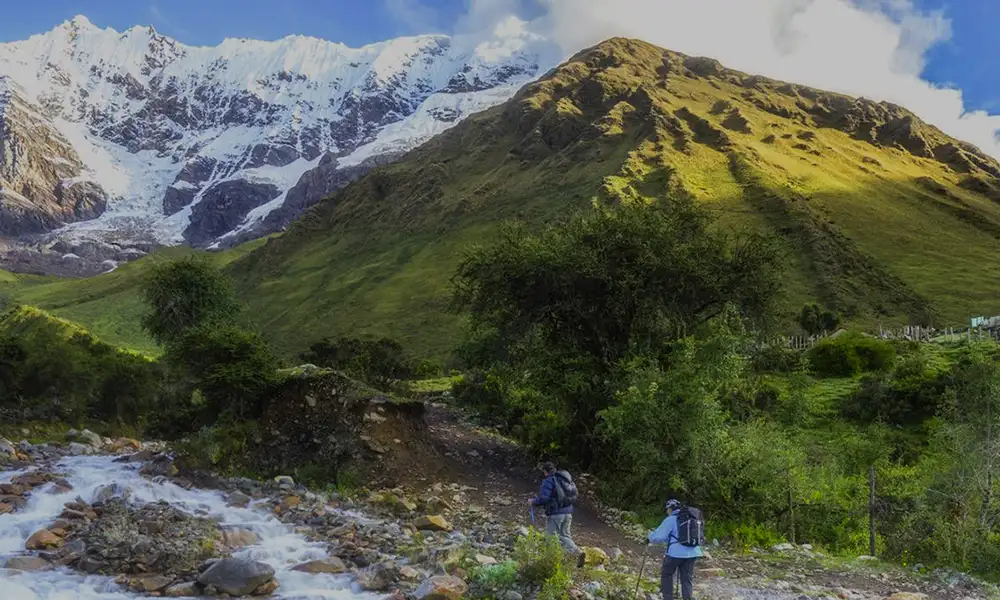
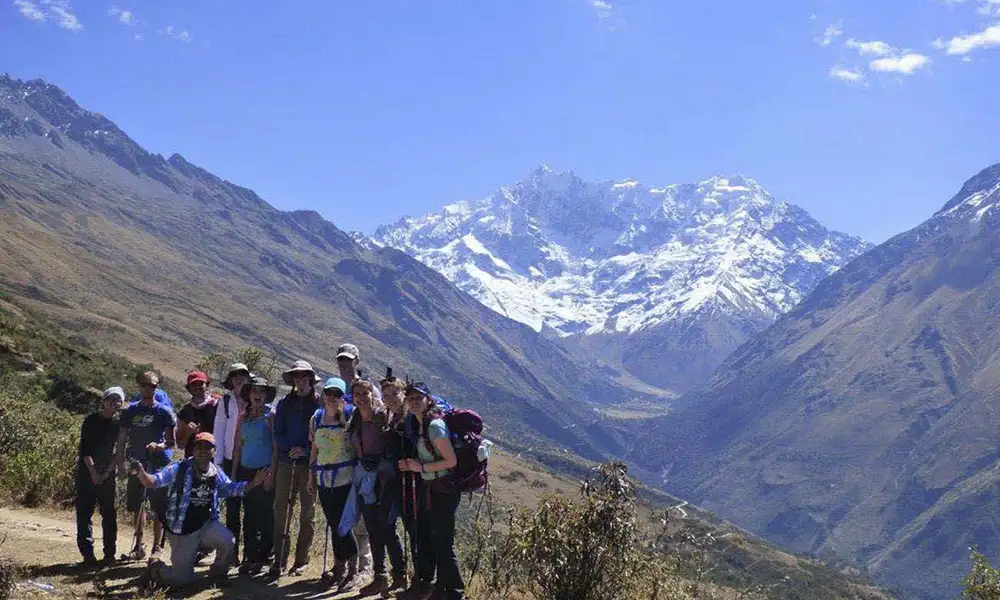
Gratitude walks with you too.
On the Salkantay Trek, you don’t move forward alone.
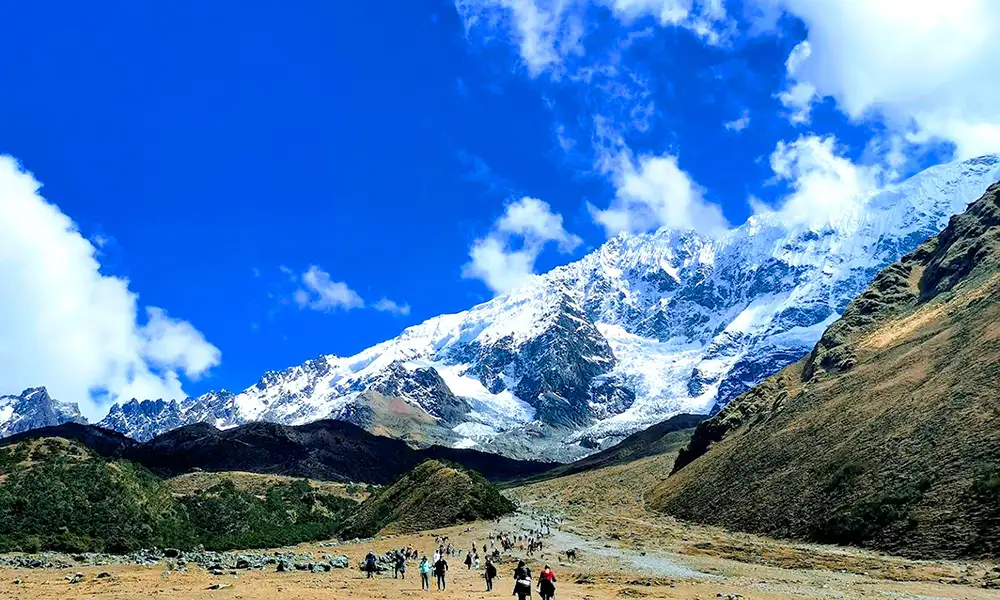
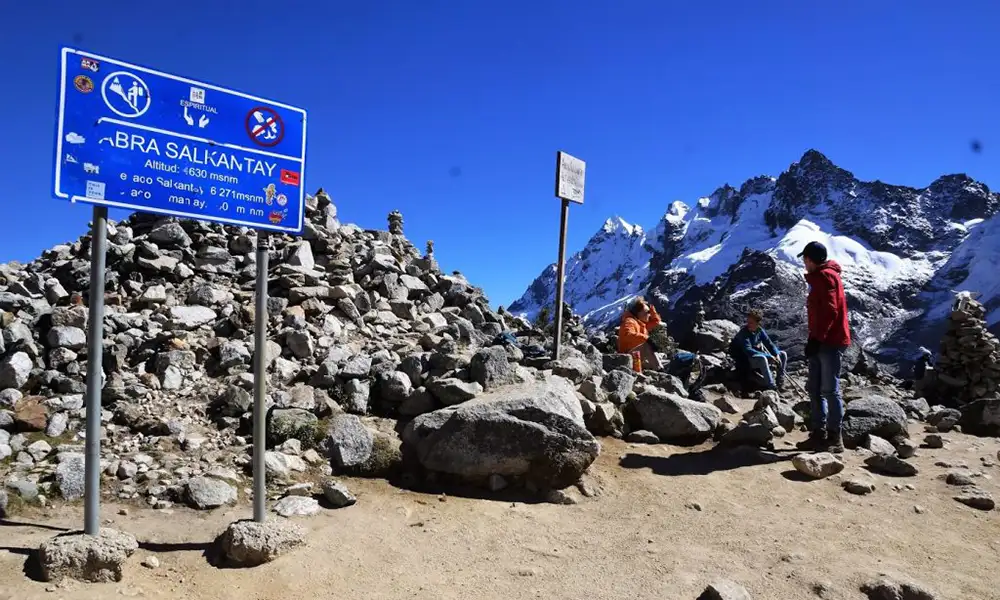
Not even when you think you’re the one climbing, panting, breathing, and struggling to reach the pass at 4,630 meters.
There are silent figures who accompany each of your steps:
the guide who waits for you when you’re short of breath,
the cook who prepares hot soup before dawn,
the muleteer who carries your backpack while singing softly to his mules,
the assistant who checks your boots, your spirits, your pace.
The travelers see the mountain;
they see you reach it.
That’s why tipping isn’t a formality:
it’s a symbol.
A ritual of gratitude.
A way of saying: “Thank you for bringing me safely, thank you for your invisible work, thank you for your kindness on this route that changes lives.”
This is the most comprehensive, heartfelt, poetic, and informative guide to tipping on the Salkantay Trek, so you can understand not only how much to give… but why to give it.
🧭 1. Is tipping mandatory on the Salkantay Trek?
No. It never is. But it is an essential part of the trekking culture.
Tipping on the Salkantay is not demanded:
it’s inspired.
Everyone who works on the route—from the guide to the muleteer—receives a base salary from their agency, but the tip is the traveler’s direct recognition of their effort, patience, support, and resilience in the face of the cold, altitude, and fatigue.
Tips are part of the human fabric that makes this journey not just a trek, but an exchange of humanity.
👥 2. Who do you tip on the Salkantay Trek?
On the Salkantay Trek, the team isn’t just any team:
it’s a family that temporarily adopts you.
Each member is appreciated for a different reason:
🥾 Lead Guide – The Guardian of the Trail
The guide is the one who accompanies you physically and emotionally.
They know when to drink water, when to rest, when to pick up the pace, and when to gaze at the horizon.
They are the voice that tells the story of the Apus (mountain spirits),
the patience that awaits you when you’re exhausted,
the knowledge that prevents risks.
Their role is vital.
So is their tip.
🧭 Assistant Guide – The Supporting Shadow
They anticipate problems, help with backpacks, check equipment, and support those who fall behind.
They often don’t talk much… but they’re involved in everything.
🍲 Cook – The Heart of the Camp
While you sleep or rest, they’re already lighting a fire in 4°C (39°F) weather.
The soup that warms your soul, the quinoa that gives you energy, the coca tea that lifts your spirits…
everything, absolutely everything, is prepared with hands that have known the mountain forever.
Their work is hard.
Their tip is a hug.
🐎 Muleteers – The Unsung Heroes
Without them, there would be no trekking.
- They carry your backpack, your food, your tents, your dreams.
- They walk before you and arrive after you.
- They keep their mules safe, take care of the equipment, and are always smiling.
- They are the silent heart of the Salkantay.
🚐 Drivers – Those Who Open and Close Your Path
They take you to the beginning and pick you up at the end. A brief interaction, but an important contribution.
💰 3. How Much to Tip on the Salkantay Trek?
Here is the most accurate, honest, and up-to-date guide.
⭐ Per person (5 days / 4 nights)
🥾 Lead Guide:
S/ 40 – S/ 70
Exceptional Service: S/ 80 – S/ 100
🧭 Assistant Guide:
S/ 20 – S/ 40
🍲 Cook:
S/ 30 – S/ 50
🐎 Muleteers (per traveler):
S/ 20 – S/ 30
A group fee is usually paid upfront and then divided among all the muleteers.
🚐 Driver:
S/ 5 – S/ 10
🌍 In US dollars (international reference)
- Guide: $15 – $25
- Assistant: $7 – $12
- Cook: $10 – $18
- Muleteers: $6 – $10
- Driver: $2 – $3
⏳ 4. When to tip?
Generally at the end of the trek, before saying goodbye to the group.
This is usually done in Hidroeléctrica or Aguas Calientes.
This moment is like a small ritual:
the group gathers, the guide expresses gratitude, the travelers share words, there are tired smiles and genuine emotions.
It’s a beautiful ending before the final ascent to Machu Picchu.
🎁 5. How to tip respectfully and meaningfully?
- Use cash (Soles preferred, US dollars accepted).
- Give an envelope or small bag (many agencies provide one).
- Look the person in the eye.
- Say a few words, even if they’re brief:
“Thank you for your effort. Thank you for taking care of us.”
The mountain unites.
So does gratitude.
🤔 6. What if I can’t give a big tip?
That’s okay.
Give what you can.
The team will understand.
A small but sincere tip is more valuable than a large one without feeling.
🌬️ 7. Unseen realities: Why are tips important?
The altitude is demanding.
lass=”yoast-text-mark” />>The cold is biting.
<p>The logistics are complex.
But the team works:
- at 4,000 meters
- at 4:00 a.m.
- carrying heavy loads
- preparing food
- caring for animals
- checking tents
- making sure YOU enjoy yourself
They go up and down the mountain every week.
Rain, shine, storm, or hail.
Tipping is a gesture of respect for that hard life.
But kind.
❓ Frequently Asked Questions about Tipping on the Salkantay Trek (FAQ SEO)
📌 Can I tip in dollars?
Yes, although soles are more useful to them.
📌 Should I tip if I didn’t finish the trek?
You’re not obligated, but it’s a kind gesture if you still used the service.
📌 What if I’m traveling alone?
Your tip remains the same as the recommended per person.
📌 Is it better to tip in a group or individually?
Tips are given individually to the guide.
Tips for the muleteers are generally given in a group.
📌 Can I give gifts in addition to money?
Yes. Chocolates, hats, gloves, or snacks are nice touches.
But they don’t replace a tip.
🌄 8. Tipping as a Bridge Between Worlds
The mountain teaches us something we sometimes forget:
no one reaches the summit alone.
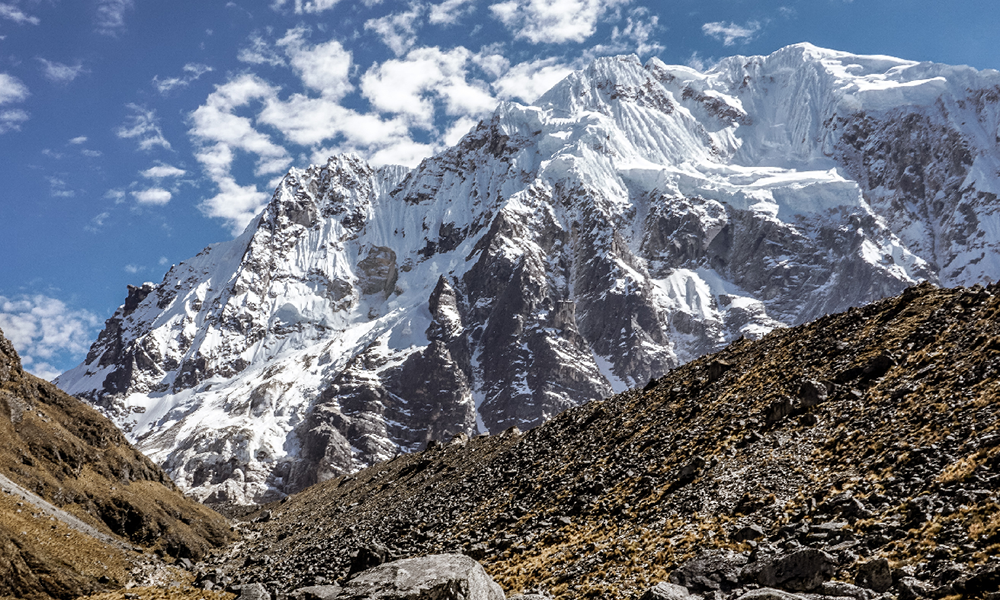
On Salkantay, while you admire the snow-capped peaks, the team is thinking about your well-being.
- While you sleep, they light a fire.
- While you travel light, they carry your load.
- While you breathe in the scenery, they breathe in responsibility.
A tip isn’t payment.
It’s a thank you given with your hands,
but born from the heart.
A small gesture that acknowledges a truth:
you climb the mountain, yes…
but they accompany you so you can reach the top.
🏁 How much to give, why to give, and what it represents
- ✔ It’s not obligatory.
- ✔ It’s culturally expected.
- ✔ It’s an important part of the trekking economy.
- ✔ It’s an act of profound gratitude.
- ✔ Acknowledge an effort that goes beyond salary.
- ✔ Make your mark on the mountain more humane.
A tip is the final echo of the hike:
a gesture that remains in the memory of those who accompanied you
and a way to close the journey with the same respect with which the mountain welcomed you.