

A Comprehensive, Informative, and Poetic Guide for Difficult Moments
The Salkantay Trek is a beautiful and challenging route.
It’s an umbilical cord that connects the strength of the Apu (mountain spirit), the chill of dawn, the weight of the backpack, the ragged breathing, and your own will.
Not every day is the same.
Not every body responds the same way.
And there’s a moment—sometimes brief, sometimes prolonged—when the trekker feels their legs give way, their chest tighten, or their mind cloud over.
A moment when the mountain seems to grow and you shrink.
Then comes the most human question of the trek:
“What do I do if I can’t continue?”
This blog answers with clarity, depth, and, above all, compassion.
🧭 1. Accept the moment: the mountain doesn’t punish, the mountain listens
Before discussing options, directions, and rescues, there’s something essential:
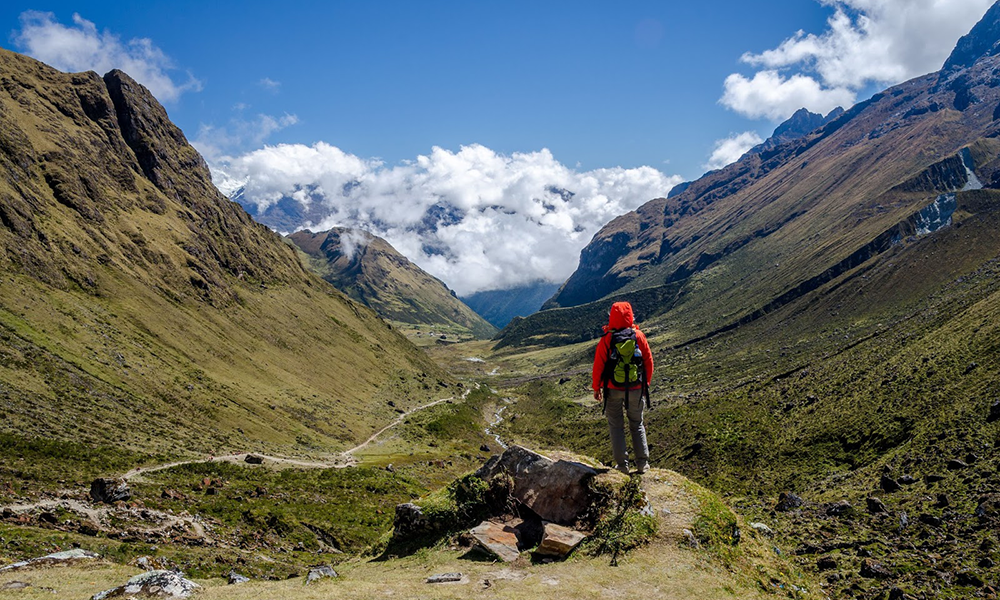
Stop. Breathe. Look around.
Feel the wind. You’re not failing.
lass=”yoast-text-mark” />>You’re not going backward.
>You’re becoming aware.
The mountain doesn’t measure your worth by the distance you’ve traveled. It measures it by your ability to listen to your body.
On Salkantay, stopping is also moving forward.
🗣️ 2. Talk to your guide: your voice is your most powerful tool
The first real step when you can’t continue a trek is to communicate it.
The Salkantay guides aren’t just professionals:
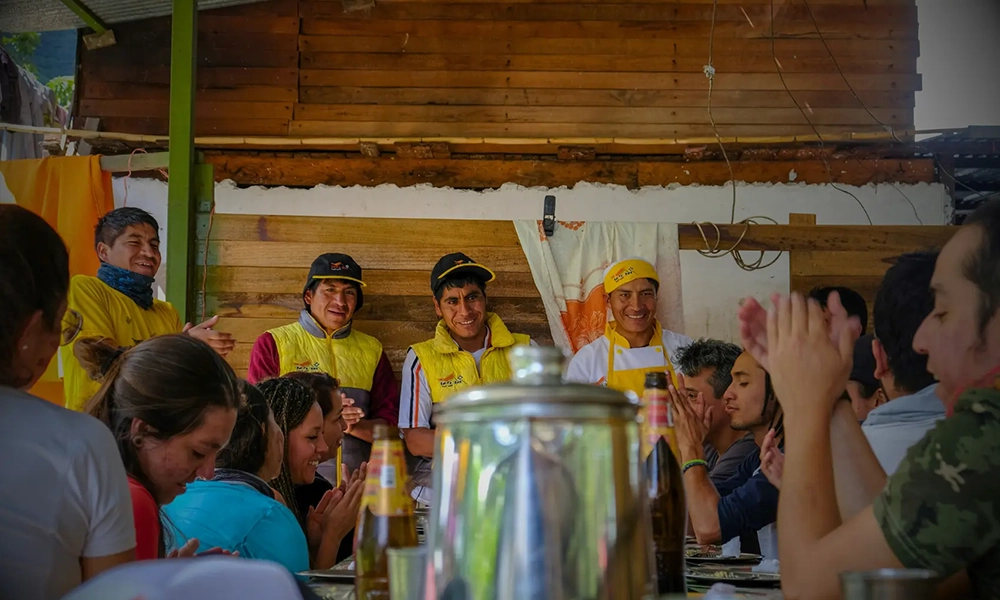
they’re guardians, weather readers, impromptu psychologists, human first aid providers, interpreters of the Apu (mountain spirit).
They need to know how you feel so they can help you.
🧡 How to tell them?
- “I feel dizzy.”
- “I can’t control my breathing.”
- “It hurts too much.”
- “I don’t think I can go on.”
- “Something’s not right.”
Your honesty can prevent a bigger emergency.
🩺 3. Assessment: The guide reads your body like a map
Guides are trained to assess in minutes:
- oxygen saturation
- respiratory rate
- balance
- coordination
- mental state
- hydration
- signs of hypothermia
- muscle pain
- symptoms of altitude sickness
They don’t see it from the tourist’s ego, but from the perspective of mountain life.
They make decisions based on knowledge, never on pride.
💼 Equipment they typically use:
- oximeter
- first-aid kit
- oxygen tank
- bandages
- muscle creams
- altitude sickness pills
- hydration
- thermal blanket
At that moment, you are not alone:
you are accompanied, guided, and protected.
🧳 4. Sometimes it’s not you… it’s your backpack
Many travelers “break down” because they carry more weight on their backs than necessary.
A poorly adjusted backpack can:
- cut off your breathing
- stretch your back
- increase fatigue tenfold
- cause dizziness
- disrupt your rhythm
✨ Immediate solutions:
- readjust the straps
- shift the weight from your shoulders to your hips
- remove unnecessary items
- carry some of it on the mule (at a cost)
When that weight is taken off, your body comes back to life.
Many believe they couldn’t continue…
but it was their backpack that couldn’t.
🐎 5. If you can no longer walk: the Salkantay horse, your bridge back
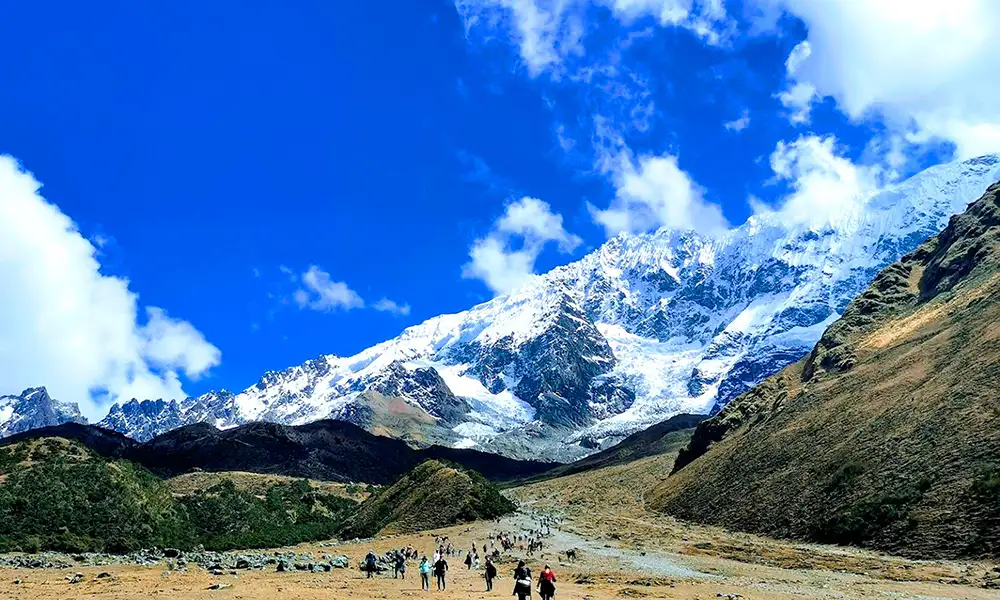
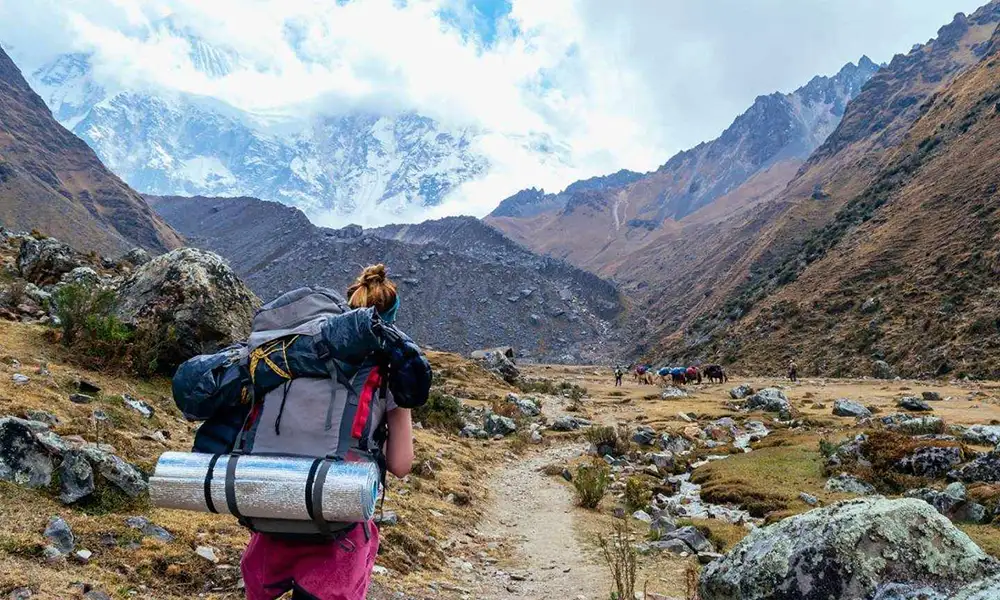
In the upper part of the trek, where the landscape is white, immense, and silent, the muleteers are a lifeline for many travelers.
If you can no longer walk:
- You’ll be assigned a horse.
- You’ll be taken to Soraypampa, Salkantaypampa, or Wayracmachay.
- From there, you can decide whether to rest or return.
💰 Approximate Price:
Between 70 and 120 soles, depending on the section.
🤎 Important:
After the Salkantay Pass, horses cannot proceed.
The terrain is narrow, wet, and dangerous.
However, on the permitted sections, the horse allows you to return without pain or risk.
🚙 6. Evacuation by Transport: How to Leave Depending on the Day of the Trek
The Salkantay Trek has natural exit routes.
It’s not a trek that leaves you stranded.
🌄 Day 1 – Soraypampa
Easy Evacuation:
- Return to Mollepata
- Private Transfer
- Return Horse
You’re close to a road and cell service.
🏔️ Day 2 – Ascent to Salkantay Pass
Most dropouts occur here.
Options:
- Horseback ride down
- Return to Soraypampa
- Transfer to Cusco from Mollepata
⛰️ Day 2 – Descent to Wayracmachay
Horses are no longer allowed here.
But you can:
- Walk slowly with a guide
- Reach Collpapampa
- Evacuate by local transport
🌿 Day 3 – Collpapampa → La Playa
Very easy evacuation:
- Local vans
- Transport to Santa Teresa or Cusco
- Rest options available
🛻 Day 4 – Hydroelectric Plant
Easy exit:
- Train to Aguas Calientes
- Transfer to Santa Teresa
- Direct return to Cusco
Here you are “out of danger”.
❄️ 7. If the problem is the cold: the mountain tells you in silence
The cold of Salkantay is not an urban cold.
It’s a cold that comes from the glacier,
that descends like a spirit upon the skin,
that enters the bones like a message.
But it’s also a cold that can be controlled.
❄️ Warning signs:
- constant shivering
- blue lips
- clumsiness when walking
- mental confusion
- stiff limbs
🔥 Actions:
- put on dry clothes
- drink something hot
- go into the tent and cook
- use a thermal blanket
- change gloves or socks
The cold should never be ignored.
The mountain always warns you.
🧠 8. If it’s the mind that gives up: fear also walks with us
Not everything is f
Physical.
Mental fatigue also exists.
Anxiety, fear, frustration, crying, feeling stuck.
At high altitude:
- The mind becomes more sensitive
- Breathing alters mood
- Altitude clouds judgment
- Tiredness amplifies everything
And that’s okay.
- It’s human.
- It’s natural.
- It’s part of the journey.
🧘 What to do?
- Breathe deeply
- Walk more slowly
- Hold the guide’s hand
- Focus on a fixed point
- Remember that moving forward is not an obligation
- Ask the guide to talk for a while
Sometimes, a single conversation saves the day.
🩺 9. If you have altitude sickness: the most silent enemy
Altitude sickness is unpredictable.
🚨 Symptoms:
- nausea
- severe headache
- dizziness
- fatigue
- shortness of breath
- feeling faint
🌿 Solutions:
- descend immediately
- take altitude sickness pills
- rest
- hydrate
- use oxygen
- avoid continuing if you don’t improve
Altitude sickness is not an obstacle,
it’s a warning from your body.
Respect it.
🌬️ 10. Resting is not quitting: it’s honoring the journey
Some agencies allow you to stay an extra day at a campsite.
Sometimes your body just needs:
- a day of rest
- an extra liter of water
- a night of deep sleep
- a mental break
Rest is also part of the journey.
Trekking is not a race.
It’s an experience.
🚫 11. When continuing would be dangerous: life is the limit
If the guide determines you cannot continue,
their decision is final.
It’s not a punishment,
it’s protection.
The mountain will still be there tomorrow.
Your health won’t wait.
🌟 12. When the mountain stops you, it’s taking care of you
Sometimes walking is moving forward.
Sometimes stopping is too.
If you can’t continue the Salkantay Trek, remember:
The mountain isn’t trying to defeat you.
It’s trying to teach you.
It shows you your limits so you can listen to your body.
It offers you wind to breathe.
Silence to think.</p>
Water to calm you.<
/p>
- A horse to help you.
- A guide to protect you.
- A way back to take care of you.
The Salkantay isn’t abandoned:
it’s transformed.
It’s postponed.
It restarts.
And when you return—because you will return—
the mountain will recognize you. And it will let you pass.