

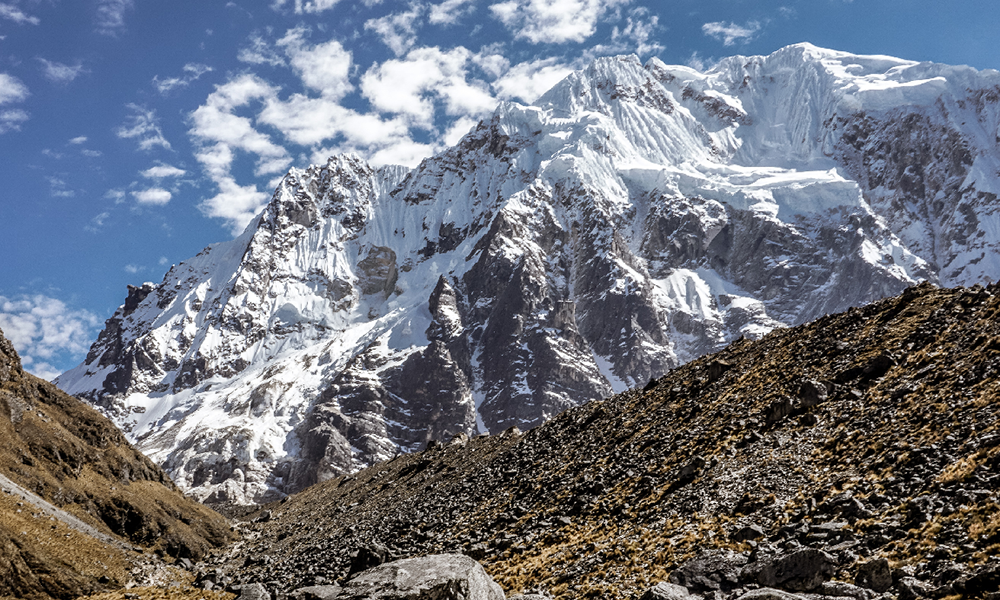
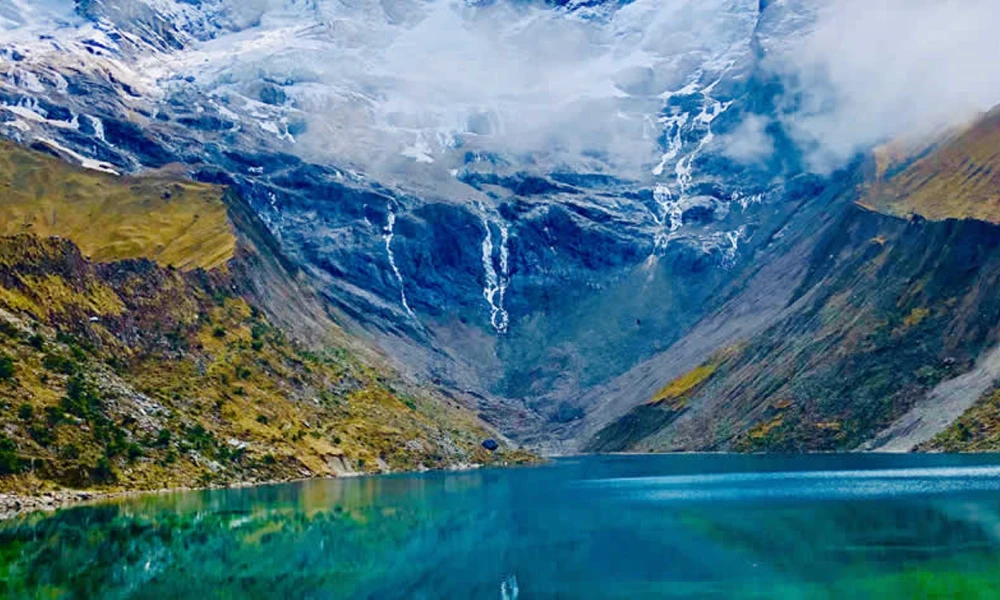
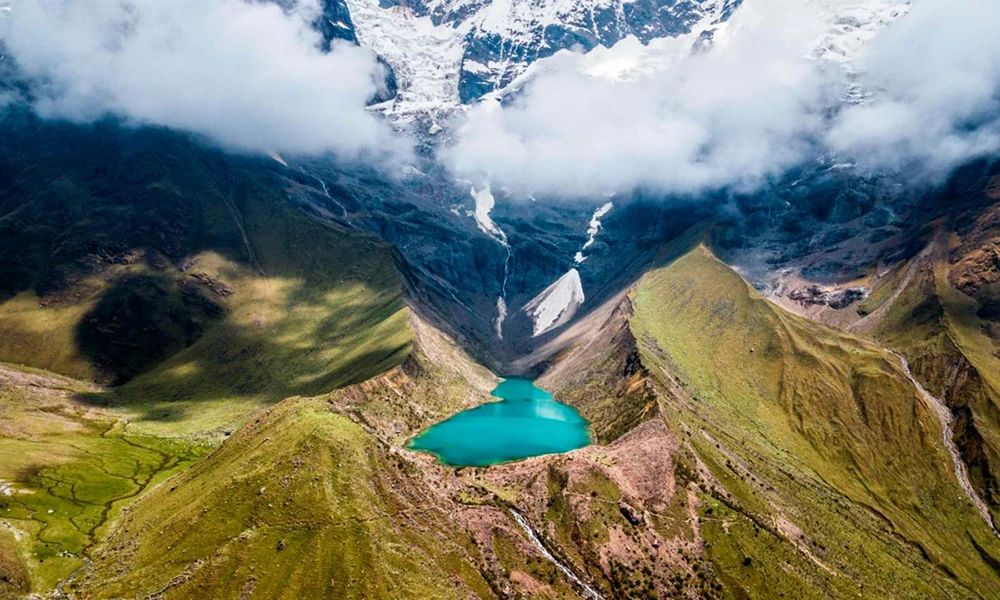
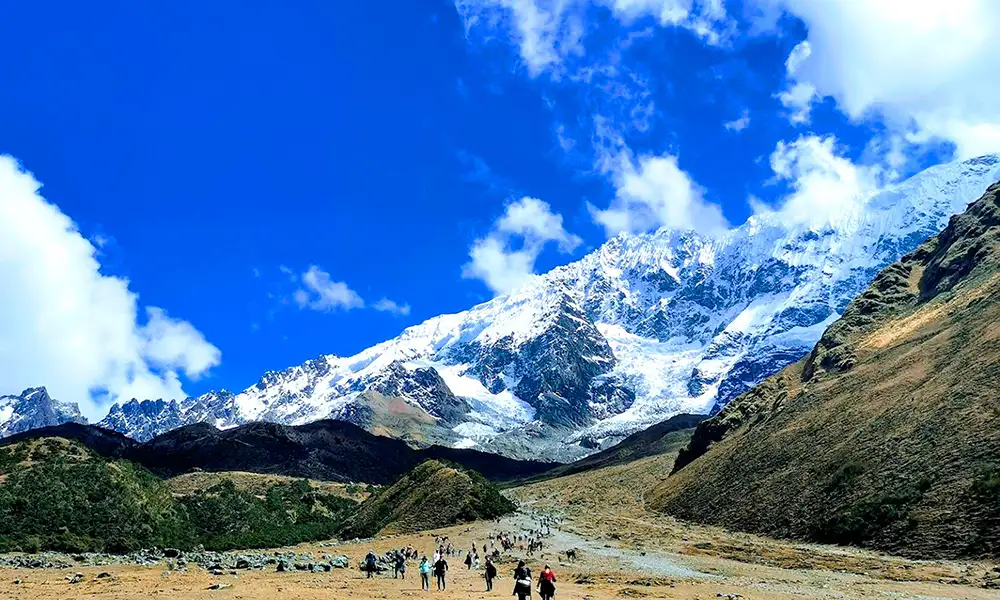
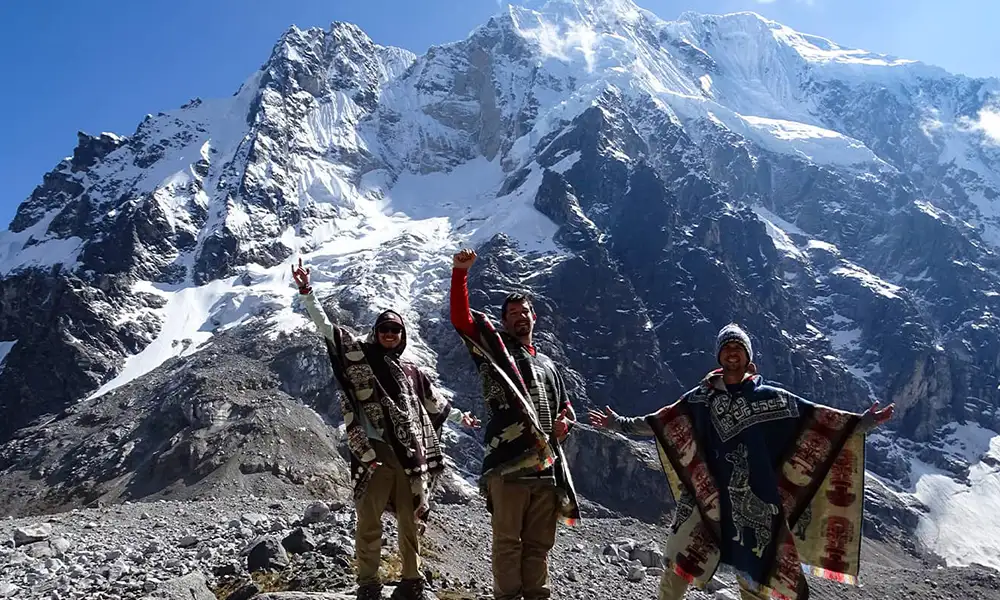
Taking a drone on the Salkantay Trek is a powerful temptation:
who wouldn’t want to capture the immensity of Apu Salkantay, the emerald shimmer of Humantay Lagoon, or the winding path leading into the high jungle from the air?
But in the mountains—as in life itself—not everything you can bring is safe to use. Drone use in Peru is regulated, and the Salkantay Trek, while not an archaeological park like Machu Picchu, crosses areas that demand caution, permits, and profound respect for nature and local communities.
This article explains everything, absolutely EVERYTHING you need to know:
national regulations, local restrictions, permits, risks, fines, professional recommendations, and real-life traveler experiences.
Get ready: this is the most comprehensive guide you’ll find.
🌄 1. Can you take a drone on the Salkantay Trek?
✔️ Yes, you can.
There is no law prohibiting carrying it in your backpack.
No one will stop you from having it in your luggage, and there is no police checkpoint at the entrances to Salkantay.
But…
⚠️ Using it is another story.
Its flight is subject to:
National laws from the Ministry of Transport and Communications (MTC) and the General Directorate of Civil Aeronautics (DGAC)
Regulations for recreational vs. commercial use
Environmental restrictions
Community rules
Limits in archaeological zones
Prohibitions in Machu Picchu
Carrying it is easy.
Using it correctly is an act of responsibility.
📜 2. Legal Framework in Peru for Flying Drones
Peru has clear regulations for drones, established by the General Directorate of Civil Aeronautics (DGAC), part of the MTC.
The regulations divide everything into two criteria:
A. By DRONE WEIGHT
Less than 250 g (e.g., DJI Mini 2, Mini 3, Mini 4)
- Does not require a pilot’s license
- Does not require registration for recreational use
- Must respect restricted areas and basic safety rules
More than 250 g (e.g., DJI Air 3, Mavic 3, Phantom, Autel)
- Must be registered with the DGAC (Directorate General of Civil Aviation)
- Require an RPAS operator certificate for professional use
- Can be used recreationally, but with more restrictions
B. By TYPE OF USE
✔️ Recreational Use
- Permitted without extensive procedures
- Ideal for travelers
- However, prohibited areas must still be respected
- Must be flown within visual line of sight and during daylight hours
✔️ Commercial/Professional Use
- Different approach:
- Operator certificate
- Damage insurance
- Authorization for each specific operation
- Drone registration
- Applications with a waiting period Anticipation
🏔️ 3. Which sections of the Salkantay Trail allow drones and which do not?
This is the MOST important point.
The Salkantay Trail is not a closed park: it crosses communal lands, natural areas, mountain passes, and areas near protected areas.
Here are the zones one by one:
🟢 ZONES WHERE YOU CAN USUALLY FLY DRONES
1. Mollepata and Challacancha
Open, rural lands, without special regulations.
You can use a drone, avoiding flying over houses or animals.
2. Soraypampa (except for restricted community areas)
Open landscapes, enormous mountains, cold climate.
It is usually allowed if there aren’t many people.
3. The road to the Salkantay Pass
It is a free zone, without official restrictions.
Ideal for epic shots… as long as the wind allows it.
4. Path to Huayracmachay and Andenes
Beautiful high Andean forest, no restrictions.
5. Section to Lucmabamba and Llactapata (with community respect)
- Llactapata is a viewpoint, NOT a major archaeological site.
- Some communities restrict flying near homes.
🔴 AREAS WHERE DRONES ARE PROHIBITED
❌ 1. Humantay Lagoon (frequent community restrictions)
Community members control access and often prohibit drones due to:
- noise
- wildlife protection
- respect for Apu Humantay (Mount Humantay)
- preventing accidents with tourists
Sometimes they may allow it, but it is usually restricted.
❌ 2. Machu Picchu (Completely Prohibited)
The archaeological site has an absolute and definitive prohibition:
🚫 Drones cannot be flown within the historical sanctuary
🚫 Drones cannot be flown over Aguas Calientes
🚫 Drones cannot be flown from nearby trails
🚫 No permits exist for recreational use
🚫 Only film companies with ministerial permits are allowed to fly drones
❌ 3. Hydroelectric Plant – Aguas Calientes (Urban Area)
Prohibited due to:
- air safety
- crowding
- power lines
- municipal regulations
❌ 4. Areas with Sensitive Wildlife
Especially:
- high-Andean birds
- birds of prey
- deer
- viscachas
- nesting areas
⚠️ 4. What fines or penalties exist for using drones where they are prohibited?
Fines vary depending on the infraction:
A. DGAC/MTC Fines for Improper Flights
- Flying in a prohibited zone: up to S/ 4,000 – S/ 18,000
- Unregistered flights: S/ 1,000 – S/ 5,000
- Danger to people: high penalties
- Damage to archaeological heritage: serious penalties and legal action
B. Local/Community Fines
There are no fixed official fines, but they may:
- Temporarily confiscate your drone
- Prevent you from entering the area
- Require compensatory payment
- Demand community permission
The community is usually strict in Humantay.
C. Sanctions in Machu Picchu
- Immediate confiscation of the drone
- Significant fines
- Removal of the drone Archaeological site
- In extreme cases, police intervention
🧭 5. Practical tips if you want to take a drone to Salkantay
These tips come from experienced photographers, videographers, and guides.
✔️ 1. Take a small drone (Mini type)
It weighs less, is quieter, more discreet, and easier to fly.
✔️ 2. Don’t fly near animals
Especially birds: a collision can be fatal for them… and for your drone.
✔️ 3. ALWAYS ask guides and community members
The mountain is not only to be respected,
permission is required.
✔️ 4. Don’t fly in strong winds (very common in the pass)
Apu Salkantay blows powerful gusts that can carry your drone into the abyss.
✔️ 5. Avoid flying near tourists
Privacy and safety > beautiful shots.
✔️ 6. Don’t use it at Machu Picchu (or nearby)
You’ll avoid a serious problem.
✔️ 7. Plan strategic flight points
The best:
- Soraypampa at first light
- Trail to Abra Salkantay
- Section of cloud forest
- Llactapata at dawn
🌬️ 6. The drone as the gaze of the wind
A drone is an invisible thread between you and the sky.
It lets you see as the condor sees,
suspended above the eternal stone,
drinking in the light from above.
But flying over Salkantay is not a right:
it’s a privilege.
The mountain demands respect,
asks for silence,
asks for permission.
If you’re going to fly,
do it consciously,
do it with humility,
do it knowing that Apu Salkantay isn’t just a backdrop:
it’s a living being.
🏁Can you take a drone to Salkantay?
- Yes, you can.
- Yes, you can use it in open areas.
- You can’t use it in protected areas.
- You can’t use it in Machu Picchu.
- You must respect laws, nature, and local communities.
- You must avoid wildlife, archaeological sites, and urban areas.
- You must be discreet and mindful.
If you follow all these guidelines,
you’ll be able to capture unique images…
But if you don’t,
the drone could cost you
much more than money:
it could cost you the trip, your peace,
and your connection with the mountain.