

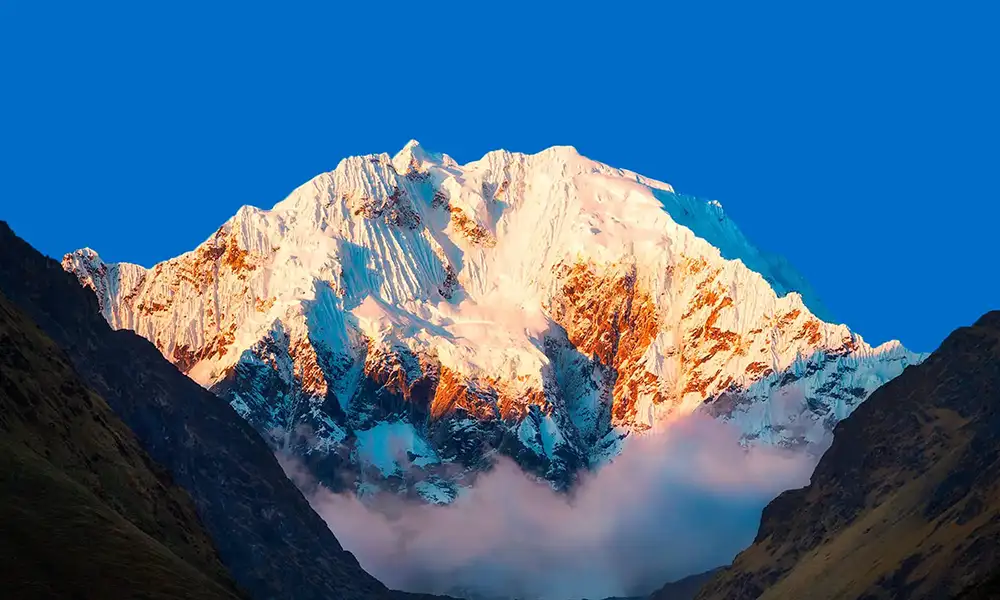
An extensive, honest, and poetic exploration of what it means to trek to Apu Salkantay
There are routes you walk with your feet.
Others you walk with your soul.
The Salkantay Trek belongs to the second category.
It’s a route that demands strength, yes;
but also humility, listening, calm, and a deep connection with the mountain.
And when we talk about safety, we’re not just talking about protocols, radios, and first-aid kits.
We’re talking about the ancient dance between the hiker and the mountain range.
How the mountain observes you, tests you, and, if you behave with respect,
protects you.
This guide brings it all together:
real risks, emergencies, preparation, appropriate behavior, and a spiritual perspective on safety on Salkantay.
It’s the most comprehensive, technical, and human version you can find.
🏔️ 1. How safe is the Salkantay Trek, really?
The Salkantay Trail is not inherently dangerous.
It is a powerful path.
And every powerful path demands preparation.
The route is safe when you:
- go with a responsible agency,
- respect weather changes,
- are acclimatized,
- listen to your body,
- and don’t underestimate the altitude.
🟢 With an agency: high safety
Reputable agencies provide:
- certified guides
- a complete first-aid kit
- emergency horses
- satellite radios
- pacing control for the group
- knowledge of the terrain
- alternative routes in case of landslides
- The experience becomes predictable and controlled.
🟡 On your own: safe, but with greater responsibility
The Salkantay Trail is a free trail,
but freedom also implies risk.
Going alone is possible,
but it requires:
- previous trekking experience
- weather forecasting
- high physical fitness
- professional equipment
- discipline
- offline navigation
It’s not dangerous.
But it’s not something to be improvised on either.
❄️ 2. Real Risks of the Salkantay Trek (and How to Deal with Them)
Many blogs downplay this part.
Here’s the truth, complete and honest.
🧊 A. Extreme Altitude (The Great Challenge)
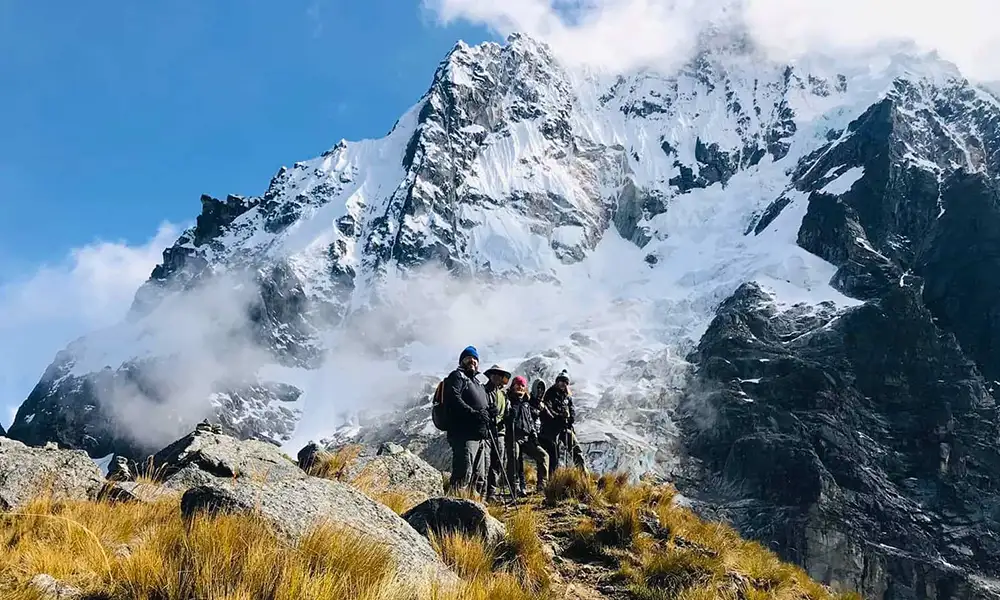
The highest point, Abra Salkantay (4,630 m), commands respect even from experienced hikers.
Risks:
- Severe altitude sickness
- Hyperventilation
- Acute migraine
- Persistent nausea
- Shortness of breath
- Mental fatigue
How to deal with it:
- Acclimate for 2–3 days in Cusco
- Sleep at altitude before the trek
- Take altitude sickness pills if necessary
- Walk slowly, without pride
- Breathe intentionally
- Drink water constantly
- Avoid smoking and alcohol
Altitude is not an enemy;
it’s a teacher that teaches patience.
🌬️ B. Unpredictable and Extreme Weather
Common Problems:
- Icy winds
- Sudden fog
- Explosive downpours
- Snow in any month
- Occasional thunderstorms
How to Protect Yourself:
- Wear proper thermal layers
- Professional waterproofs
- Hat, gloves, and a buff
- Avoid exposed areas during storms
- Follow the guide, not your instincts
The mountain’s mood changes quickly. Learning to read its signs is part of the journey.
🪨 C. Technical and Slippery Terrain
- Sections of loose rock
- Narrow trails
- Steep descents
- Mud in the jungle
- Small waterfalls crossing the path
Absolute Prevention:
- Trekking poles
- Boots with deep treads
- Don’t run
- Walk attentively, not distractedly
- Avoid hiking at night
🌳 D. Cloud Forest and High Jungle
Here, the dangers are different.
Less aggressive, but constant.
Risks:
- mosquitoes
- irritating plants
- extreme humidity
- dehydration
- slipping in mud
Prevention:
- insect repellent
- long sleeves
- drink water continuously
- frequent rest
- waterproof backpack covers
🚑 3. Emergencies on Salkantay: how they are really handled
When an emergency occurs,
the mountain doesn’t disappear or abandon you.
The Salkantay support network is real and efficient.
🟢 If you travel with an agency:
The protocol is clear:
- Immediate medical evaluation
- Oxygen or medication administration
- Evacuation on horseback
- Transfer to a vehicle
- Travel to Cusco for professional care
- The guides know the trail like the back of their hand.
And it is.
They grew up there, they honor it, they understand it.
🟡 If you’re traveling independently:
You’ll need:
- First aid knowledge
- Emergency numbers
- Satellite communication
- Money for a horse for evacuation
- Insurance with rescue coverage
- Don’t rely on chance.
📡 4. Signal, Communication, and Rescue
📶 Phone signal:
- Soraypampa: weak
- Abra Salkantay: nonexistent
- Chaullay: intermittent
- Lucmabamba: acceptable
- Hydroelectric Plant: full
📡 What always works:
- Agency radios
- Community radios
- Satellite GPS
Golden tip:
If you’re traveling alone, bring a Garmin inReach Mini.
It can save lives.
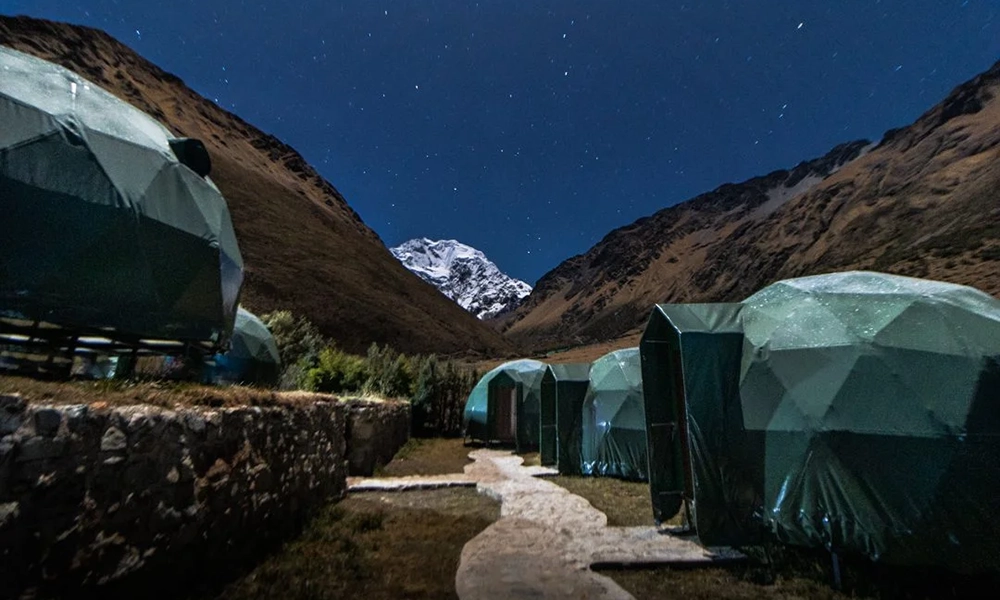
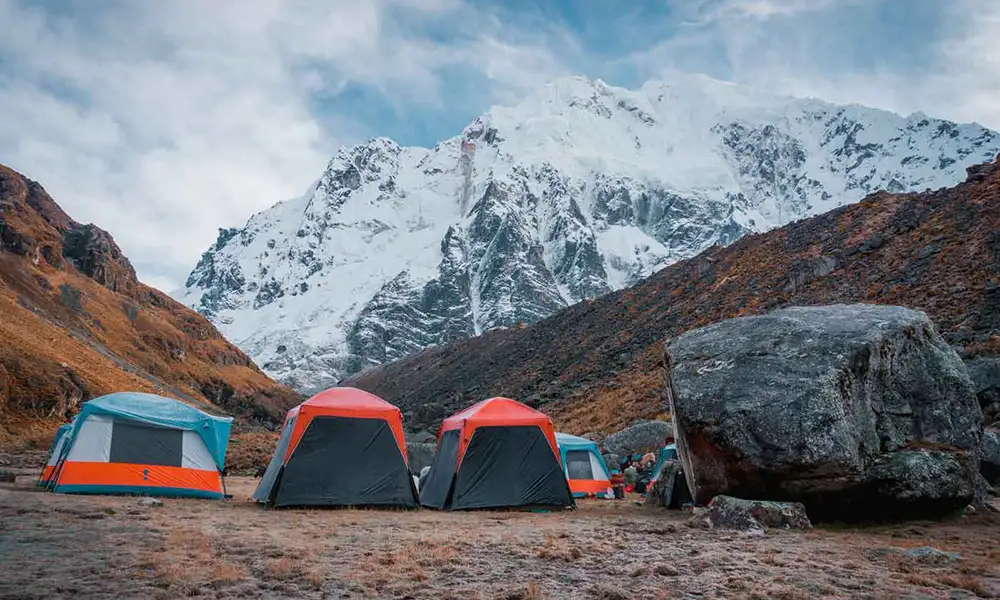
🏕️ 5. Camp safety: Is it safe to sleep on the mountain?
Yes.
The Salkantay camps are safe, stable, and peaceful.
Who manages them?
- Local Communities
- Farming Families
- Eco-lodge Owners
Real Safety:
- Zero crime
- Family atmosphere
- Natural security
- Constant local support
Tips:
- Don’t leave food in your tent
- Always keep your tent zipped
- Keep track of your accommodation
- Avoid walking at night
The mountain is tough,
but its people are kind.
👩🦰 6. Is it safe for women traveling alone?
Yes?
Yes.
The Salkantay Trek is considered one of the safest routes in southern Peru for women traveling alone, especially with an agency.
Reasons:
- Trekking environment (respectful travelers)
- Protective communities
- Professional guides
- Constant group dynamics
Personal recommendations:
- Choose a reputable agency
- Avoid hiking alone in isolated sections
- Socialize with your group
- Share your itinerary
- Trust your intuition
The mountain welcomes with respect those who walk with dignity.
🎒 7. Safety if you go on your own: important truths
Hiking the Salkantay Trek independently is possible…
but not for everyone.
You need:
- Good physical condition
- Real trekking experience
- Technical equipment (not basic)
- Terrain awareness
- Emotional independence
- Tolerance for solitude at high altitude
Additional risks:
- No one to help you if you get injured
- No guide to monitor the weather
- No one to set the pace
- Horses are not always available
If you decide to go alone,
do so with reverence and preparation.
⚠️ 8. Things almost no one tells you, but you should know
• The cold in the Abra is brutal
It can reach -10 °C even in the dry season.
• The mountain is mentally exhausting
The altitude slows your thinking.
• The fog is beautiful… and dangerous
It can disorient you in seconds.
• Rainfall doesn’t follow forecasts
Not even the most modern apps can predict it.
• The heat in the jungle is exhausting
The humidity throws off any energy calculations.
• Not all trekkers are prepared.
Never compete, never compare yourself.
🌟 9. So… is the Salkantay Trek safe?
Yes.
It’s safe if you respect it.
Safety isn’t based on the “absence of danger,”
but on the presence of awareness.
- It’s not about being strong.
- It’s about being wise.
- It’s not about arriving fast.
- It’s about arriving present.
The Salkantay is a noble,
but honest, route.
It shows you your limits without humiliating you.
It shows you your strength without deceiving you.
And if you listen to it,
it leads you to Machu Picchu through a journey you’ll remember for a lifetime.
🌄 10. The mountain doesn’t seek to frighten you, it seeks to awaken you.
On Salkantay, safety is woven in many ways:
- in the coat you choose,
- in the water you drink,
- in the slow pace you take,
- in the guide you follow,
- in the intuition you honor,
- in the humility with which you ascend.
The mountain observes.
It doesn’t punish;
it teaches.
And when you behave like a learner,
it behaves like a compassionate teacher.
Because deep down,
Salkantay doesn’t want you to suffer.
It wants you to awaken.
And when you reach Machu Picchu,
after valleys, cold, altitude, clouds, jungle, and impossible sunrises,
you will understand that true safety isn’t in the path,
but in your relationship with it.