

The most comprehensive guide to weather, conditions, safety, and preparation for trekking the Salkantay in the Andes’ dry and cold season
The Andean winter which corresponds to June, July, and August—is one of the most spectacular and, at the same time, most demanding times to undertake the Salkantay Trek.
While many regions of the world are experiencing summer, the Peruvian Andes are in their driest period of the year, with almost no rain, a clear canvas of sky, and mountains that appear sharp and pristine, like sculptures carved by gods.
But it is also a time when the cold is harshest, the nights are merciless, the wind takes your breath away, and the low humidity can have unexpected effects on the body.
This is your definitive guide, deeply informative and useful for planning your trip.
❄️ 1. What exactly is the Andean winter?
To understand the Salkantay climate at this time of year, you need to know something key:
The Andean winter is NOT a winter of constant snow, but a dry winter, typical of the tropical mountain range.
✦ Main characteristics:
- Clear skies for most of the day
- Almost no rain
- Low humidity
- Temperatures that drop drastically at night
- Very marked temperature range (mild days, freezing nights)
- Greater solar radiation due to its proximity to the equator
- More stable and drier trail conditions
In short:
Winter = cold + dryness + perfect views.
🌡️ 2. Actual temperatures during the Salkantay Trek (June–August)
These are the average temperatures by area, based on data from local operators, weather stations, and guides’ experience.
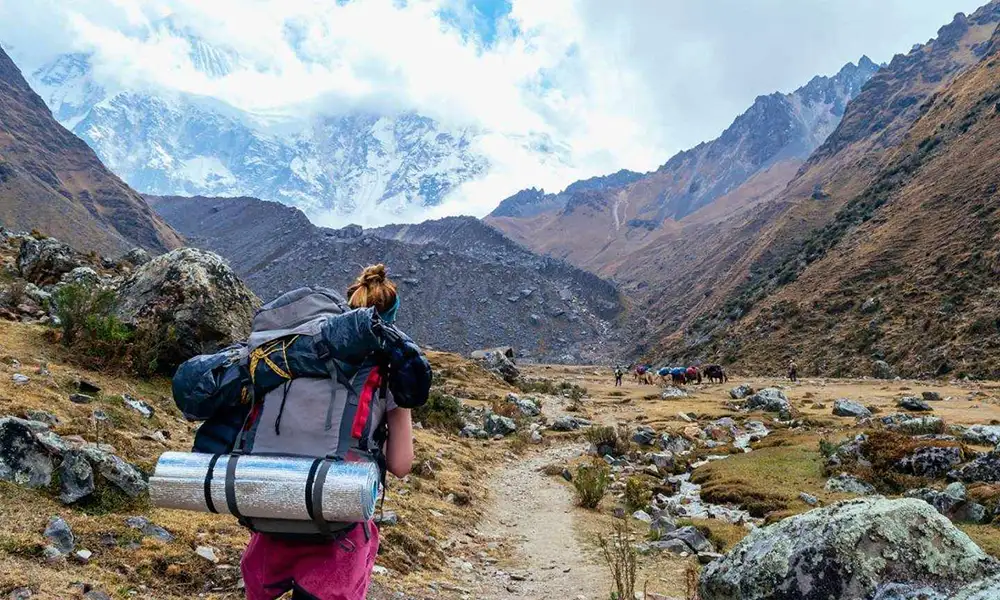
A. Soraypampa (3,900–4,000 m)
- Day: 5°C–12°C
- Afternoon: 2°C–8°C
- Night: -5°C to -10°C
- Wind chill: down to -12°C
What to expect: Frost on the grass, ice crystals on the tent, and a penetrating cold if you’re not properly equipped.
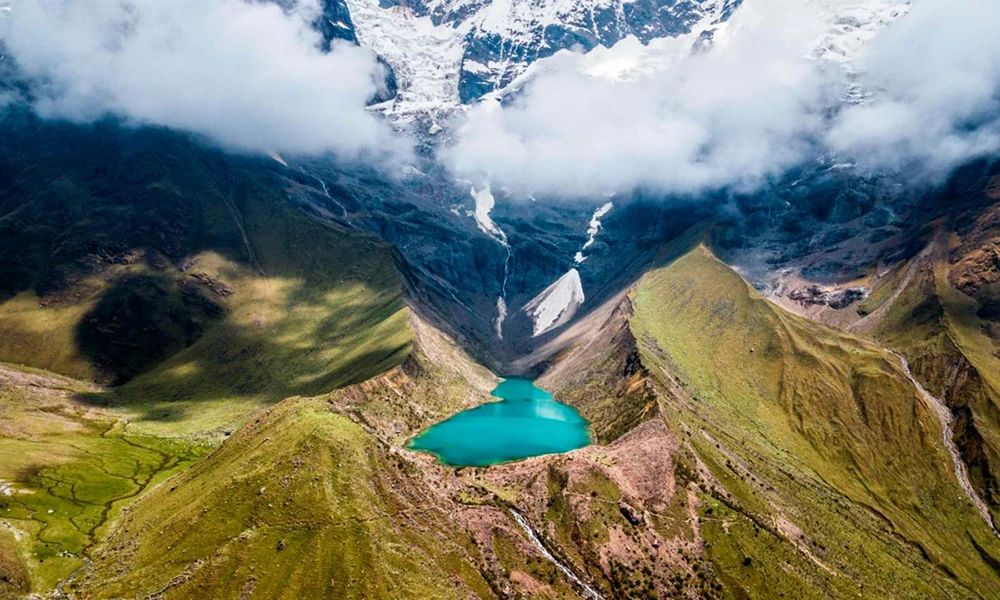
B. Humantay Lagoon (4,200 m)
- Day: 4°C–10°C
- Wind chill: down to 0°C
- Afternoon: Light fog on some days
- Cold and photogenic sunsets
What to expect: A lagoon of intense turquoise color, almost always clear.
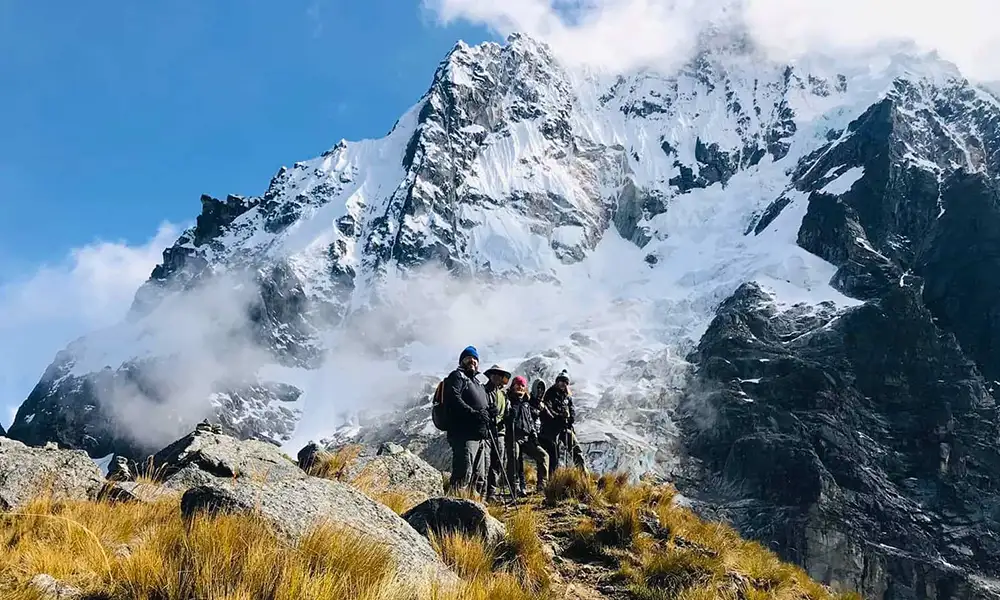
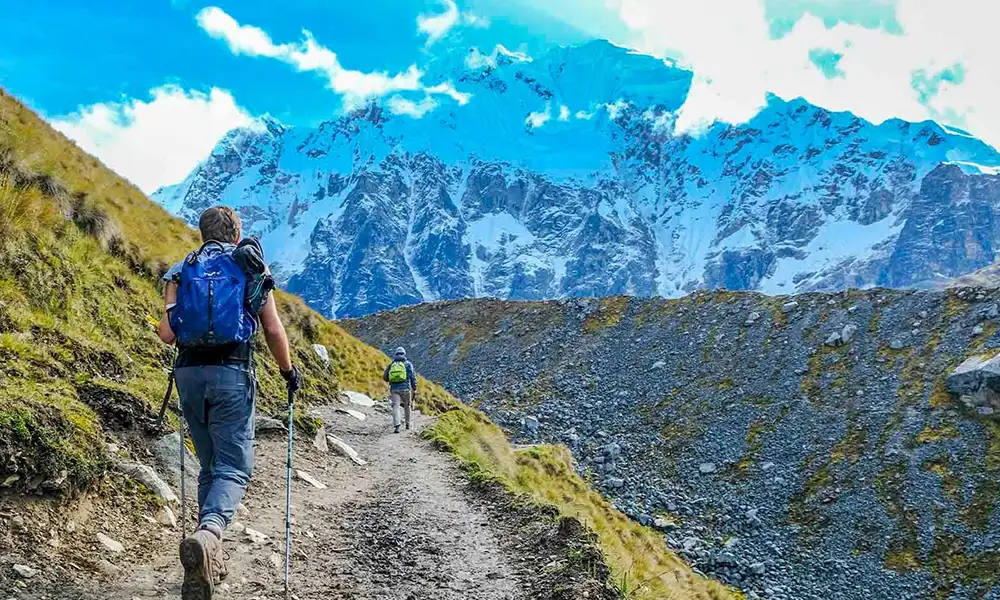
C. Salkantay Pass (4,630 m)
- Coldest point of the entire trek
- Tomorrow: -2°C to 5°C
- Wind: Gusts of 15–25 km/h
- Wind chill: -10°C
- Low chance of light snow
What to expect: A breathtaking glacial landscape, a completely clear view of Apu Salkantay, and a challenging hike due to the high altitude.
D. Descent to Huayracmachay – Chaullay (3,000 m)
- Afternoon: 8°C – 16°C
- Increasing humidity
- Warmer but cool feel
E. Lucmabamba – Cloud Forest (2,000–2,400 m)
- Day: 15°C – 28°C
- Tropical, humid environment
- Mild nights: 12°C – 16°C
What to expect:
A complete contrast to the previous days at altitude.
F. Aguas Calientes (2,000 m)
- 18°C – 26°C
- Warm, humid, tropical
🌦️ 3. Does it rain in winter? Is there snow?
✔️ Rain
Very little.
June, July, and August are part of the DRY season, with minimal rainfall.
✔️ Snow
Possible but light.
Occasionally, hail or brief snowfall occurs at the Salkantay Pass, but a thick layer is uncommon.
✔️ Fog
May appear at dawn, but clears quickly.
✔️ Frost
Very frequent at night in Soraypampa.
🌬️ 4. Wind: The Most Underestimated Factor
In winter, winds can feel colder than the actual temperature.
- At the Salkantay Pass, they can reach speeds of 25–40 km/h.
- They can increase the wind chill to -12°C or -14°C.
- They are strongest between 8:00 am and 11:30 am.
Tip:
A windproof jacket is just as important as a thermal jacket.
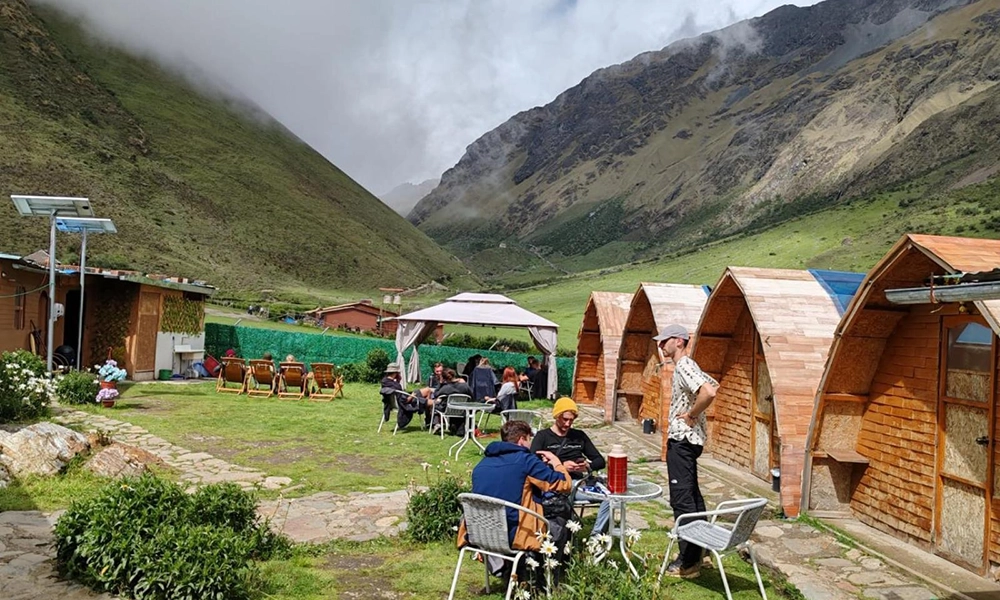
⛺ 5. How are the campsites in winter?
Soraypampa
- The coldest campsite
- Many travelers sleep in full thermal clothing
- Tents are often covered in ice in the morning
- Water bottles can partially freeze
Chaullay
- Moderately cold
- Cool but not freezing
Lucmabamba
- Warm and pleasant
- Ideal for regaining energy
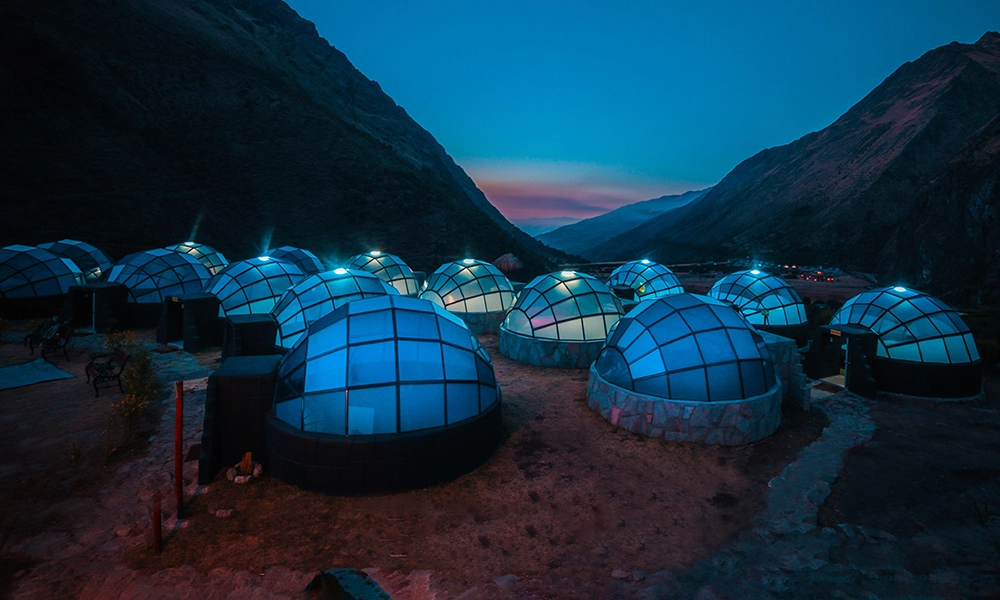
If you choose agencies with domes in Soraypampa, the experience is more comfortable (but still cold).
🧭 6. Is hiking difficult in winter?
✔️ Advantages
- Dry paths → less risk of slipping
- Firm ground → more stable pace
- Less mud
- Clear skies → better visibility and orientation
❗ Challenges
- Greater effort to breathe (cold, dry air)
- Lungs feel “hard” at altitude
- Tendency to dehydrate quickly
- Legs fatigue more easily in extreme cold
- Lips and skin dry out
🍃 7. How the body reacts to cold + altitude
During winter:
🩸 A. Decreases air vapor pressure
→ you dehydrate faster without realizing it
❤️ B. The heart works harder to maintain heat
→ your heart rate increases at altitude
🧠 C. May increase the risk of altitude sickness
→ due to lower oxygenation and increased vascular constriction
😮💨 D. The Cold can cause “frozen breathing”
→ temporary burning sensation in the trachea
🤲 E. Fingers and extremities get cold quickly
→ essential to protect hands and feet
🎒 8. What to absolutely bring if Doing the Salkantay Trek in Winter
Here’s the most complete list:
🧣 Thermal Clothing (mandatory)
✔ Thermal base layer
✔ Fleece mid-layer
✔ Down jacket
✔ Windproof jacket
✔ Rain poncho (for unexpected hail)
🧤 Hand and Head Protection
✔ Thermal gloves
✔ Thin inner gloves
✔ Fleece hat
✔ Buff or multifunctional neck gaiter
🧦 Foot Protection
✔ Thermal socks
✔ A second pair for sleeping
✔ Waterproof mid-calf boots
🛏️ Sleeping Gear
✔ Sleeping bag rated to -10°C to -15°C
✔ Emergency thermal blanket
✔ Hot pack for warming feet (optional)
🌞 Sun Protection (very important)
✔ Sunscreen SPF 50+
✔ Sunglasses UV
✔ Hydrating Lip Balm
🥾 Additional Equipment
✔ Trekking Poles
✔ Headlamp
✔ Backpack Cover
✔ Portable Charger
✔ Water Purification Tablets (just in case)
👣 9. How many hours of walking are involved per day in winter?
The same as the rest of the year, but with different sensations:
Day 1: 1.5–3 hours (Humantay optional)
Day 2: 7–9 hours (most challenging day)
Day 3: 5–6 hours
Day 4: 3–5 hours
Day 5: Machu Picchu (varies depending on the tour)
In winter, Day 2 feels more challenging due to the cold and wind.
🧯 10. Winter Safety: What You Should Know
🧡 Avoid starting the trek without being acclimatized.
2–3 days in Cusco are MANDATORY.
💧 Drink water constantly
The dry air can make you feel thirsty.
🧤 Protect yourself against hypothermia
Sleeping in damp clothes is dangerous.
🧪 Eat hot and plentiful meals
If your tour operator doesn’t offer good food, choose another one.
🛡️ Watch for warning signs
- Severe dizziness
- Extreme numbness
- Acute headache
- Persistent nausea
Stop the hike and notify your guide.
👫 11. Are there more people at this time of year? Yes, very many.
June–August is peak tourist season:
✔ Europeans on vacation
✔ North Americans
✔ Asians
✔ South Americans
Impact:
- Busier campsites
- Fully booked agencies
- Larger groups
- Need to book in advance
If you want privacy, request small groups (maximum 10 people).
🧳 12. Is it really worth doing the Salkantay Trek in winter?
YES.
For three main reasons:
🌤️ 1. The weather is the most stable of the year
- Better visibility
- Almost no rain
- Spectacular Humantay
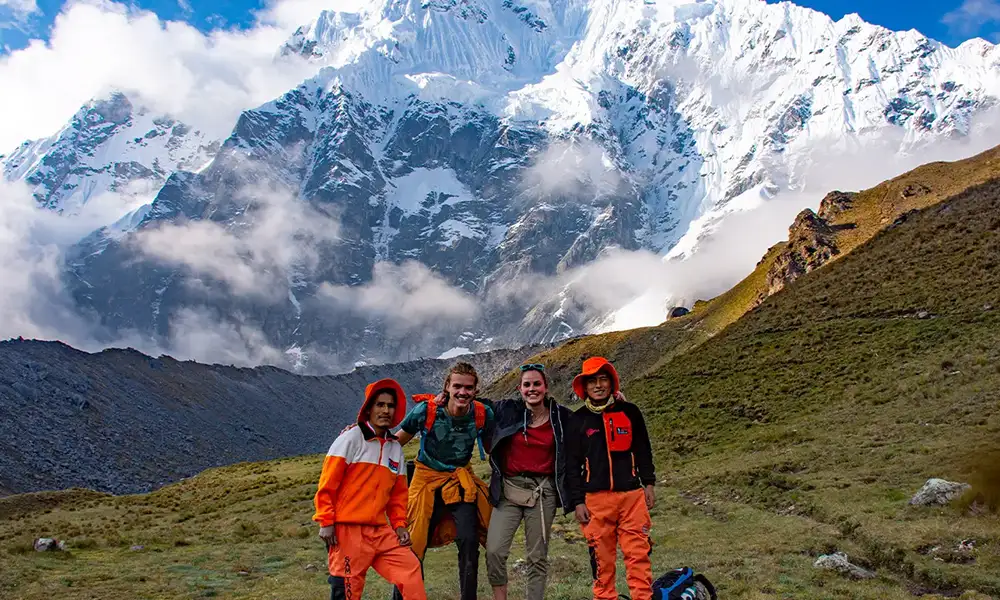
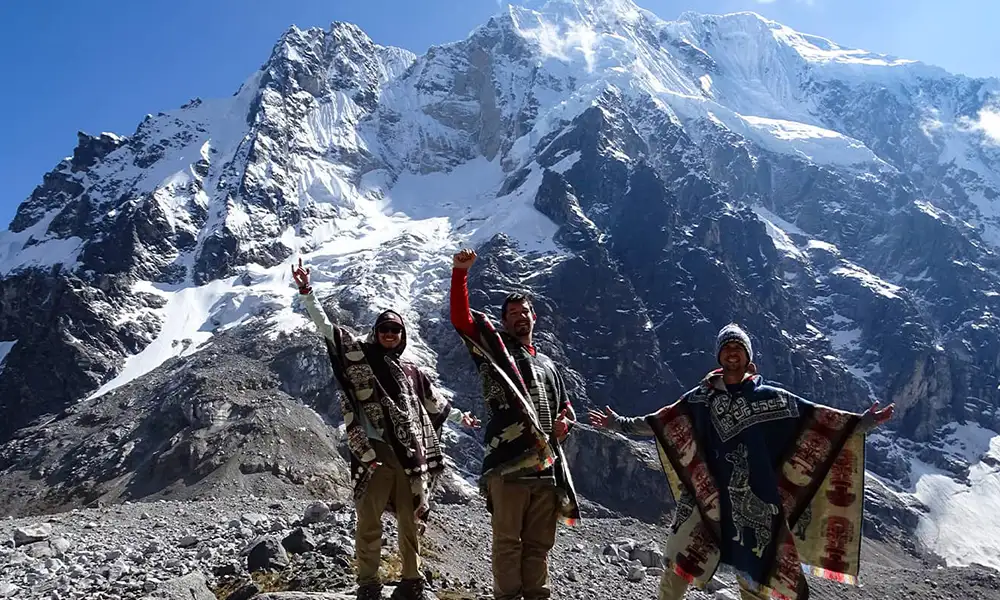
- Completely clear Salkantay
📸 2. The photos are better
- Intensely blue skies
- Cloudless glaciers
- Vibrant colors
✨ 3. The experience feels more epic
The cold, the silence, and the clear skies give the trek a special atmosphere.
🌟 Winter Reveals the True Spirit of Salkantay
The Salkantay Trek in June, July, and August is:
- challenging
- cold
- beautiful
- stable
- profound
- spiritual
- photogenic
- unforgettable
It’s the season when Apu Salkantay reveals its full grandeur, when the sky seems like a perfect mirror, when the trek feels clean, pure, and powerful.
If you prepare properly, it can be the best experience of the year.