

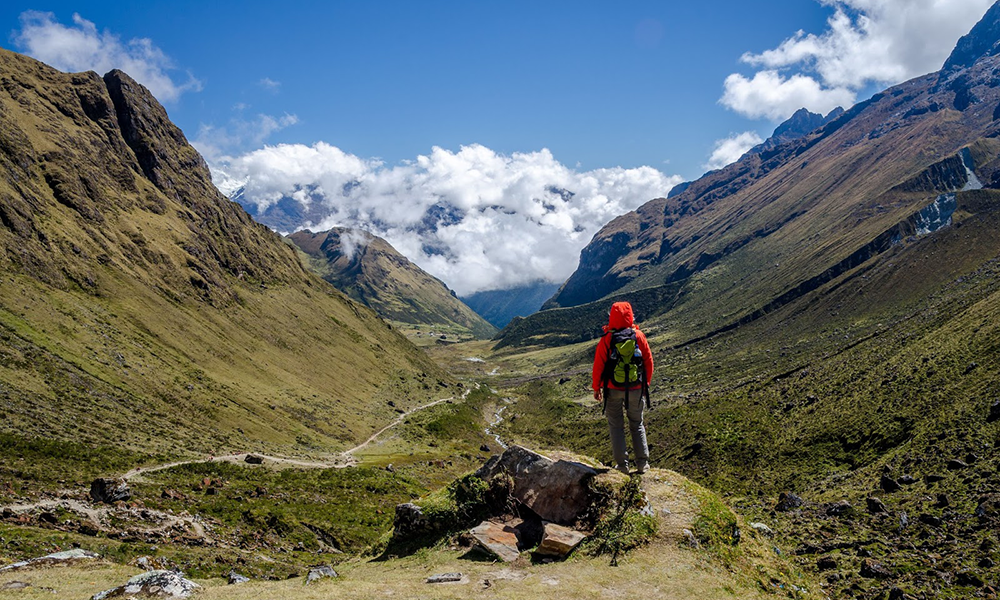

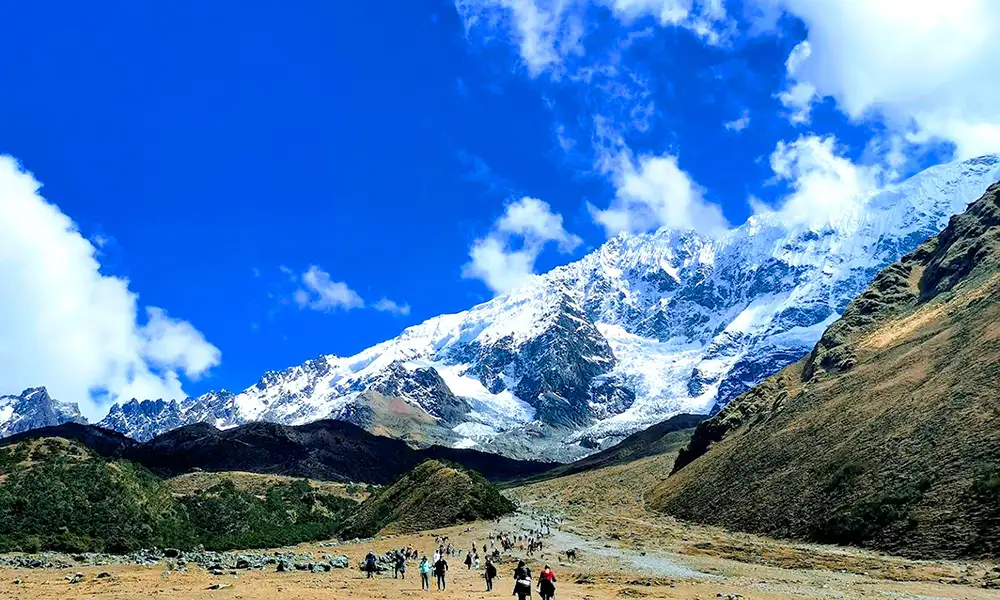
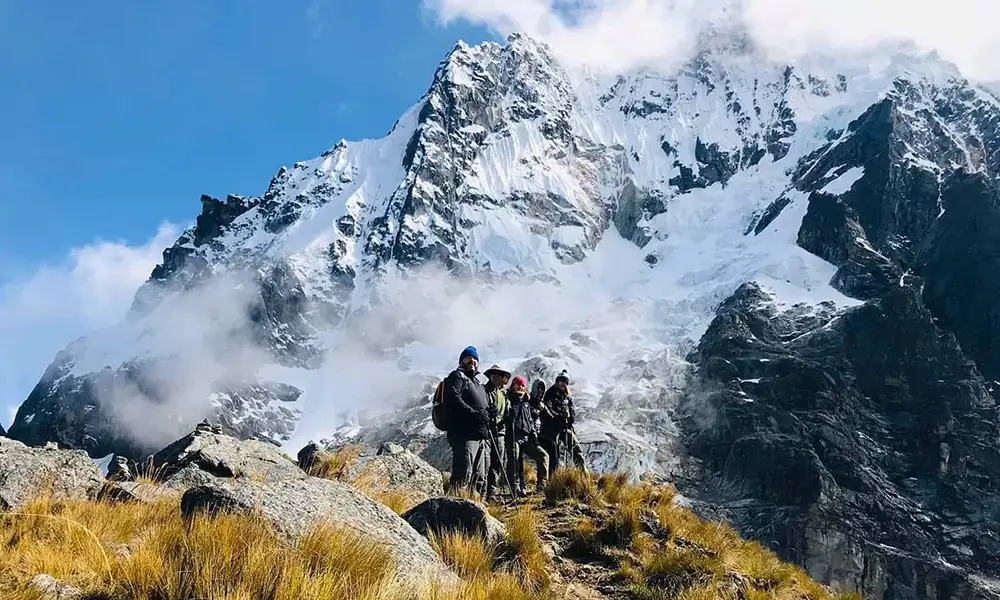
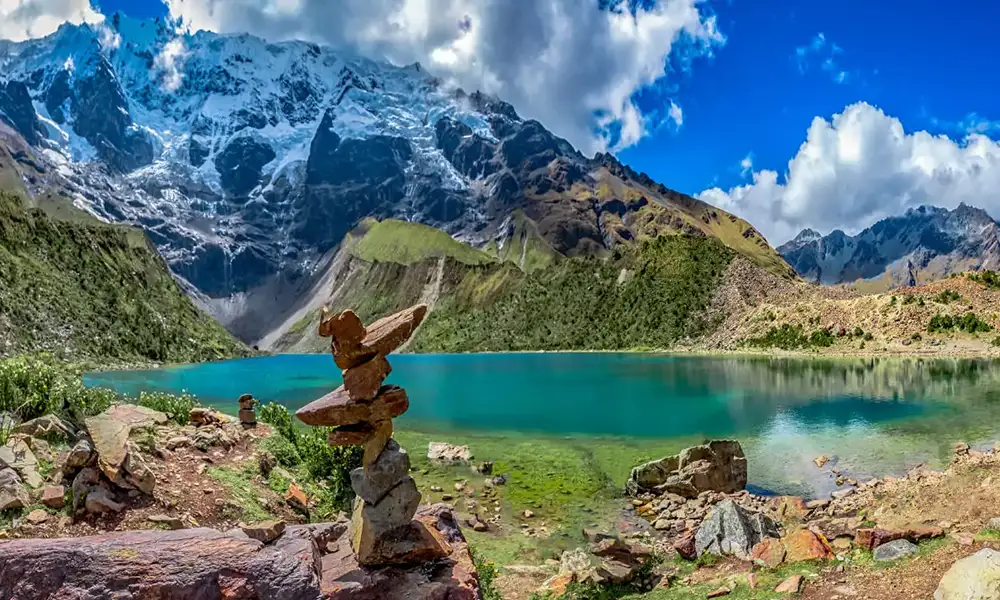
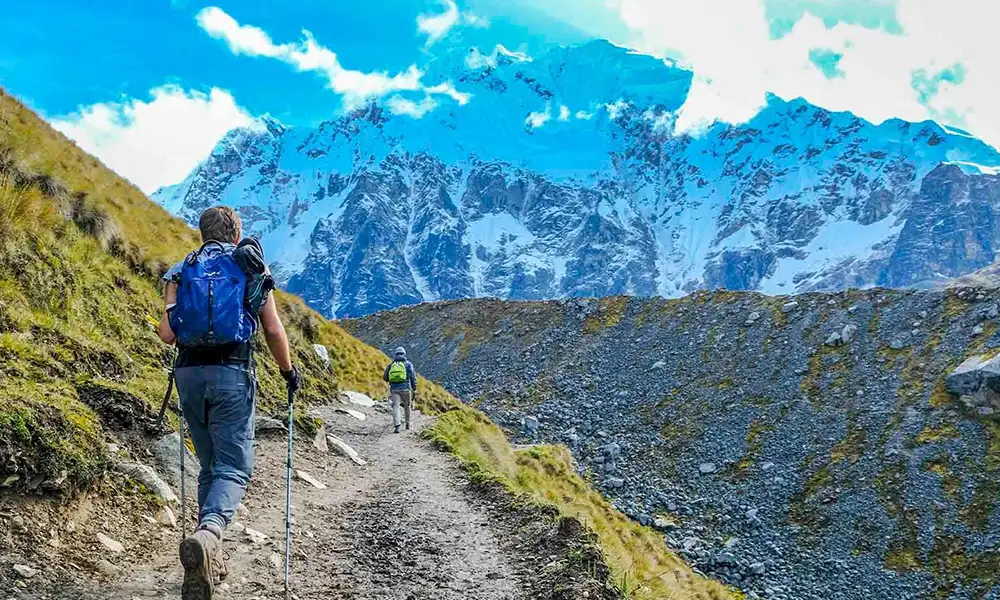
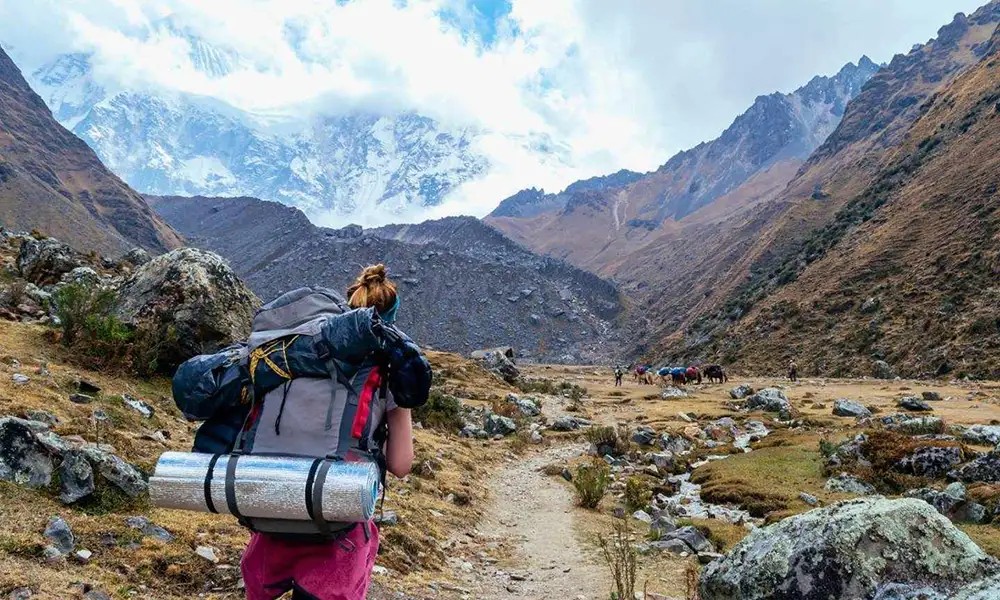
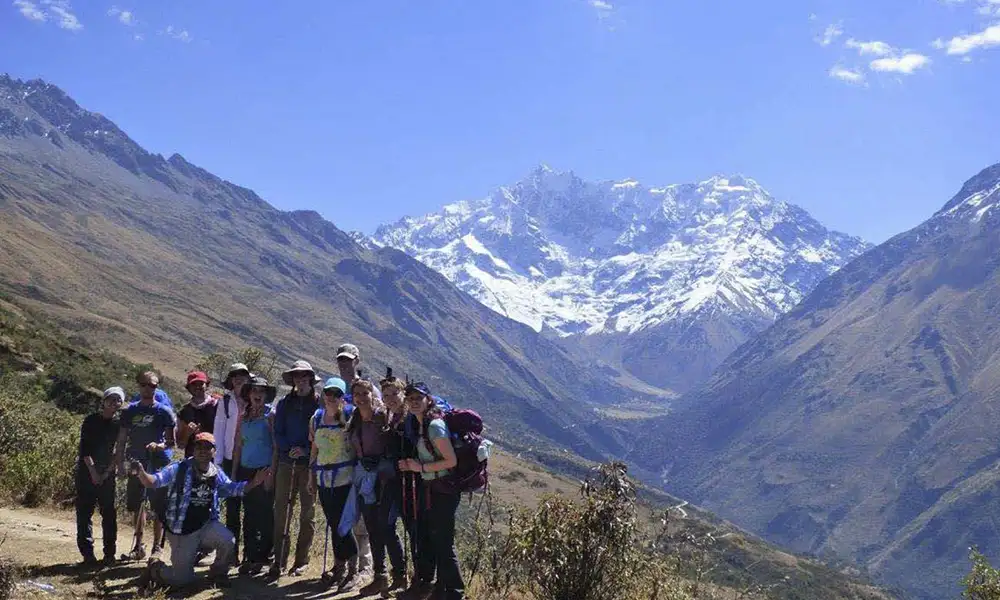
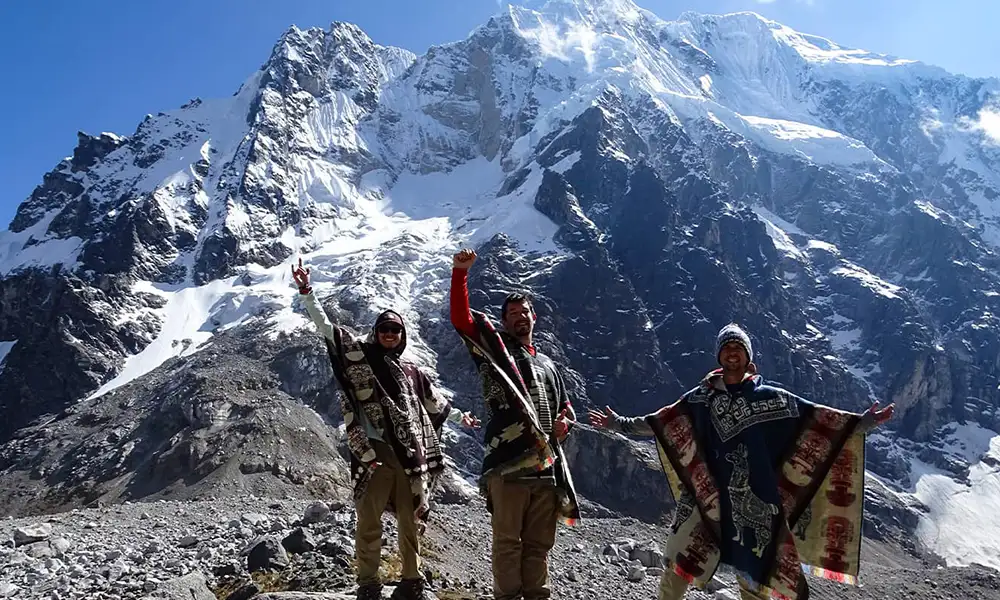
The sanctuary hidden among the clouds where the jungle converses with the Incas, and Machu Picchu appears as a sacred revelation.
There are places discovered with the eyes,
others with the footsteps,
but Llactapata is discovered with the soul.
It is one of those silent jewels of the Salkantay Trek,
a place that seems to be waiting for the right traveler,
the one who walks with patience,
the one who breathes in the mountain without haste,
the one who knows that the best views are not in postcards
but in the hidden corners of the trail.
Llactapata is a viewpoint, yes.
But it is also a portal, a sanctuary, an observatory, a refuge, a memory.
A place where the Incas left a message…
and the cloud forest protects it as if it were a sacred secret.
Prepare yourself for the most profound description ever written about this place.
🌿 1. Llactapata: More than a viewpoint, an Inca sanctuary hidden in the jungle
Llactapata was not built randomly.
The Incas did not erect temples in just any place.
Each space was selected with astronomical, agricultural, spiritual, and energetic precision.
What we see today as:
- incomplete terraces,
- ruined walls,
- moss-covered platforms,
- weathered rocks,
was once part of a larger structure,
a complex with a sacred purpose:
to contemplate, honor, and study Machu Picchu from a distance.
Llactapata is an elevated altar facing another, larger altar.
Two points connected by energy, stone, and purpose.
Archaeologists agree that Llactapata served as:
- a solar observatory,
- a ritual station,
- an agricultural point for climate analysis,
- a center for aligning with celestial events,
- a strategic military point,
- a ceremonial resting place along royal routes.
That’s how important it was.
And yet, today only hikers on the Salkantay trek know about it.
🏔️ 2. Spiritual Location: Why did the Incas build it right here?
Llactapata has an almost impossible location:
- it sits on a natural ridge,
- surrounded by precipices,
- shrouded in clouds,
- with vertical access on both sides,
- exposed to the Andean cloud forest,
- and precisely aligned with Machu Picchu.
From its central platform,
the Inca Citadel appears exactly where it should:
framed by mountains,
illuminated by the sun at the solstices,
and visually connected by the Vilcabamba mountain range.
It wasn’t by chance.
It was spiritual engineering.
The Incas chose places where the sky, the mountains, and the light
created a perfect dance.
Llactapata is an undeniable example.
🌫️ 3. The Encounter: The First View of Machu Picchu from Llactapata
This is one of the most unforgettable moments of the Salkantay Trek.
Imagine it:
You climb for hours through moss-covered trees,
along an ancient Inca Trail steeped in history.
The forest closes in, the humidity envelops you,
your clothes get wet in the thick mist.
And suddenly,
the path opens up…
A natural balcony appears.
The clouds lift slightly.
And then it happens:
Machu Picchu emerges from the distance,
silent, small, mysterious,
as if it were watching you too.
You don’t see it in its entirety.
That’s part of the magic.
The mist reveals only a part:
a wall,
a terrace,
the silhouette of Huayna Picchu,
the contours of the sacred mountain.
It’s a glimpse, a hint, a whisper.
A dialogue between mountain and hiker.
🌱 4. The energy of the place: Llactapata is felt, not just seen.
The first thing you notice in Llactapata is
the stillness.
It’s a stillness with weight.
A stillness that seems to emanate from within the earth.
Here, the sounds change:
- the birds are clearer,
- the wind is softer,
- the water flows with a different musicality,
- the silence transforms into presence.
Many travelers sit on the grass
without saying a word.
Others meditate.
Others simply observe, trying to understand
why this place moves them so deeply.
Llactapata is one of those places where
the mountain doesn’t need to prove anything.
The mountain exists, and that’s enough.
🧭 5. The Path to Llactapata: An Inca Trail Covered by the Jungle
This section of the Salkantay Trek is one of the most beautiful.
The restored Inca Trail from Lucmabamba
is a work of art:
- weathered steps
- precisely placed stones
- ancient canals still in use
- invisible retaining walls
- platforms steeped in history
But what is most impressive is how the jungle has reclaimed it:
- roots embracing the stone,
- orchids sprouting from the cracks,
- mist enveloping the walls,
- giant ferns greeting the traveler.
It is difficult to know where the human work ends
and where the work of the jungle begins.
Both have coexisted in harmony for centuries.
🏛️ 6. The Inca Structures of Llactapata and Their True Meaning
Llactapata is not just a viewpoint.
It is an architectural complex with specific functions:
● Agricultural terraces
Used for crop trials and moisture control.
● Ritual buildings
Some aligned with solstices and equinoxes.
● Solar observation centers
Machu Picchu is illuminated in a unique way from here during the June solstice.
● Hydraulic channels
Water control indicators in the cloud forest.
● Walls oriented towards Huayna Picchu
A symbolic connection with the guardian of the citadel.
Every stone had a purpose.
Nothing was accidental, nothing improvised.
The Incas did not build to adorn:
they built to understand the universe.
🌄 7. Llactapata and Machu Picchu: A sacred connection
The relationship between the two is intimate:
Llactapata observes.
Machu Picchu allows itself to be observed.
Archaeoastronomical studies indicate that
the sunrise during the winter solstice
aligns both sites in a perfect spectacle:
The sun rises over Machu Picchu]
and the light reaches Llactapata directly.
This is not by chance.
It never is with the Incas.
It is believed that Llactapata served as:
- a center for initiating ceremonies,
- a point of spiritual preparation before entering Machu Picchu,
- a resting place for the nobility,
- an altar for celestial observation,
- an agricultural station for understanding the climate.
🌫️ 8. The Magic of the Weather: Llactapata Changes Every Minute
One of the most beautiful aspects of the place
is its constant atmospheric change.
In a single minute you can see:
☁️ Thick fog
🌤️ A ray of sunlight illuminating Machu Picchu
🌧️ A gentle rain descending from the mountain
🌀 A wind laden with humidity
🌈 A rainbow forming between the valleys
⛰️ A clear view of the Sanctuary
🌫️ And a gray veil obscuring everything again
Llactapata is not a fixed viewpoint.
It’s a continuous metamorphosis.
- The climate gives it character.
- The mist lends it mystery.
- The wind gives it a voice.
🧘♀️ 9. The Human Experience: What does the traveler feel in Llactapata?
Llactapata doesn’t impact you like a typical tourist destination.
It impacts you in layers:
First layer: surprise
You don’t expect to see Machu Picchu so soon.
Second layer: emotion
Something in your chest opens up.
Third layer: introspection
You begin to think about how far you’ve come,
about what’s still to come,
about what it means to arrive.
Fourth layer: gratitude
Not everyone gets here.
Few have seen it this way.
Fifth layer: connection
You understand that Machu Picchu isn’t a destination,
but a process.
Llactapata prepares you emotionally
for what’s to come.
🌟 10. Why should Llactapata be considered one of the treasures of the Salkantay Trek?
Because it offers the traveler:
- an intimate moment with Machu Picchu,
- an ancestral vision that almost no one knows,
- an archaeological site without crowds,
- a space to feel the jungle and the mountain in balance,
- a silent dialogue with Inca energy,
- a spiritual rest after days of trekking,
- and a magical foretaste of the final destination.
Llactapata is not just a viewpoint.
It is the emotional prelude to Machu Picchu.
>The secret door.
The threshold between effort and reward.
>The place where the mountain gently tells you:
“You’re almost there.
You’re ready.”
🧙♂️ Llactapata, the whisper before the great encounter
Machu Picchu is a visual impact.
Llactapata is an impact on the soul.
It’s a place few know,
but that everyone should experience.
A spot where the mountain breathes softly,
the jungle whispers ancient stories,
and Machu Picchu appears
not with grandeur,
but with grace.
Llactapata isn’t the destination,
but it’s the moment the journey becomes understood.
It’s the poetry of Salkantay.
Its hidden heart.
The sacred antechamber
to the encounter with the eternal city.