

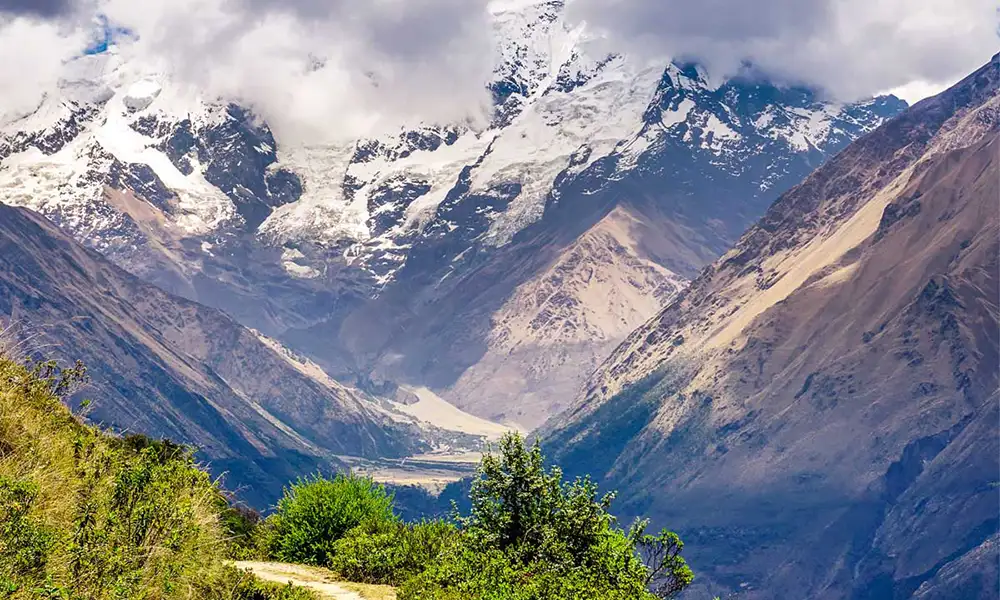
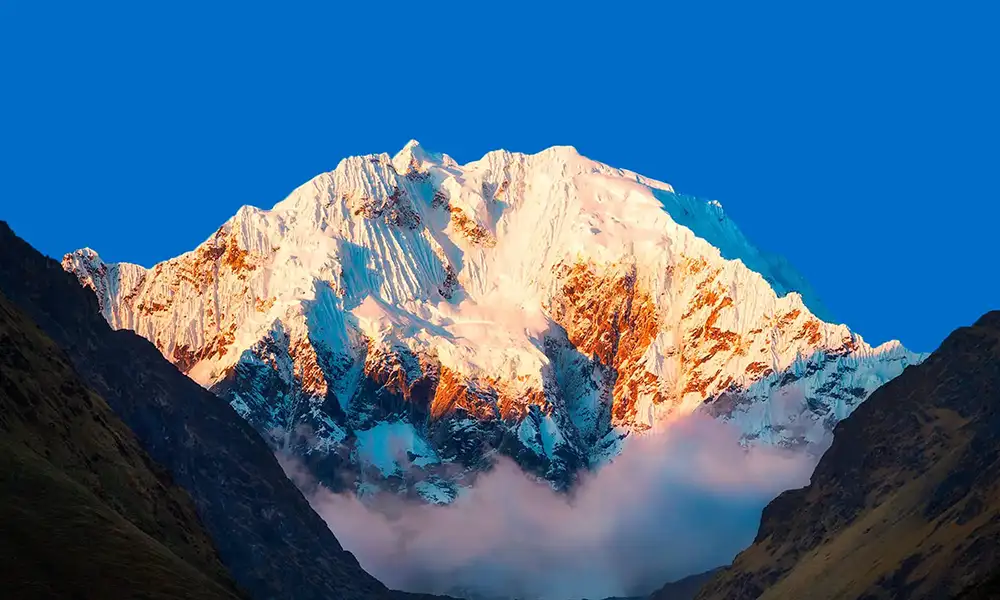
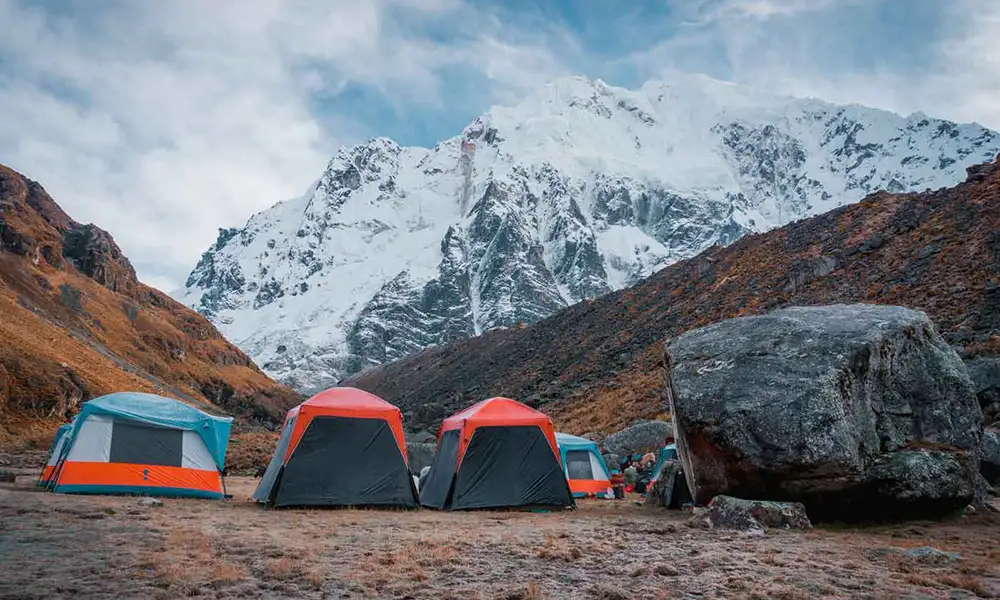
Nevado Salkantay, an imposing mountain that dominates the Vilcabamba mountain range, is not just a majestic Peruvian landscape: it is an ancestral symbol, a living spirit, a protector, and a witness to Andean history. Its name—Salkantay or Sallqantay in its original Quechua form—holds profound meanings about nature, spirituality, and the worldview of the Andean peoples.
For thousands of travelers who undertake the Salkantay Trek, understanding the true meaning of the name transforms the experience into a much more powerful cultural and spiritual journey.
This blog explains the complete story, the true meaning, the etymology, the myths, the religious significance, the connection to Machu Picchu, and everything behind the name.
🌄 1. What does the name “Salkantay” really mean?
The word Salkantay comes from the original Quechua word Sallqantay and is composed of two components:
✔️ SALLQA
Meaning:
- Wild
- Untamed
- Natural / undomesticated
- Pure and beyond human control
- Of primeval nature
In the Andean worldview, sallqa is everything that belongs to the natural world in its purest state, uncontrolled by humankind.
It includes mountains, wild animals, rivers, forests, and weather phenomena.
✔️ ANTAY
Meaning:
- Landslide
- Snowfall
- Avalanche
- Violent detachment
- Sudden ice storm
It expresses force, movement, and transformation.
It describes the unpredictable behavior of a snow-covered mountain.
⭐ 2. Accepted Complete Translations
The most accurate translations of Salkantay are:
🟩 “Wild mountain that produces avalanches”
🟩 “The untamed one that falls”
🟩 “The one who unleashes storms”
🟩 “Wild lord of the snow”
These translations describe not only its geology but also its spiritual personality.
🏔️ 3. Apu Salkantay: Living Spirit of the Andes
To understand the meaning of the name, we must understand what an Apu is.
🌟 What is an Apu?
An Apu is a sacred mountain with its own spirit.
It is a living, conscious, and powerful entity.
The Apus:
- Protect communities
- Regulate the climate
- Govern water
- Are intermediaries between the human and spiritual worlds
- Are considered “fathers” or “ancestors”
Apu Salkantay is one of the most important in southern Peru, along with:
- Apu Ausangate
- Apu Veronica
- Apu Pitusiray
- Apu Huanacaure
🌞 4. The Role of Salkantay in the Andean Cosmovision
Salkantay is an Apu associated with:
- Active masculine force
- Extreme weather
- Transformations of nature
- Protection of wildlifeThe fertility of glacial water
For Andean communities, Salkantay:
- Has “character”
- Can be “angry” or “calm”
- “Listens” to offerings and requests
- “Responds” with climate changes
🧭 5. Importance in the Inca Era
During the Empire For the Incas, the Salkantay region was a zone of transit, trade, and spiritual pilgrimage.
It was a crucial mountain due to:
✔️ Its altitude (6,271 m)
The second highest in Cusco, a natural landmark.
✔️ Its geographical position
It connected:
- Cusco
- The cloud forest
- The Santa Teresa Valley
- Routes to Vilcabamba
✔️ Its influence on the climate
The Apu (mountain spirit) controlled the water cycles.
✔️ Its presence in rituals
Offerings were made of:
- Coca
- Chicha (fermented corn beverage)
- Llamas
- Fire ceremonies
- Payments to Mother Earth
🔱 6. Salkantay’s relationship with Machu Picchu
The connection between Salkantay and Machu Picchu is powerful.
🧩 Astronomical Alignments
It has been shown that:
- Some structures at Machu Picchu point directly toward Salkantay.
- During solstices, the light aligns with the snow-capped mountain.
This suggests that Machu Picchu was designed with a spiritual connection to this mountain.
🧩 “The Guardian of Machu Picchu”
Many archaeologists believe that Salkantay was one of the sanctuary’s guardian spirits, along with Apu Putucusi and Apu Huayna Picchu.
🔥 7. Myths and Legends of Salkantay
⭐ 7.1. The Legend of the Salkantay and Ausangate Brothers
One of the most widespread legends tells that:
- Ausangate represents wisdom, abundance, and rain.
- Salkantay represents untamed strength, cold, and snow.
They both fall in love with a star named Qoya, which unleashes storms, avalanches, and celestial battles.
⭐ 7.2. Salkantay as a Warrior
Another legend describes it as a warrior who:
- protected the border between the Andes and the jungle
- watched for intruders,
- commanded the storms.
The sound of the wind on its glaciers was its “voice.”
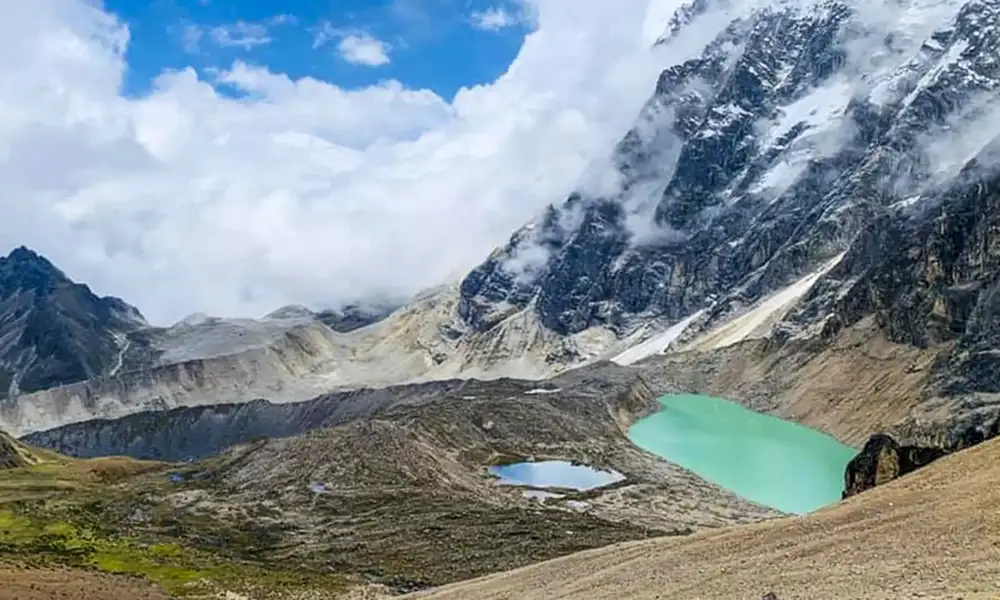
⭐ 7.3. The Weeping Mountain
Some locals say that when the Apu (mountain spirit) is saddened:
- it cries in the form of melting ice,
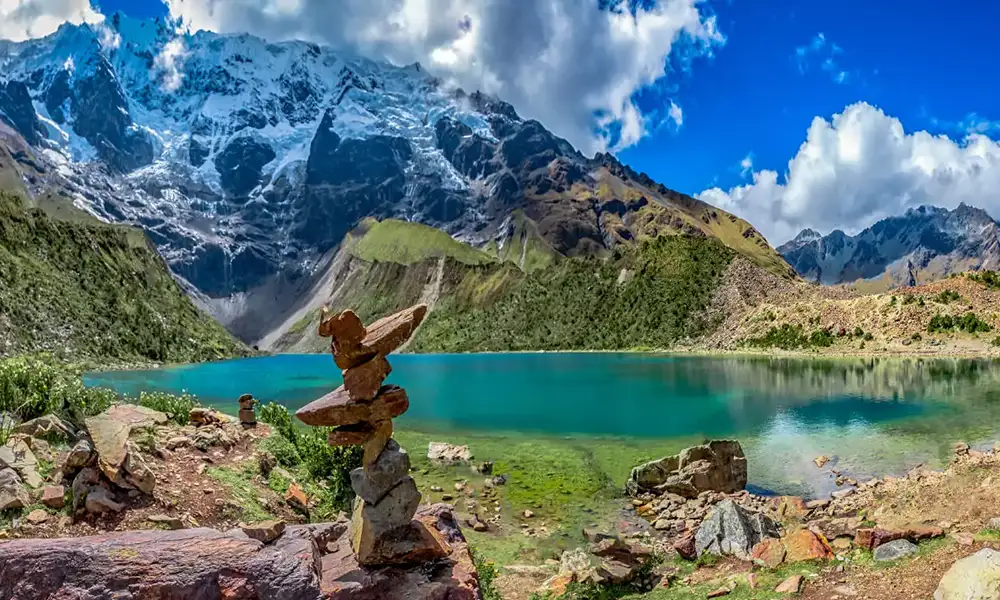
- the lagoons change color,
- and fog covers the trekking trails.
🌬️ 8. Salkantay’s Natural Behavior: A Living Mountain
The name Salkantay is not only mystical.
Its natural behavior justifies its reputation as “untamable.”
✔️ Frequent avalanches
Due to its glacial slope.
✔️ Abrupt weather changes
It can go from intense sunshine to snowfall in minutes.
✔️ Extreme winds
Especially near the pass (4,630 m).
✔️ Crevasses that “response
The sound of the expanding ice resembles a deep breath.
✔️ Changing Colors
Salkantay can appear white, gray, blue, gold, or black depending on the light.
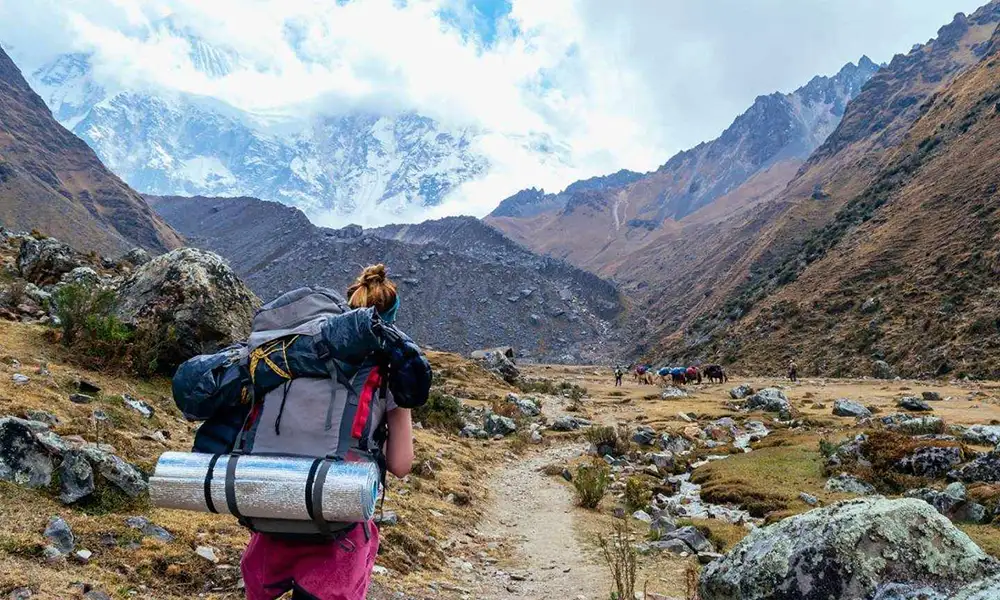
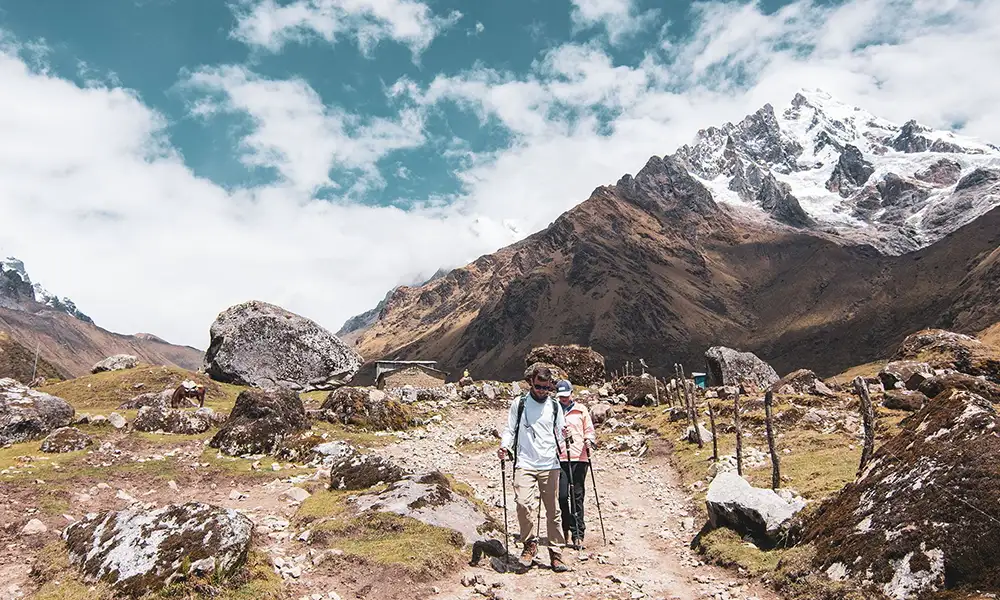
🥾 9. The Meaning of the Name on the Salkantay Trek
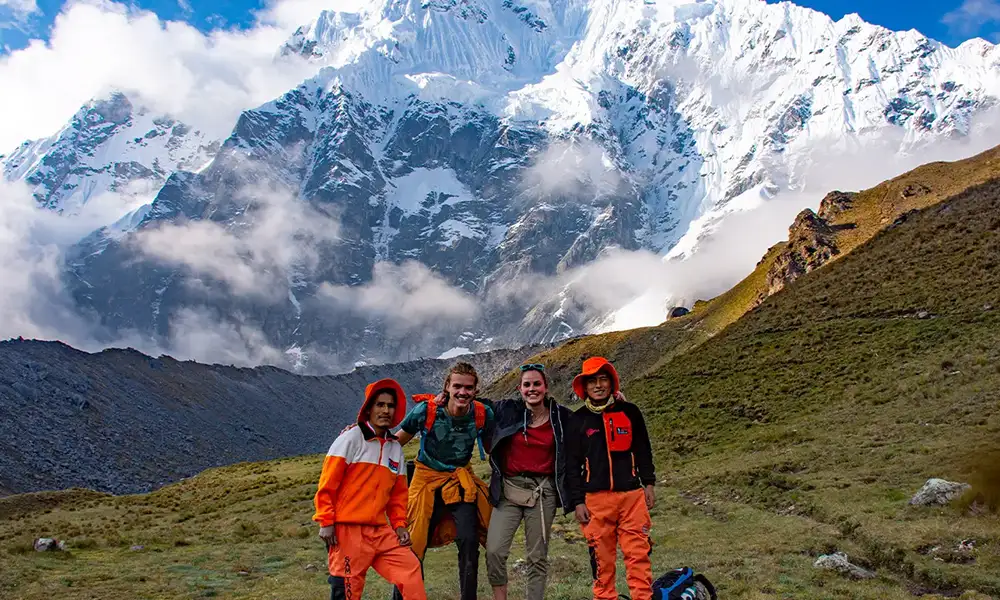
During the trek, the name “Salkantay” comes alive.
✔️ Day 1: You observe it from afar
Majestic and commanding.
✔️ Day 2: You face it
The ascent to the Salkantay Pass is the most spiritual moment of the trek.
Travelers often:
- Leave coca leaf offerings
- Breathe deeply
- Feel emotional release
- Take epic photos
- Give thanks to Pachamama (Mother Earth)
✔️ Crossing the pass is symbolic
It represents:
- Overcoming fears
- Leaving burdens behind
- Spiritual rebirth
It is one of the most intense moments of any trek in the world.
🌱 10. Spiritual Dimension of the Name Salkantay
The name evokes:
- strength
- purity
- the unpredictable
- resilience
- the balance between life and death
- the divine presence
For the Andean people, Salkantay is a teacher.
It teaches about:
- humility
- respect for nature
- patience
- transformation
- connection with the earth
Many travelers feel a special energy when crossing its mountain pass.
🌍 11. Current Importance of Apu Salkantay
Today, Salkantay:
- is one of the most famous treks in the world
- inspires Andean ceremonies
- is a source of water for thousands of people
- is studied by geologists and glaciologists
- appears in international documentaries
- sustains entire communities through tourism
But for its people, it will always be the same:
The wild spirit that protects the Andes.
The name Salkantay or Sallqantay is A linguistic and spiritual gem that encapsulates centuries of history, myth, and respect for nature.
It signifies the wild and untamed mountain, capable of producing avalanches and sudden climate changes.
But it also represents the Apu, the powerful spirit that protects the valleys, communities, and Andean trails.
Understanding its meaning transforms trekking into an act of profound connection, not only with the mountain, but with the living history of the Andes.
Whoever understands the meaning of the name understands a part of the soul of Peru.