

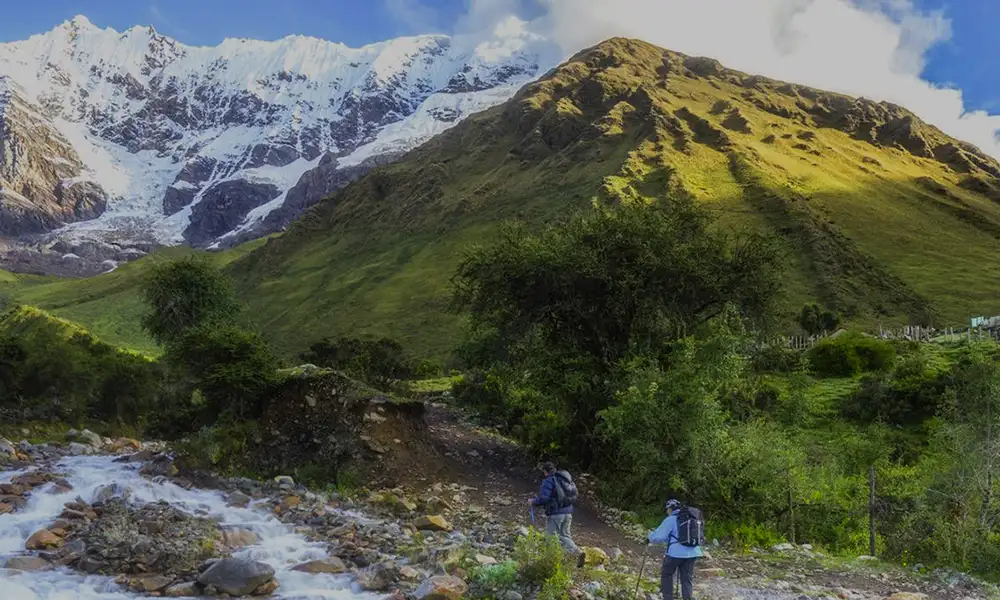
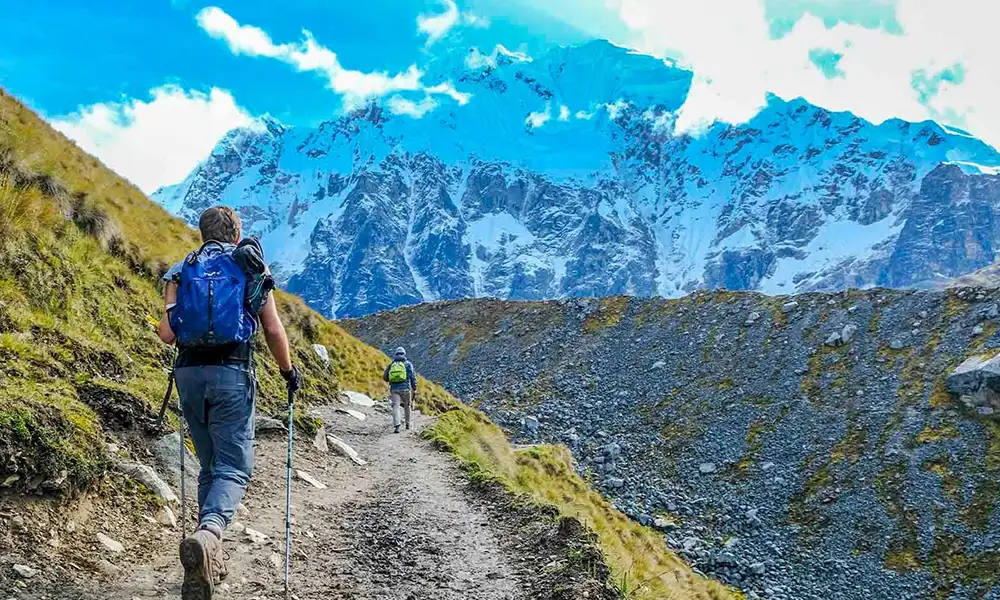
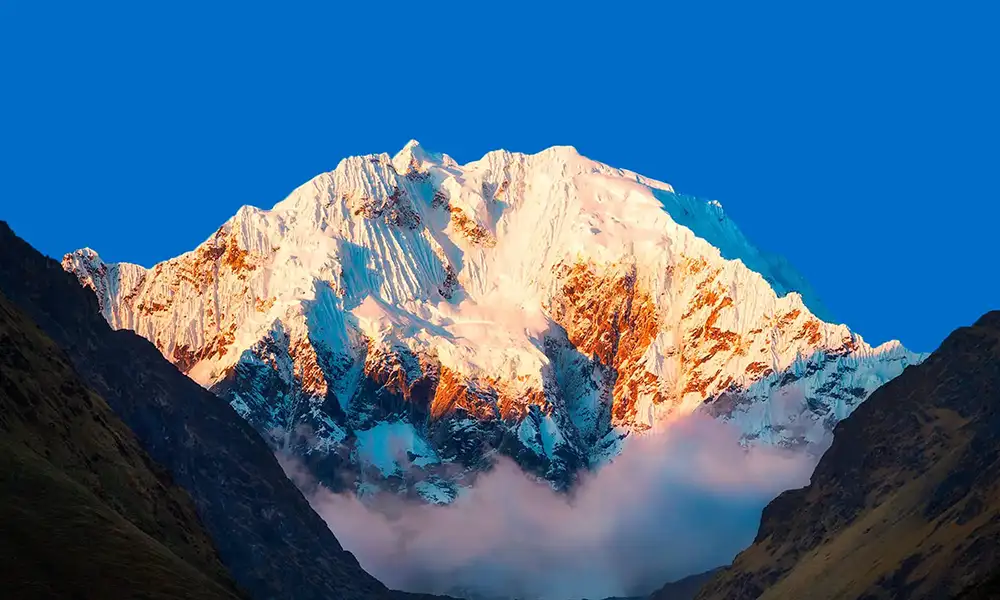
The Salkantay Trek is one of Peru’s most iconic, intense, and spiritual trails. Considered the best alternative route to Machu Picchu, this trek combines Inca history, sacred landscapes, turquoise lagoons, immense glaciers, cloud forests, and rainforest. Over five days, you’ll traverse environments so diverse they feel like different countries: from glacial tundra to the Amazon rainforest.
But the Salkantay is more than just a trek. It’s a path of transformation. A physical, emotional, and spiritual journey that crosses territories the ancient Incas considered the domain of the Apus—the protective mountain spirits.
In this blog, you’ll discover what the Salkantay Trek truly is, its profound history, its spiritual significance, and the most comprehensive day-by-day explanation of the route.
Prepare to experience the soul of Apu Salkantay.
🌄 1. What is the Salkantay Trek?
The Salkantay Trek is an adventure hike that connects Cusco with Machu Picchu through the Vilcabamba mountain range. With a standard duration of 5 days and 4 nights, it covers a total of 70 to 75 km, passing through glaciers, valleys, lagoons, and high jungle.
It is considered one of the most beautiful treks in the world by National Geographic Adventure Travel.
What makes it so special?
- It traverses extremely diverse ecosystems.
- It doesn’t require permits like the Inca Trail.
- It offers close-up views of the Salkantay Mountain (6,271 m).
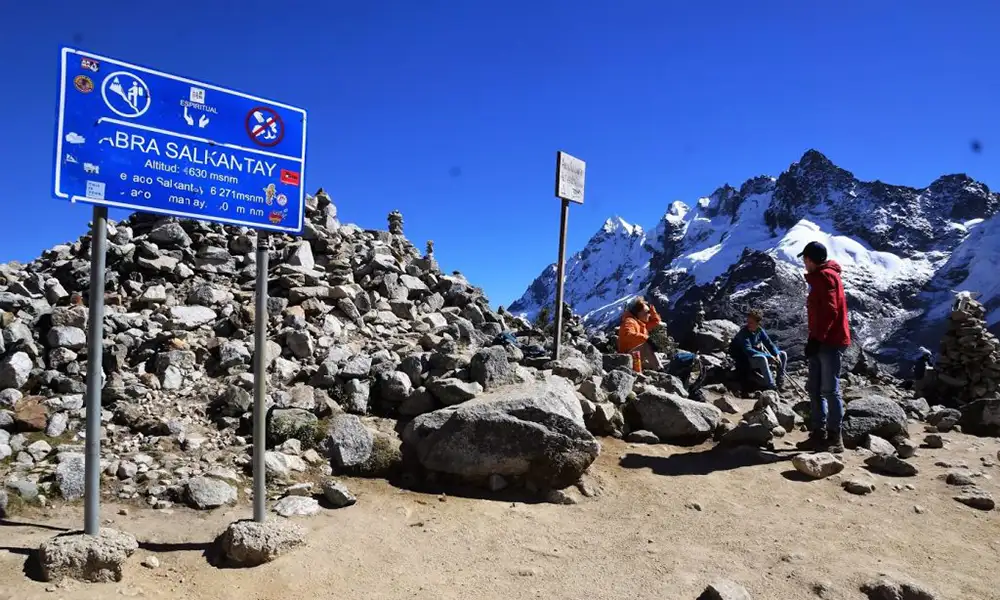
- Its highest point, the Salkantay Pass (4,630 m), is an epic challenge.
- It combines ancestral culture, adventure, spirituality, and untamed nature.
- It ends at Machu Picchu, one of the Wonders of the World.
It is a free, majestic route deeply connected to the essence of the Andes.
🏔️ 2. Who is Apu Salkantay? The Spirit of the Mountain
To understand the trek, you must first understand Salkantay.
🌟 Apu Salkantay: Sacred Mountain
In the Andean worldview, an Apu is a protective mountain, a powerful spirit that watches over communities, regulates the climate, and governs crops, water, and life.
Apu Salkantay is one of the most important mountains in southern Peru.
📖 Etymology of the name
In Quechua:
- Sallqa = wild, untamed
- Antay = to produce avalanches or snow waves
Therefore, Salkantay means:
👉 The Wild Lord who produces avalanches
👉 Untamed mountain
👉 Sacred mountain that commands respect
This name reflects the immense, cold, and revered nature of the Apu.
📜 3. History of the Salkantay Trek: The Ancestral Path
Although it is considered a modern route today, its origins date back to the Inca Empire.
The Incas used the Salkantay area as:
- A connecting route between Cusco and the cloud forest
- A strategic route to Vilcabamba
- A trade route for transporting coca leaves, fruits, and timber
- A ceremonial territory to honor the Apu (mountain spirits)
🔶 Relationship with Machu Picchu
According to archaeological studies, the Salkantay was part of a spiritual circuit that connected sacred mountains with Machu Picchu.
Many structures at Machu Picchu are aligned with the silhouette of the Salkantay, demonstrating its importance.
🔶 Legends of Salkantay
Andean legends tell of two brother apus:
- Apu Salkantay: strong, wild, cold
- Apu Ausangate: wise, generous
Both watch over the balance between the mountains and life in the Andes.
🌍 4. Trek Geography: A Route of Extreme Contrasts
During the Salkantay Trek, travelers traverse areas of:
❄️ High mountain (4,000 – 4,630 m)
- Glaciers
- Snow
- Thin air
- Lunar landscape
🌿 Cloud forest (2,800 – 2,000 m)
- Cloud forests
- Rivers and waterfalls
- Coffee plantations
🌲 High jungle (2,000 – 1,900 m)
- Warm climate
- Dense vegetation
- Amazonian biodiversity
🏰 Archaeological zone
- Llactapata (secret viewpoint of Machu Picchu)
- Connections with Inca trails
Very few treks in the world offer such variety in such a short time.
🥾 5. Complete Salkantay Trek Route
Here’s a more in-depth and precise day-by-day explanation:
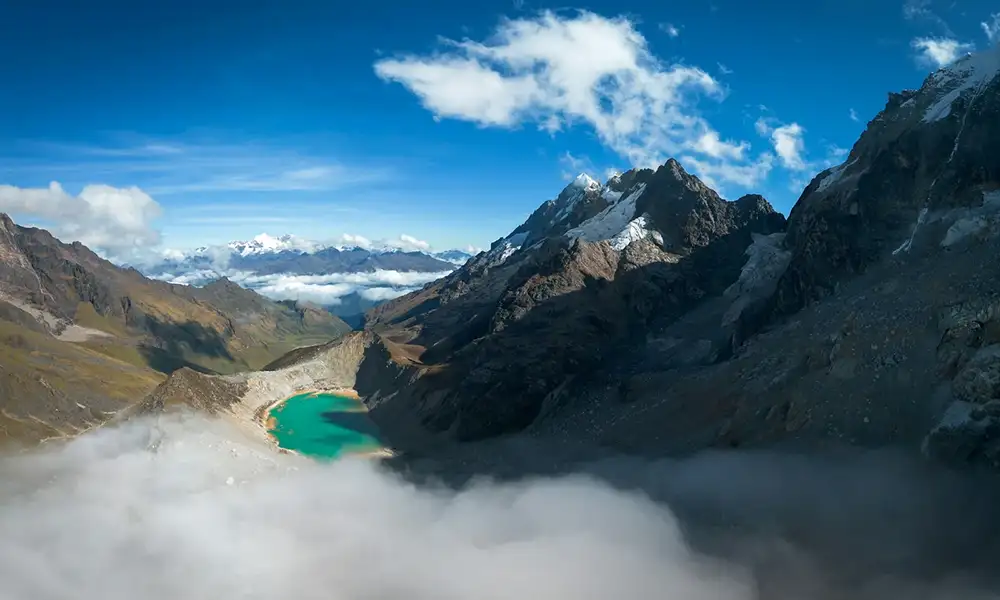
⭐ Day 1: Cusco → Mollepata → Soraypampa → Humantay Lagoon
🔹 Altitude: 3,900–4,200 m
🔹 Duration: 3–4 hours of hiking
🔹 Weather: Cold, windy, sub-zero temperatures at night
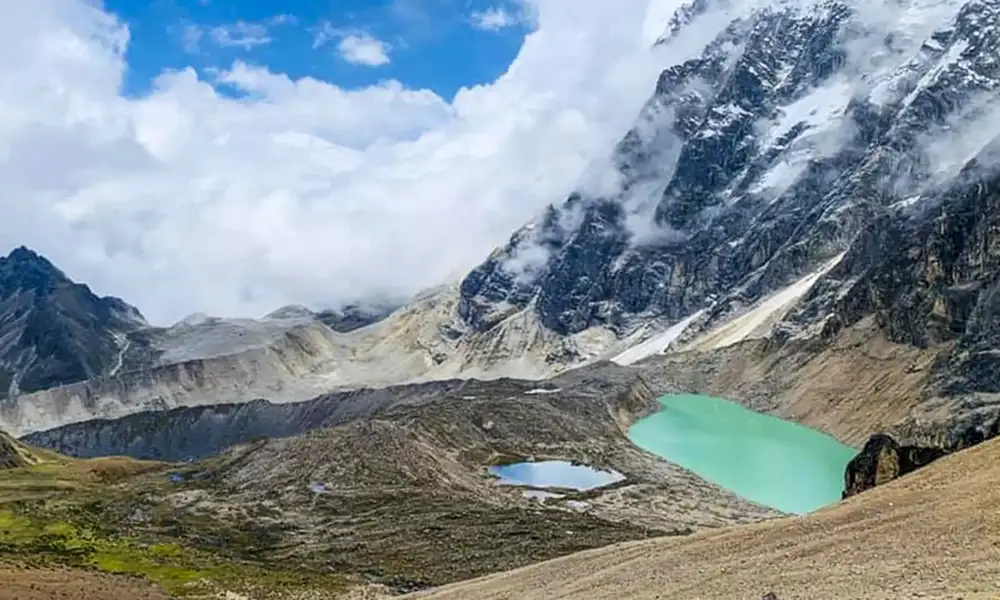
The trail begins with a gradual climb towards Humantay Lagoon, a glacial lake that reflects the snow-capped peaks. It’s one of the most photographed landscapes in Peru.
✔️ This day is for:
- Acclimatizing
- Connecting with the energy of the Apu (mountain spirit)
- Enjoying the glacial landscape
You’ll sleep at the foot of the snow-capped mountain: a mystical experience.
⭐ Day 2: Soraypampa → Salkantay Pass (4,630 m) → Huayracmachay → Chaullay
🔹 The MOST demanding day of the trek
🔹 The final climb to the pass is an epic stretch
🔹 Temperature: -5°C to -10°C in the morning
The hike to Salkantay Pass is one of the most intense moments of the route.
It’s a mix of physical exertion, breathtaking scenery, and powerful spiritual energy.
What you’ll find:
- Snow
- Rocks
- Profound silence
- The icy wind from the Apu (mountain spirit)
- An unparalleled sense of accomplishment
Then you descend to a more temperate climate.
⭐ Day 3: Chaullay → La Playa → Lucmabamba
🔹 Altitude: 2,900 → 2,100 m
🔹 Ecosystem: Cloud Forest
Here the landscape changes completely:
from cold mountain → to humid jungle.
You will pass by:
- Waterfalls
- Green canyons
- Fruit plantations
- Coffee plantations
Many travelers enjoy an organic coffee tasting with local families.
⭐ Day 4: Lucmabamba → Llactapata → Hydroelectric Plant → Aguas Calientes
🔹 Maximum altitude: 2,800 m
🔹 Highlight: Llactapata
Llactapata is an archaeological site that offers a perfect, unobstructed view of Machu Picchu, as if the Incas had built it to observe the sanctuary.
Then you descend to the Hydroelectric Plant and hike to Aguas Calientes along a tropical trail.
⭐ Day 5: Aguas Calientes → Machu Picchu
🔹 Altitude: 2,430 m
🔹 Final Challenge: The Dawn Step Climb
Entering Machu Picchu after crossing mountains, valleys, and jungle evokes an almost spiritual sense of triumph.
🌟 6. Why is the Salkantay Trek so popular today?
Because it offers:
✔️ Freedom
It doesn’t require permits like the Inca Trail.
✔️ Extreme Nature
Lakes, glaciers, and towering mountains.
✔️ Affordable Price
It’s one of the most economical routes to Machu Picchu.
✔️ Authentic Experience
Ample interaction with local communities.
✔️ True Adventure
Variable weather, physical challenge, and breathtaking starry nights.
🔥 7. Interesting Facts about the Salkantay Trek
- Salkantay is the second highest peak in the Cusco region.
- Many families still make offerings to the Apu (offerings to Mother Earth).
- The trek passes through areas where the Incas performed rituals to water and earth.
- Humantay Lagoon changes color depending on the sunlight.
- In 2024–2025, it was one of the most trending routes on TikTok and Instagram.
🌿 8. Is it a spiritual trek?
Yes. Many travelers feel that the Salkantay is more than just a hike.
Because of:
- The energy of the Apu
- The profound silence
- The connection with nature
- Crossing the mountain pass, which feels like a “rebirth”
It is common to make offerings, practice breathing exercises, and meditate.
🧭 9. Who should do the Salkantay Trek?
It’s ideal for:
- Mountain lovers
- Adventurous travelers
- People seeking diverse landscapes
- Those in good physical condition
- Travelers looking for an affordable alternative
- Photographers and content creators
- Spiritual seekers
The Salkantay Trek is much more than a path to Machu Picchu.
It’s a journey that combines the power of Apu Salkantay, the wisdom of the Andes, the energy of the rainforest, and the magic of one of the most breathtaking landscapes on the planet.
It’s history, culture, nature, effort, and spirituality interwoven in one of the most challenging and beautiful routes in the world.
Those who hike the Salkantay are never the same person again.