

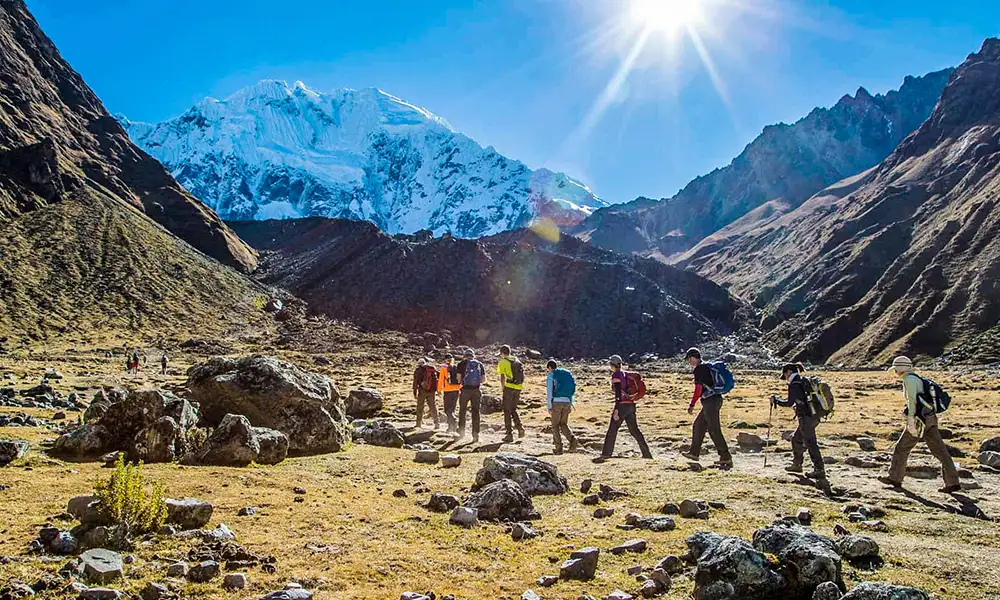
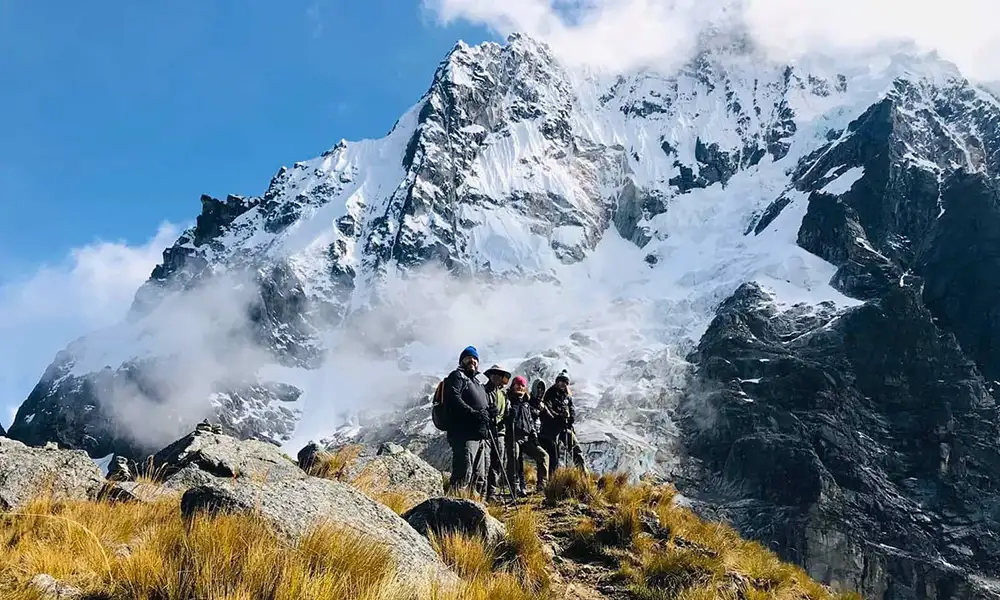
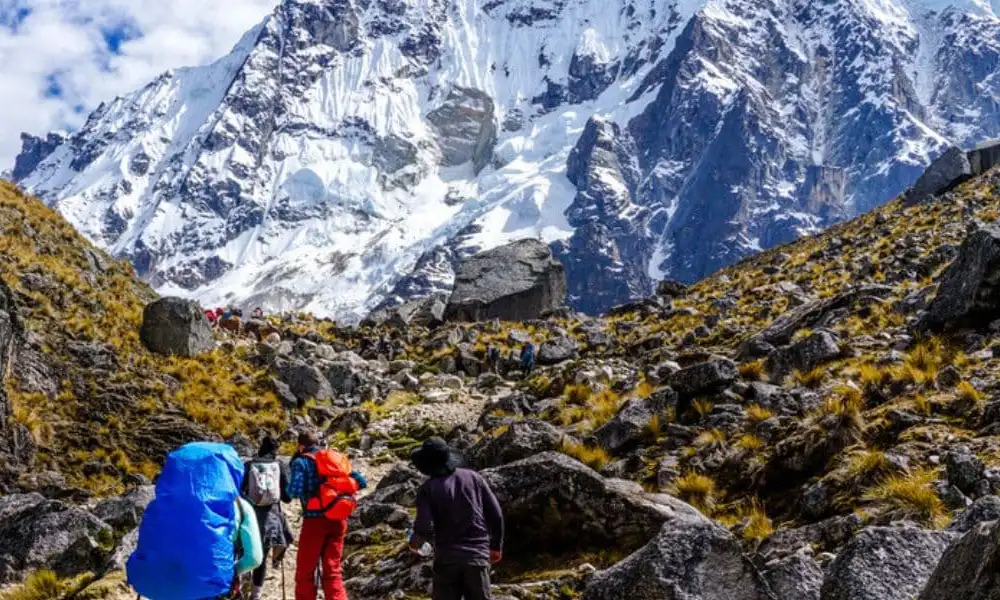
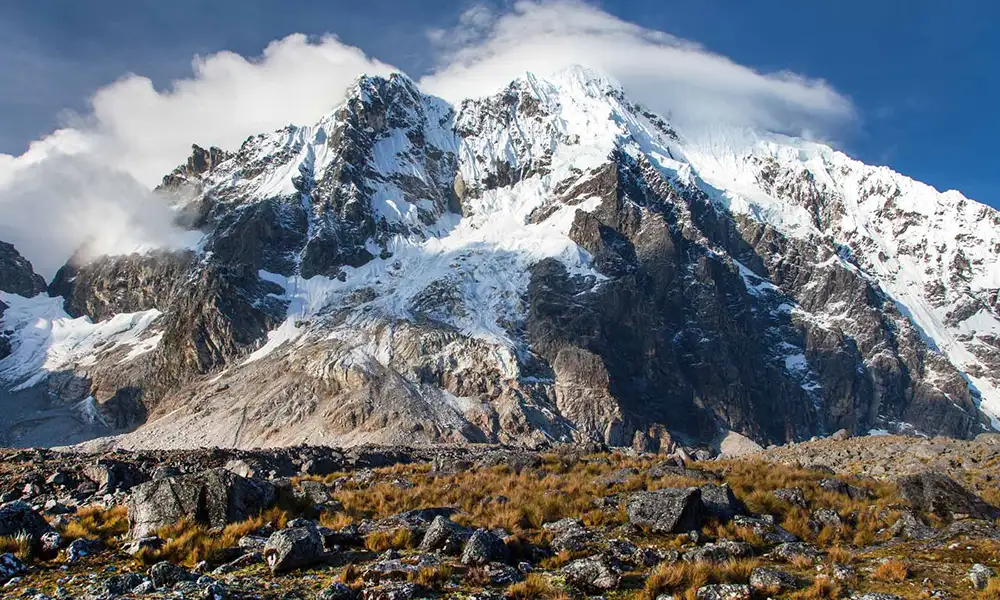
If you’re looking for an epic adventure that connects you with nature and Andean culture, the Salkantay Trek is the perfect route for you. This 5-day, 74-kilometer trek will take you through a variety of breathtaking landscapes, from the Andean peaks to the lush rainforest. It’s a less crowded alternative to the Inca Trail, but just as stunning. Along the way, you’ll witness the majesty of the snow-capped Salkantay mountain, explore hidden valleys, and end your journey at the awe-inspiring Machu Picchu.
This blog offers a complete guide to planning your Salkantay Trek adventure, covering everything you need to know: prices, difficulty level, detailed itineraries, practical tips, and much more.
1. General Information about the Salkantay Trek
What is the Salkantay Trek and why do it?
The Salkantay Trek is a high-altitude trek that connects the town of Mollepata with Machu Picchu through the Andes Mountains. Its name comes from the Salkantay mountain, a sacred peak in the Andean worldview. This trek is ideal for those seeking an authentic experience, full of challenges and surrounded by breathtaking landscapes.
Instead of following the classic Inca Trail, the Salkantay Trek offers a less traveled route, allowing you to enjoy nature in its purest form, surrounded by glaciers, rivers, mountains, and rainforests.
What is the difference between the Salkantay Trek and the classic Inca Trail?
Both routes lead to Machu Picchu, but the Salkantay Trek has a significant advantage over the Inca Trail: its diverse scenery and fewer tourists. While the Inca Trail is a historic route that follows the path the Incas used to reach Machu Picchu, the Salkantay Trek offers a more comprehensive experience, traversing glaciers, deep valleys, cloud forests, and rainforests. Additionally, the Inca Trail has a limited number of daily permits, making it a more popular route, while the Salkantay Trek offers greater flexibility.
What exact route does the Salkantay Trek follow?
The Salkantay Trek begins in the small town of Mollepata, located a 2-hour bus ride from Cusco. From there, the trek follows this itinerary:
🚐Day 1: Mollepata – Soraypampa (camp)
🧭Day 2: Soraypampa – Salkantay Pass – Colpa (camp)
📸Day 3: Colpa – La Playa (jungle camp)
🌉Day 4: La Playa – Aguas Calientes
🌟Day 5: Machu Picchu
Each day, the trek takes you through beautiful landscapes and allows you to experience the region’s biodiversity.
How high is the highest pass (“Salkantay Pass”)?
The highest pass on the trek is Salkantay Pass, which is located at 4,630 meters above sea level. This is the highlight of the trek and the place where you can enjoy a spectacular view of Nevado Salkantay. Although the trek isn’t as long as the Inca Trail, the altitude presents a significant challenge, so proper acclimatization before starting is crucial.
How many kilometers is covered in total?
The Salkantay Trek covers a total of 74 kilometers (46 miles). While the distance isn’t as long compared to other routes, the rugged terrain, high altitudes, and long daily hikes make the trek physically demanding.
What kind of landscape does the Salkantay Trek traverse?
During the trek, you’ll experience a variety of ecosystems. From the high, snow-capped mountains of the Salkantay Pass to tropical valleys filled with lush vegetation. Here are some of the landscapes you’ll encounter:
- Glaciers and snow-capped peaks.
- Cloud forests and crystal-clear rivers.
- Rainforests teeming with life.
- Agricultural valleys and cultivated fields.
- Each stage of the trek offers something unique and breathtaking.
What is the history or meaning of the name “Salkantay” (Sallqantay in Quechua)?
In Quechua, the word “Salkantay” means “wild mountain.” It is one of the highest mountains in the region and is considered sacred by Andean communities. In Inca mythology, Salkantay is believed to be one of the deities that protects the region, and many believe that its spiritual energy guides travelers.
2. Preparations and Logistics
How much does the Salkantay Trek cost?
The price of the Salkantay Trek can vary depending on the tour agency and the services included. In general, prices range from $300 to $600 USD, and this may include transportation from Cusco, a professional guide, meals, equipment, and porters.
What does a typical trekking package include?
Trekking packages usually include:
- Transportation from Cusco to Mollepata (start of the trek).
- Professional guide who will accompany you throughout the trek.
- Meals: breakfast, lunch, and dinner during the trek.
- Equipment: tents, sleeping bags, sleeping mats, and cooking utensils.
- Porters who will carry the heavy equipment (tents, food, etc.).
c.)Where does the trek begin and how do I get there?
The trek begins in Mollepata, a small town located about 2 hours by bus from Cusco. From there, travelers begin their hike to the first campsite at Soraypampa.
3. Trekking Conditions and Difficulties
What is the difficulty level of the Salkantay Trek?
The Salkantay Trek is considered moderate to difficult. The greatest challenge lies in the altitude and steep terrain. While not as difficult as the Inca Trail, the long hours of hiking, especially on the first day, make it a considerable challenge.
Is it necessary to acclimatize in Cusco before the trek?
Yes, it is essential to acclimatize in Cusco (which is 3,400 meters above sea level) before starting the trek. If you do not acclimatize properly, you could suffer from altitude sickness. It is recommended to spend 2-3 days in Cusco before starting the trek.
4. Equipment and Recommendations
What should I pack in my backpack?
Here is a list of what you should pack for your adventure:
- Thermal and quick-drying clothing (for the mountain cold and the jungle heat).
- Waterproof and durable trekking boots.
- Waterproof poncho and warm jacket.
- Sun protection: sunglasses, sunscreen, and a hat.
- Water bottles and water purification tablets.
- Light snacks: energy bars, nuts, etc.
Can I rent trekking poles?
Yes, you can rent trekking poles, boots, and other equipment in Cusco. Many shops offer trekking pole rentals for an additional fee.
5. Accommodation and Campsites
What are the typical accommodations during the trek?
Most accommodations during the trek are campsites. Tents are set up each night, and portable toilets are provided. On your last night in Aguas Calientes, you can stay in a hotel before visiting Machu Picchu the following day.
6. Food and Services During the Trek
What is the food like during the trek?
The food on the trek is generally local and nutritious. The menu includes rice, quinoa, potatoes, vegetables, and meat (chicken or beef). Vegetarian and vegan options are also available.
The Salkantay Trek is one of the most spectacular and least crowded routes to Machu Picchu. If you are looking for a challenging experience surrounded by breathtaking landscapes and rich Andean culture, there is no better choice. Prepare for an unforgettable adventure and start planning your trek to the heart of the Andes.